
G2013
Veteran
Yes, there is one.
On 5.01 version, menu "Options", below "Huge Optimal Solver"
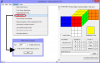
On 5.01 version, menu "Options", below "Huge Optimal Solver"

Follow along with the video below to see how to install our site as a web app on your home screen.
Note: This feature may not be available in some browsers.

I know how to solve my 3x3 with beginner's method, and I totally want to get more into actual speed cubing. I found the Friedrich's method and I'm in the process of learning that, are there any video tutorials or print out ones that would help me to learn this faster? Well, I'm guessing there are, but does anyone know any really good ones???

I can say that this is sometimes false. I was constantly averaging 16 until I decided to do 50 solves everyday, and now I've dropped to nearly sub-15.
I tried out a SS 6x6 and Mini 7x7 but they are too big and uncomfortable.

I can say that this is sometimes false. I was constantly averaging 16 until I decided to do 50 solves everyday, and now I've dropped to nearly sub-15.
Well , I can only speak from personal experience. I spent a lot of time on metronome training and ultimately found it ineffective for initially learning lookahead. (Maybe for those who can already look ahead and want to improve, it might help.)
This is what I disagree with. A ticking metronome can't force you to do things you can't do. It doesn't help you concentrate on the next pair. It just ticks. If you cannot take your eyes or mind off the current pair, you just miss beats. That is why I recommend starting out with blind pairs practice.
Absolutely agree, but that's not what I recommended.

You know what they say... Practice makes permanent. If you look ahead well, you will look ahead better. If you don't look ahead, your turn speed will get faster and you'll get faster for a while but you'll develop a habit of not looking ahead, which is hard to break later on.

I think that describes me quite well.

Honestly, I wouldn't call 50 solves doing a lot in a row. I think repeated daily exposure is going to improve your times whatever you do. But I still think you'd have improved faster from that invested hour(ish)-a-day with something that taught you new abilities, rather than just honing old abilities which, for most of us here, are relatively poor and based on fast recognition rather than lookahead. I know that's something I identify in my own solves.
Sure, everybody learns differently, and I think blind pairs are good when you're not familiar with the method. But if you are familiar with F2L, something which I would say people around the 20 second mark are, I think their utility ends there. The idea of metronome training is to slow right down and practice turning without pauses. Forcing yourself to do that will make you look at the next pair, because when you don't, you fail the solve. Doing blind pairs when you know your inserts already is actually training the wrong abilities: fast turning, and fast recognition. These are useful, but not as useful as lookahead, and when we reach plateaus at faster times we're going to wish we'd learned lookahead instead.

The thing is I can do blind pairs. I only have problems searching for the next pair at a high turning speed.And I did an ao100 yesterday and reduced my global average to 22 seconds.

I found blind pairs hard at first despite knowing all my inserts well, because I was still relying on watching the pieces. Practising them was definitely helpful. Without being able to insert blind, looking ahead at something else was impossible.Sure, everybody learns differently, and I think blind pairs are good when you're not familiar with the method. But if you are familiar with F2L, something which I would say people around the 20 second mark are, I think their utility ends there. The idea of metronome training is to slow right down and practice turning without pauses. Forcing yourself to do that will make you look at the next pair, because when you don't, you fail the solve. Doing blind pairs when you know your inserts already is actually training the wrong abilities: fast turning, and fast recognition. These are useful, but not as useful as lookahead, and when we reach plateaus at faster times we're going to wish we'd learned lookahead instead.

The thing is I can do blind pairs. I only have problems searching for the next pair at a high turning speed.And I did an ao100 yesterday and reduced my global average to 22 seconds.
The thing is I can do blind pairs. I only have problems searching for the next pair at a high turning speed.And I did an ao100 yesterday and reduced my global average to 22 seconds.
Yes, I don't recommend blind pairs as the main source of practice for you, I recommend metronome training until sub10 at the very least. I'm still doing it and improving quite well. Doing solves will help you to improve, but it will also stamp in bad habits.
however I suck at blockbuilding and EOLine.
Oh My God! I am so tired and bored of CFOP because its been 2 months and I still haven't improved at all. I'd like to switch or at least practice another method so that I don't get bored. Roux or ZZ? I looked at a lot of videos. I like both the methods, M slices aren't a problem however I suck at blockbuilding and EOLine. I am interested in becoming fast at OH also. I kind of enjoy the idea of an RUL F2L however I feel that Roux is faster than ZZ.
EOLine should be easy after a few hundred solves

In ZZ, you can also do EOCross also? right? So he can choose ZZ over Roux as he can make crosses. It will be better than blockbuilding.The real tricky part, IMO, is that sometimes, for example in a six edges bad case, you might want to orient three edges (yes, making one edge bad), so that you can get a good case where all four bad edges are on F or B. EO+Line is fine when starting out, but it will help to integrate them ASAP.
Sure, but I am choosing Roux over ZZ because I like it more and well yeah...In ZZ, you can also do EOCross also? right? So he can choose ZZ over Roux as he can make crosses. It will be better than blockbuilding.
But both the methods are fast and choose whichever you want or are comfortable with!


