Last layer variants - There are for subgroups that the last layer is commonly broken down into. These are corner permutation, corner orientation, edge permutation, and edge orientation. Any combination of these in any order has been thought of before. Also, influencing any one of these in some way while placing the last F2L slot has most likely been thought of.
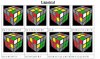
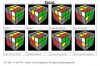
ok so i was looking at the wiki and i couldn't find algs for advanced edge control... i know this isn't and original idea, it surely has been thought of many times but made a list of all the cases for the LS to force a cross. the are 16 cases + mirrors, combine this with the 2 look Oll algs or CoLL (which i'm currently learning) and the U perms z and H perms if one uses Coll or Pll and you have a decent LL system. this also gives, correct me if I'm mistaken, a ~1/20 chance of an oll skip.
Unpaired edges - unpaired.JPG Paired edges - paired.JPG

Edit: this assumes one has at least one edge oriented, if one does not and has a pair made all one must do is a U2 sledge U2 sledge
Edit2: Ok this looks like it might be MGLS ELS?
 
Last edited:
ok so i was looking at the wiki and i couldn't find algs for advanced edge control... i know this isn't and original idea, it surely has been thought of many times but made a list of all the cases for the LS to force a cross. the are 16 cases + mirrors, combine this with the 2 look Oll algs or CoLL (which i'm currently learning) and the U perms z and H perms if one uses Coll or Pll and you have a decent LL system. this also gives, correct me if I'm mistaken, a ~1/20 chance of an oll skip.
Unpaired edges - View attachment 5599 Paired edges - View attachment 5600

Edit: this assumes one has at least one edge oriented, if one does not and has a pair made all one must do is a U2 sledge U2 sledge
Edit2: Ok this looks like it might be MGLS ELS?

It's called VHLS. Some of the cases are definitely worth learning (there's a video on Cubing World), but some aren't.
 
1) 2x2x3 block on left side -lots of approaches, 3/4 cross and 2 pairs, FB with two D edges, 2x2x2 expanded-
2) CP -R U R' U' R' F R F' for adj swap and F R U R' U' F' for diag swap-
3) EO with M moves
4) RU F2L
5) 2GLL or COLL/EPLL
 
Or you could use Petrus.

Or NCPB2

ok so i was looking at the wiki and i couldn't find algs for advanced edge control... i know this isn't and original idea, it surely has been thought of many times but made a list of all the cases for the LS to force a cross. the are 16 cases + mirrors, combine this with the 2 look Oll algs or CoLL (which i'm currently learning) and the U perms z and H perms if one uses Coll or Pll and you have a decent LL system. this also gives, correct me if I'm mistaken, a ~1/20 chance of an oll skip.
Unpaired edges - View attachment 5599 Paired edges - View attachment 5600

Edit: this assumes one has at least one edge oriented, if one does not and has a pair made all one must do is a U2 sledge U2 sledge
Edit2: Ok this looks like it might be MGLS ELS?

This is more akin to VHLS and can be done intuitively (BTW I think you mean PLL skip?). It's also usually the first step for those who want to do ZB along with learning COLL (it acts as the introductory subset in ZBLS).

The intuitive method mean making a pair and placing it at UFR you then orient the BU and LU edges using techinques from the heise method. You then look at the FU edge. If it is oriented you do standard insertion, if not, you do sledgehammer. At least this is what i do in my CFOP (well it might be more acruarate to call it FreeZB with reduced algs)

So it is a nice idea and you can find the cases online if you want
 
Last edited:
This is more akin to VHLS and can be done intuitively (BTW I think you mean PLL skip?). It's also usually the first step for those who want to do ZB along with learning COLL

no oll skip because if the cross is oriented there is just the corners which need to be oriented, roughly 1/20 this will orient both edges and corners(i think)
 

I know, but if you scroll way back in this thread, there are a lot of people who essentially just developed Petrus variations, so "or you could just use Petrus" became something of a joke.

no oll skip because if the cross is oriented there is just the corners which need to be oriented, roughly 1/20 this will orient both edges and corners(i think)

1/27 chance of OLL skip.
 
Hi guys, here I go again with a new idea. It might be good, who knows.
Steps:

1) Create E-slice edge "bars" (edges will oriented and permuted relative to each other in the E-slice, resulting in bars) + orient 3 corners ~ 6 moves - 0 algs
2) Orient bottom layer edges ~ 6 moves - 1 alg
3) Orient remaining corners ~ 10 moves - 16 algs
4) Place corners ~ 10 moves - 5 algs
5) Permute E-slice edges ~ 5 moves - 0 algs
6) Permute bottom layer ~ 8 moves - 0 algs
7) ELL ~ 9 moves - 29 algs

Average moves: 49 - Optimal: ~ 40
Alg count: 51 algs

Pros:

- Each step is quick and easy
- Efficiently uses inspection time
- Low move count
- Most steps are ergonomic

Cons:

- High-ish alg count
- Lookahead from one step to the next is poor
- z2/x2 is required to move from step 2 to step 3

Tell me what you think!

This is a pretty good method but it suffers from one main problem: too many small steps eats uses too much recog. This is why speedsolving methods tend to have no more than 5 steps.

Also, back on my first post: https://www.speedsolving.com/forum/...ew-Method-Substep-Concept-Idea-Thread/page103

Also SSC-M https://www.speedsolving.com/forum/showthread.php?54056-SSC-(Shadowslice-Snow-Columns)-3x3x3-Method

I guess what I'm trying to say is that you really do have the potential to become a good method creator but it may do you some good to read over some of my work (look at my bio+ the Briggs method) as we seem to think in such a similar way that it's quite uncanny (especially since I am often told I think at 90 degrees to everyone else).

So, nice method but it's got too many small steps TBH :)
 
Thanks! It really means a lot to me for you to say that! My main idea when creating methods is to ditch the classic F2L approach and go for something for abstract, as this promotes efficiency. Hopefully I'll discover something good eventually!
 
New method: ROCKET BOOSTERS!!!

Step 1: Rocket Boosters
Description: The user builds two 2x2x1 in LD and RD.
Average moves: 9
Move set: All

Step 2: T
Description: The user builds a T on the front face using FLD, FD, FRD and UF whilst making sure
no U layer or D layer pieces get to the E-slice. This is done in an F2L style.
Average moves: 8
Move set: <FMLRU>

Step 3: Finish the corners
Description: The user completes the corners while conserving UF and UB by doing an M move, then
executing an algorithm, then undoing the M move.
Average moves: 9
Moves set: <FMLRU>

Algs:

The algorithms have all been documented and are known as CLLs.

Step 4: Place UB and BD
Description: The user moves the pieces belonging in UB and BD into their position.
Average moves: 9
Move set: <FMU>

This should be intuitive, but here are some algs if you need them:

UL to UB: M2 U' M' U2 M U' M2
UR to UB: M2 U M' U2 M U M2
LU to UB: M' U' M U2 M' U' M
RU to UB: M' U M U2 M' U M
UR to BD: M' U M' U2 M U M
RU to BD: U' M U2 M' U'
UL to BD: M' U' M' U2 M U' M
LU to BD: U M U2 M' U

Step 5: L4E
Description: Similar to ELL, but the pieces are in different locations. A good strategy would be to
just learn new algorithms, as there are only 29 cases.
Average moves: 10

Algs:

I'll generate them later. 29 is a bit too much for now.

Example solve:

Scramble: D2 B' U2 B' R2 B2 L2 B' D2 R2 F2 L R' U B D U R2 B2 U' R'

z2 R B U' B' L2 B' D2 B2 - Rocket Boosters (8 moves)
F' U R' F R2 U2 L2 B' R' L2 - T (10 moves)
R' U L U' R U L' U' - Corners (8 moves)
U' F2 M2 U' M U F2 U M - UB + BD (9 moves)
R E R' E' S R' S' R - L4E (8 moves)

Total moves: 43

Method Ratings:

Inspection use: 10/10
The method solves 6 pieces through inspection - that is two more than CFOP.

Ergonomics: 8/10
Although there are occasionally F moves and slice moves, these can be done quickly with
practise. I myself have a pretty neat fingertrick for S and E moves, so I am fine with them.
Otherwise you're mostly using M, U, L and R moves.

Lookahead: 8/10
Lookahead is nice for some steps such as the corners and the T, but the lookahead for the
UB/BD and L4E steps isn't excellent.

Recognition: 8/10
The only thing keeping this from a 10/10 is the L4E recognition and the fact that pieces might get
stuck in BD during the UB/BD step.

Movecount: 10/10
The movecount is excellent with an average speedsolving movecount of 45 moves, which is great
compared to the most mainstream methods.

Algorithm count: 9/10
This method has a relatively low alg count compared to methods like CFOP. There are only about 60
algorithms.

Ease of learning: 9/10
Any user of one of the mainstream methods will find a transition to this method to be easy.
Although CFOP users may find the first step's blockbuilding a bit challenging, it is easy to get
used to. The others steps are either VERY easy, like the T step and the UB/BD step, or they are
algorithmic.

Overall rating: 62/70
The rating I gave CFOP (my main method): 57/70

BETTER THAN CFOP CONFIRMED!!!!!!!!!!!
 
New method: ROCKET BOOSTERS!!!

Step 1: Rocket Boosters
Description: The user builds two 2x2x1 in LD and RD.
Average moves: 9
Move set: All

Step 2: T
Description: The user builds a T on the front face using FLD, FD, FRD and UF whilst making sure
no U layer or D layer pieces get to the E-slice. This is done in an F2L style.
Average moves: 8
Move set: <FMLRU>

Step 3: Finish the corners
Description: The user completes the corners while conserving UF and UB by doing an M move, then
executing an algorithm, then undoing the M move.
Average moves: 9
Moves set: <FMLRU>

Algs:

The algorithms have all been documented and are known as CLLs.

Step 4: Place UB and BD
Description: The user moves the pieces belonging in UB and BD into their position.
Average moves: 9
Move set: <FMU>

This should be intuitive, but here are some algs if you need them:

UL to UB: M2 U' M' U2 M U' M2
UR to UB: M2 U M' U2 M U M2
LU to UB: M' U' M U2 M' U' M
RU to UB: M' U M U2 M' U M
UR to BD: M' U M' U2 M U M
RU to BD: U' M U2 M' U'
UL to BD: M' U' M' U2 M U' M
LU to BD: U M U2 M' U

Step 5: L4E
Description: Similar to ELL, but the pieces are in different locations. A good strategy would be to
just learn new algorithms, as there are only 29 cases.
Average moves: 10

Algs:

I'll generate them later. 29 is a bit too much for now.

Example solve:

Scramble: D2 B' U2 B' R2 B2 L2 B' D2 R2 F2 L R' U B D U R2 B2 U' R'

z2 R B U' B' L2 B' D2 B2 - Rocket Boosters (8 moves)
F' U R' F R2 U2 L2 B' R' L2 - T (10 moves)
R' U L U' R U L' U' - Corners (8 moves)
U' F2 M2 U' M U F2 U M - UB + BD (9 moves)
R E R' E' S R' S' R - L4E (8 moves)

Total moves: 43

Step 1: very similar to roux except with less flexibility (for example, roux could build fb then sb or this and expand). 9 moves seems optimistic

Step 2: basically f2b with different pieces, except you also have to worry about where other pieces end up...

Step 3: CMLL but you have to worry about the m-slice... so more moves

Step 4/5: L6E with horrible movesets
 
How so? I don't want to hear "This sucks" "Bad idea" I want critique! C'mon!

Ok. This is bad. Just getting it out of the way.

a) Can we see these E and S slice fingertricks? Because without those, that last step is going to be absolutely disgusting.
b) Lookahead is worse than with CFOP, comparable to Roux, maybe a bit worse, just based on unsolved pieces at any given time
c) Most of these steps are similar to Roux, but there's a reason Roux goes from 1 block to the other. The fingertricks are much better doing first block-second block than they are doing them in parts, the way you have it set up here.
d) Where did you get your numbers? The fact that you have UF and FD solved means you basically have to use algs that won't mess with either, which is going to adversely affect move count. I'd guess at least as bad as COLL, which is 9.78, and that's for optimal algs (something closer to L4C, which is 11.73). Also, generate your ELLs before guessing at move count, especially since normal ELL is 11 STM average.
e) Additional ergonomics tip: MRULF isn't that great a move set. I'm trying to execute your example solve quickly, and things like F2 M2 are very difficult to do cleanly.
 
New method: ROCKET BOOSTERS!!!

Step 1: Rocket Boosters
Description: The user builds two 2x2x1 in LD and RD.
Average moves: 9
Move set: All

Step 2: T
Description: The user builds a T on the front face using FLD, FD, FRD and UF whilst making sure
no U layer or D layer pieces get to the E-slice. This is done in an F2L style.
Average moves: 8
Move set: <FMLRU>

Step 3: Finish the corners
Description: The user completes the corners while conserving UF and UB by doing an M move, then
executing an algorithm, then undoing the M move.
Average moves: 9
Moves set: <FMLRU>

Algs:

The algorithms have all been documented and are known as CLLs.

Step 4: Place UB and BD
Description: The user moves the pieces belonging in UB and BD into their position.
Average moves: 9
Move set: <FMU>

This should be intuitive, but here are some algs if you need them:

UL to UB: M2 U' M' U2 M U' M2
UR to UB: M2 U M' U2 M U M2
LU to UB: M' U' M U2 M' U' M
RU to UB: M' U M U2 M' U M
UR to BD: M' U M' U2 M U M
RU to BD: U' M U2 M' U'
UL to BD: M' U' M' U2 M U' M
LU to BD: U M U2 M' U

Step 5: L4E
Description: Similar to ELL, but the pieces are in different locations. A good strategy would be to
just learn new algorithms, as there are only 29 cases.
Average moves: 10

Algs:

I'll generate them later. 29 is a bit too much for now.

Example solve:

Scramble: D2 B' U2 B' R2 B2 L2 B' D2 R2 F2 L R' U B D U R2 B2 U' R'

z2 R B U' B' L2 B' D2 B2 - Rocket Boosters (8 moves)
F' U R' F R2 U2 L2 B' R' L2 - T (10 moves)
R' U L U' R U L' U' - Corners (8 moves)
U' F2 M2 U' M U F2 U M - UB + BD (9 moves)
R E R' E' S R' S' R - L4E (8 moves)

Total moves: 43

Method Ratings:

Inspection use: 10/10
The method solves 6 pieces through inspection - that is two more than CFOP.

Ergonomics: 8/10
Although there are occasionally F moves and slice moves, these can be done quickly with
practise. I myself have a pretty neat fingertrick for S and E moves, so I am fine with them.
Otherwise you're mostly using M, U, L and R moves.

Lookahead: 8/10
Lookahead is nice for some steps such as the corners and the T, but the lookahead for the
UB/BD and L4E steps isn't excellent.

Recognition: 8/10
The only thing keeping this from a 10/10 is the L4E recognition and the fact that pieces might get
stuck in BD during the UB/BD step.

Movecount: 10/10
The movecount is excellent with an average speedsolving movecount of 45 moves, which is great
compared to the most mainstream methods.

Algorithm count: 9/10
This method has a relatively low alg count compared to methods like CFOP. There are only about 60
algorithms.

Ease of learning: 9/10
Any user of one of the mainstream methods will find a transition to this method to be easy.
Although CFOP users may find the first step's blockbuilding a bit challenging, it is easy to get
used to. The others steps are either VERY easy, like the T step and the UB/BD step, or they are
algorithmic.

Overall rating: 62/70
The rating I gave CFOP (my main method): 57/70

BETTER THAN CFOP CONFIRMED!!!!!!!!!!!

It looks nice at a guick glance but really any algset with adjacent F and M moves is not nice. And no one wants to do S or E moves in a speedsolve... Some are even against the idea of M moves so i would give the ergonomics maybe a 2 on a scale of one to ten as they can't be executed anywhere near as fast as PLL or OLL or CMLL even if they are shorter.

Also, 60 algs is more or less average for a speedsolving method nowadays (if we ignore ZB or Heise) so if normal is 5, i would give it maybe a 6 or 7

Also, there's nothing stopping you solving more pieces in inspection with CFOP, many people can plan up to at least Cross+1, most faster ones more than that. So inspection maybe a 5 if CFOP is average as well.

Also, average movecount for CMLL is closer to 10 not 8 unless you learn unfingertrickable optimals.

I would give it (if CFOP is a 5)
Inspection use: 5
Ergonomics: 2
Lookahead: 4 (harder than just looking for pairs in CFOP)
Recognition: 5, no easier than OLL/PLL really.
Movecount: 8 (i still think you're a bit optimistic though)
Algorithm count: 6 (If you want lower, check out my methods or Roux.
Ease of learning: 5, no worse nor better than CFOP, easier than say ZZ but harder than Waterman
Total: 35/50
CFOP:35/50

Also, for speedsolving i would say that it's how everything works together and only really focus on ergonomics, lookahead, recognition and movecounts. In this way the scoring system doesn't quite work.
For example: beginner's method
inspection use: 4
ergonomics: 7
Lookahead: 9
Recognition: 9
Movecount: 2
Algorithm count: 9
Ease of learning:9
Total:49

Ok, everyone, we better switch to the beginner's method!!!!!!!

So, this method is good for movecount (though i think you're a bit optimistic) but the rest is either bad or meh.
 
Improvement to the Rocket Boosters Method

This was just a prototype. I'm convinced Rocket Boosters can be good.

Quick responses: Optimal ELL is 9 moves
The move set MFU could be <MxU> e.g. M F M U F U' could be M x U M x' U x U x' U'
I know that kinda sucks, but just sayin
 
This was just a prototype. I'm convinced Rocket Boosters can be good.

Quick responses: Optimal ELL is 9 moves
The move set MFU could be <MxU> e.g. M F M U F U' could be M x U M x' U x U x' U'
I know that kinda sucks, but just sayin

Speed-optimized is 11, and there's a reason it's used over optimal.

Also, seriously, what are your fingertricks for E and S slices?
 
Of you think they're wrong crafto, best thing to do is use the method, get fast with it, and proove them wrong.
 
This was just a prototype. I'm convinced Rocket Boosters can be good.

Quick responses: Optimal ELL is 9 moves
The move set MFU could be <MxU> e.g. M F M U F U' could be M x U M x' U x U x' U'
I know that kinda sucks, but just sayin

Read this:
Step 1: very similar to roux except with less flexibility (for example, roux could build fb then sb or this and expand). 9 moves seems optimistic

Step 2: basically f2b with different pieces, except you also have to worry about where other pieces end up...

Step 3: CMLL but you have to worry about the m-slice... so more moves

Step 4/5: L6E with horrible movesets

Sorry, but it's essentially roux with less flexibility and bad movesets
 
Back
Top