
• Welcome to SpeedSolving.com — the world’s largest puzzle community!

    You’re currently browsing as a guest, which means you have limited access to discussions, resources, member profiles, and community features.

    Join 50,000+ cubers and puzzle enthusiasts from around the world to ask questions, share solves, improve faster, and be part of the community.

    Registration is free, fast, and easy — create your account today.

    Already a member? Log in here to hide this message and start participating.
Well then I am gonna start generating algs for variant A or if they are already generated gonna start learning them.
Trying to learn them may not be the best idea at least yet, as I don't know how worth it this LSLL method is (although I've heard you want to learn a LOT of methods).
I've genned most of the algs so far. I ran a search through the batch solver with rRU gen and 15 move search depth. 2 cases failed (16+ moves rRU), and a few should be regenned with larger depth and/or a different subset (RUD or RUF, or RUFD - so long as the algs are good). I will link the document when it's done, as along with these issues I have not attached images to the algs yet.
Edit: These algs require that the DFR corner is at DFR, which should just be a 3 mover if not already skipped after CPSquare, which the algs for (when I get round to them) will do anyway.
Edit2: There will be a beginner variant of the final step, where you orient corners, then permute edges. CO will not affect EP, so you could 1 look like this, although it would be slower.
 
Last edited:
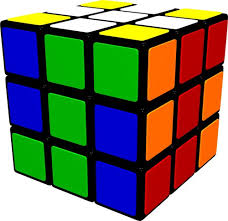
so... I was thinking about this method:

cross
f2l-1 (pretty basic)
eole (solve last edge while orienting remaining edges)
lcep (solve last corner while permuting remaing edges)
l4c (last four corners duh)
 

so... I was thinking about this method:

cross
f2l-1 (pretty basic)
eole (solve last edge while orienting remaining edges)
lcep (solve last corner while permuting remaing edges)
l4c (last four corners duh)
I am like 87% sure this has existed for at least 10 years, I just can't remember which website I have seen this.
 

so... I was thinking about this method:

cross
f2l-1 (pretty basic)
eole (solve last edge while orienting remaining edges)
lcep (solve last corner while permuting remaing edges)
l4c (last four corners duh)
Ah yes. Another ZZ variant ported to CFOP with extra steps.
 
Hello. I just watched J Perms video again on solving a 4x4 into a 2x2 and then I tried and it was pretty hard. I was wondering if there was a tutorial somewhere for how to do this consistently if not efficiently. Just for something fun and different to learn. Thanks
yes. There is a method called 2cep.
Here is the video
 
This could work too as a variant, probably better for CFOPers, I basically just combined steps 1 & 2.
  • EOPair (or EOSquare)
  • Pair (or corner if square)
  • Finish
// Example //
Scramble: R2 B2 L2 D2 B' L2 B' L R' F' L' F R' F2 U'
U' r U R' U' M // EOPair (unintentional square)
R U R' U R U R' U2 // Pair
R U R U R2 D' R U R' D R2 U2 R2 // Finish
Edit: also interesting realisation for the final alg, you only need to look at the U layer, as 1 edge and 1 corner are not in the U layer, so are affected by pieces in the U-layer. So you can recognise the corner pattern, then probably the location of the U layer edges
Edit 2: There is actually more like 430 ish algs in the final step. I might work on a way to reduce this alg count.


// Major Edit - big change //
The reason for the huge amount of algs is because there are 5 possible configurations of two solved top layer pairs, leading to 5 algsets of ~85 algs each. This is not only impractical for being able to use the method, but one of the sets in particular has very bad cases. So, I decided that having a block with only 1 possible position would fare better for this method.
I have come up with some steps that should work, and the alg reduction is huge! There are three ways to go about it, I don't know which is better.

Variant A
- EOPair
- CPSquare (amount of algs is like ZBLS vs VHLS, you can have the pair and edge ready, then do it, or just do it)
- Finish (71 algs, position square at UBL)

Variant B
- EO
- CPPair
OR
- EOPair
- CP
OR even
- EOCP

THEN
- Finish (~170 algs) with the algset (variant B1)
OR
- Conjugated 2GLL (84 algs, harder recog) (variant B2)

Variant C
- EOPair
- Conjugated ZBLL (~430 algs I forgot how many)

I think variant A could be the best all round, so here's an example for it (I don't have CE with me right now so I cannot gen CP-based algs because the batch solver doesn't do that)
Examples
Scramble: R2 B2 D L2 D L2 D2 B2 R2 U' R B U B' R'
F' U F // EOPair
R2 U' L' U R' U' L R' // CPSquare (idrk algs for this)
R2 U R2 U' R2 U R2 U2 R2 U2 R2 U // Finish
Update: I have genned all the algs for variant A (which I believe is the best variant for all round purposes). I also decided on names for the alg sets. CPSquare is CPS (self explanatory), and the final step is TLS, which stands for "triple last slot", because it's basically solving 3 F2L-1s at once. If anyone has a better name let me know.
TLS has 71 algs
CPS has 48 algs (20 more if you wanted to learn the cases with the square formed, although this comes at a minimal benefit as it can be set up in 3 moves to Cw or Ccw pair)

I'll link the doc with the algs, although beware that some (in red) are bad and need a re-gen, and there are no pictures. I have to thank trangium's batch solver, it was incredibly useful as I could gen all the algs from my phone in under 5 minutes! Pictures will take a while.

This is all still very experimental and should be taken with caution, learning these algs may be a waste of your time.

Doc: https://docs.google.com/document/d/1zmVdegLnQjD5zMz6cARDM4lOdPTcKQih30KrN7Yt8dw/edit
 
Hello. I just watched J Perms video again on solving a 4x4 into a 2x2 and then I tried and it was pretty hard. I was wondering if there was a tutorial somewhere for how to do this consistently if not efficiently. Just for something fun and different to learn. Thanks
Here is a beginner tutorial for a 4x4 - 2x2 reduction method better than J Perm's (shoutout Rowan Fortier for covering this in his reduction iceberg video lmao)

Edit: I got ninja'd in the time it took for me to find the video but ah well i'm not deleting this post yall can cope
 
Anti-EG-1 for 2x2

So if you build your side and there is bar on front, like Anti-CLL you recognise the diag corner case, then do the EG-1 for that case but cancel into R2 F2 R2 at the end.
I just happened to come across a solve where this is useful. So @NigelTheCuber you were imitating abunickabhi but putting EG-1 algs in a message, and I decided to learn one of the easier ones (EG-1 T 2).

Generated By csTimer on 2022-06-20
single: 1.884

Time List:
1. 1.884 F U F' R F' R2 U' R' F'

This scramble has a one move yellow face into EG-1 T 1, and T 1 is the opposite case of T 2. So here was my solution:

R2 U y' (basically D) F' R' F R2 U R' U' R U (R F2 R2 U2) [cancelled into PBL]

I did the face and then did the opposite case alg, then did PBL.
 
Back
Top