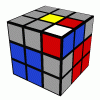
If you're not good with CFOP. I would say that the other "big four" methods would be harder to get good at. Just because they involve even more thinking then CFOP. But practice is key. And that goes for any method. If you get good at CFOP then it's easier to get good at other methods because you already have good knowledge of the cube.
 
Good time to jump on F2L?

I've only started cubing in the last few months and I've hit an average of 38ish seconds (3x3x3) with a PB of 29.99x (was a 3LLL).

I'm doing LBL for the first 2 and 4LLL. Sometimes I'll recognize a pair while doing the first two layers and insert it proactively instead of breaking it up and doing the corner and 2nd layer edge separately.

I told myself that I'd starting learning proper F2L when I hit an average of near 30 with the hope that those constraints will let me get better with finger tricks and accurate turning but it seems very difficult to do so I'm wondering if it's worth just starting on full F2L at this point or should I continuing practicing as I have been?

Is there certain benefits to the algorithms or finger tricks that come with learning F2L that makes it beneficial to jump to sooner rather than later?

EDIT: I should mention that I feel like my 4LLL is pretty quick for the stage I am at (maybe 7-8s?) but my cross is pretty terrible (maybe 6-8s?).

Thanks
 
Last edited:
'f2l' is only fast when you are very familiar with it. And you can only get familiar with it by spending time doing it. I see no benefit for you to stay practicing LBL, exept increasing your TPS, which tbh will probably hinder your look ahead as you will be trying to go too fast.
 
I'd say it is past time for you to start. I learned keyhole just after I reached 1 minute and started learning F2L when I got down to 45 seconds. My times at first went back about 10 seconds, but it paid off. My best time now is 27 seconds, but thats because I do Heise method.
 
You can learn whatever you want whenever you want. to get better at f2l, I suggest watching badmephisto's f2l tutorials until you completely understand everything he says. then, learn algs for a few slow cases. After you learn it, start out slow, and get used to your cases. After you learn, your goal shouldn't be to turn fast, but to be able to find the next pair during the current one and have fluid transitions between pairs. Before/during/after learning f2l, you should learn 2look OLL and 2Look PLL, and gradually work your way up to full pll. Full OLL isn't necessary for sub-15, but it can take a second or two off your time at your fastest. Hope this helped :)
 
You should start F2l now, it doesnt really matter how good you are you can start learning f2l at any time. When i taught my best friend how to solve the cube (well the first two layers) i taught him f2l and he had no problem with it.
 
Thanks everyone, I'm reading about keyhole F2L (first time I've heard of it).

I already am doing 2LOLL and 2LPLL and I'm pretty close to full PLL.

I'll see how keyhole is and then start on full F2L.
 
Yeah I averaged around 29 seconds with beginner method and when I saw a pair I'd always insert it logically. F2L is basically creating those pairs. Anyway, last month i decided to learn f2l and my solve times went drastically down to around a minute for a few days but I persistently practiced and in like a day I went from a 55 second average to a 27 average, beating my 29 average. Now I'm on a 24 average and I have a lot of room for improvement. I regret not learning f2l earlier, trust me!

Also never give up with F2l. Afterwards you'll be like "How did I not see that these two would pair if I just did this?" etc.

And if you are doing a case which looks particularly nasty, and you're solving it inefficiently then you should learn the algo for it online. (this is the nastiest case for me)

3531kdk.gif
 

Attachments

  • 3531kdk.gif
    3531kdk.gif
    4.3 KB · Views: 33
So I've been playing around with the keyhole method and honestly, I think it'll slow me down and then ultimately get back down to the same speed, so I think I'm just going to jump to full F2L, which will ultimately net me quicker solves after the initial slow down.
 
So I can't be the only one to think of this but I took a guhong v2 that I don't really like and took all but a red-green edge and red-green-white corners stickers off. It really makes it easy to see how the cube behaves when you apply f2l algs to it. I greatly recommend :-) .
 
It's good to learn, but don't go any further than that. The key to a fast f2l is learning is also about learning to ignore all the last layer pieces.
 
So I can't be the only one to think of this but I took a guhong v2 that I don't really like and took all but a red-green edge and red-green-white corners stickers off. It really makes it easy to see how the cube behaves when you apply f2l algs to it. I greatly recommend :-) .
You should've just taken off the LL stickers :p
 
You should've just taken off the LL stickers :p

I see your point, but with only one pertinent corner and one pertinent edge, it is very easy to track the movement of these pieces as you apply the algorithms and therefore it's much easier (for me) to absorb how the vary F2L cases materialize and recognition becomes more obvious.
 
It's on the wiki, and probably places like cubefreak.net.

One thing you can do for that case is first learn this one:

F2L06.png

U' r U' R' U R U r'
Setup: r U' R' U' R U r' U

Obviously the U turns are not necessary, that's just how the picture is off the wiki.

So, you can convert to that case with R U' R' U:

F2L24.png

(R U' R' U) r U' R' U R U r'
Setup: r U' R' U' R U r' (U' R U R')

That's 11 moves, two more than the 9 move F U R U' R' F' R U' R', but it's the only decent way I know of to avoid a rotation and not use F turns with that case. It's pretty easy to mirror for all four slots as well, because there's no B turns for the back slots. It can be really fast because it's just quarter turns on U R and r.


To understand the case in the first picture a little more intuitively, do this set up: R U' R' U' R U R'. The resulting F2L case is this one, except at the back instead of above the slot like in the picture:

F2L14.png


Notice which edge is at UF. Now solve the F2L pair, and look at which edge is at UF afterward. Notice that it's the same edge as before. So, the edge that is at UF ends up back in the same place after inserting that pair. In fact, if you watch it, it just gets put in the FR slot then removed right away. This means that if an important edge were there after a setup move, it would not matter because undoing the set up move would place it back where it was correctly.

Now do the set up: r U' R' U' R U r'. See that with an M', you convert to the previous case. Also note that doing this brings the front cross piece to the UF position, but that's okay because we know that it will not be affected by the insertion of F2L pair. So after that M', do R U' R' U R U R' to insert the F2L pair. The cross piece is back where it needs to be, so finish with M. Of course, you can just do r instead of M' R, and r' instead of R' M, resulting in r U' R' U R U r', a great rotationless insert for that case. This is nice because most people probably already have the muscle memory for it, and just need to use a wide turn at the start and end. The R U' R' U flows nicely into it to solve the case in the second picture.
 
Last edited:
Back
Top