Hi, I am looking for an algorithm subset that solves corner permutation and edge orientation when inserting the last f2l pair (The last f2l pair is already paired up in a block or the 3 mover insert, like in Winter Variation and Summer Variation respectively). In other words, I want to get a 2GLL in the last layer. Does such a subset of algs exist, and I dont think ZBLS is what I am looking for?

Navigation
Install the app
How to install the app on iOS
Follow along with the video below to see how to install our site as a web app on your home screen.
Note: This feature may not be available in some browsers.
More options
-
 Welcome to SpeedSolving.com — the world’s largest puzzle community!
You’re currently browsing as a guest, which means you have limited access to discussions, resources, member profiles, and community features.
Join 50,000+ cubers and puzzle enthusiasts from around the world to ask questions, share solves, improve faster, and be part of the community.
Registration is free, fast, and easy — create your account today.
Already a member? Log in here to hide this message and start participating.
You are using an out of date browser. It may not display this or other websites correctly.
You should upgrade or use an alternative browser.
You should upgrade or use an alternative browser.
The "Request an Alg" Thread
- Thread starter StachuK1992
- Start date
- Status
- Not open for further replies.

Cubing Forever
Veteran
What you're looking for doesn't exist but I can tell that it will have more algs than ZBLS, ZBLL and VLS combined.Hi, I am looking for an algorithm subset that solves corner permutation and edge orientation when inserting the last f2l pair (The last f2l pair is already paired up in a block or the 3 mover insert, like in Winter Variation and Summer Variation respectively). In other words, I want to get a 2GLL in the last layer. Does such a subset of algs exist, and I dont think ZBLS is what I am looking for?
You can turn almost any CPEOLL alg into an LS insert: When inserting the last pair, cancel into the CPEOLL alg. This is suboptimal in many cases, but some could be quite good.
Now, I'm looking for algorithms in a similar vein to this topic: Altcross OLL. In that thread, they discuss OLL algorithms where FD and BD are swapped (orientation maintained). I'm also curious about OLL's and F2L control with this setup, but I'm more interested in PLL.
Instead of bumping a decade old thread stump, I'm reaching out here for optimal and/or speed optimal solutions to each PLL case, but predicated with: (AUF) {M2 U2 M2}. Some pairs of PLL cases share an identical U-layer after performing the predicate (ie. V | Y, Ja | Gb etc.). I'm not sure which cases are equivalent (separated only by an AUF), so I'll post more setup cases than is probably necessary.
Without further ado, here're the setups for the cases I am referencing. Note the similarities between each pair, so the algorithms will be quite similar. Even just a single alg, or any pointers would be much appreciated:
Happy thanksgiving!
Now, I'm looking for algorithms in a similar vein to this topic: Altcross OLL. In that thread, they discuss OLL algorithms where FD and BD are swapped (orientation maintained). I'm also curious about OLL's and F2L control with this setup, but I'm more interested in PLL.
Instead of bumping a decade old thread stump, I'm reaching out here for optimal and/or speed optimal solutions to each PLL case, but predicated with: (AUF) {M2 U2 M2}. Some pairs of PLL cases share an identical U-layer after performing the predicate (ie. V | Y, Ja | Gb etc.). I'm not sure which cases are equivalent (separated only by an AUF), so I'll post more setup cases than is probably necessary.
Without further ado, here're the setups for the cases I am referencing. Note the similarities between each pair, so the algorithms will be quite similar. Even just a single alg, or any pointers would be much appreciated:
Z's:
Setup: {(M2 U2 M2) (M2 U' M2 U' M' U2 M2 U2 M')}
Setup: {(M2 U2 M2 U) (M2 U' M2 U' M' U2 M2 U2 M')}
U's:
Setup:{(M2 U2 M2) (M2 U M' U2 M U M2)}
Setup:{(M2 U2 M2 U) (M2 U M' U2 M U M2)}
A's:
Setup: {(M2 U2 M2) (x R' U R' D2 R U' R' D2 R2 x')}
Setup: {(M2 U2 M2 U) (x R' U R' D2 R U' R' D2 R2 x')}
E's
Setup: {(M2 U2 M2) (x' R U' R' D R U R' D' R U R' D R U' R' D' x)}
Setup: {(M2 U2 M2 U) (x' R U' R' D R U R' D' R U R' D R U' R' D' x)}
T's:
Setup: {(M2 U2 M2) (R U R' U' R' F R2 U' R' U' R U R' F')}
Setup: {(M2 U2 M2 U) (R U R' U' R' F R2 U' R' U' R U R' F')}
F's:
Setup: {(M2 U2 M2) (R' U R U' R2 F' U' F U R F R' F' R2)}
Setup: {(M2 U2 M2 U) (R' U R U' R2 F' U' F U R F R' F' R2)}
Ja's:
Setup: {(M2 U2 M2) (L' U' L F L' U' L U L F' L2 U L)}
Setup: {(M2 U2 M2 U) (L' U' L F L' U' L U L F' L2 U L)}
Jb's:
Setup: {(M2 U2 M2) (R U R' F' R U R' U' R' F R2 U' R')}
Setup: {(M2 U2 M2 U) (R U R' F' R U R' U' R' F R2 U' R')}
Ga's:
Setup: {(M2 U2 M2) (R2 u R' U R' U' R u' R2 F' U F)}
Setup: {(M2 U2 M2 U) (R2 u R' U R' U' R u' R2 F' U F)}
Gb's:
Setup: {(M2 U2 M2) (R' d' F R2 u R' U R U' R u' R2)}
Setup: {(M2 U2 M2 U) (R' d' F R2 u R' U R U' R u' R2)}
Gc's:
Setup: {(M2 U2 M2) (R2' u' R U' R U R' u R2 f R' f')}
Setup: {(M2 U2 M2 U) (R2' u' R U' R U R' u R2 f R' f')}
Gd's:
Setup: {(M2 U2 M2) (D' R U R' U' D R2 U' R U' R' U R' U R2)}
Setup: {(M2 U2 M2 U) (D' R U R' U' D R2 U' R U' R' U R' U R2)}
Ra's:
Setup: {(M2 U2 M2) (L U2 L' U2 L F' L' U' L U L F L2)}
Setup: {(M2 U2 M2 U) (L U2 L' U2 L F' L' U' L U L F L2)}
Rb's:
Setup: {(M2 U2 M2) (R' U2 R U2 R' F R U R' U' R' F' R2)}
Setup: {(M2 U2 M2 U) (R' U2 R U2 R' F R U R' U' R' F' R2)}
V's:
Setup: {(M2 U2 M2) (R' U R' U' y R' F' R2 U' R' U R' F R F)}
Setup: {(M2 U2 M2 U) (R' U R' U' y R' F' R2 U' R' U R' F R F)}
Y's:
Setup: {(M2 U2 M2) (F R U' R' U' R U R' F' R U R' U' R' F R F')}
Setup: {(M2 U2 M2 U) (F R U' R' U' R U R' F' R U R' U' R' F R F')}
N's:
Setup: {(M2 U2 M2) (F' R U R' U' R' F R2 F U' R' U' R U F' R')}
Setup: {(M2 U2 M2 U) (F' R U R' U' R' F R2 F U' R' U' R U F' R')}
This isn't what you asked, but: just solve the cross normally. You can M2 U2 M2 to influence F2L pairs, OLL, or PLL, but the average time saved from this influencing is less than the time added by having to do M2 U2 M2. (On very rare occasion this might make sense, e.g. you have a very easy "xxcross" except with a wrong cross.)Now, I'm looking for algorithms in a similar vein to this topic: Altcross OLL. In that thread, they discuss OLL algorithms where FD and BD are swapped (orientation maintained). I'm also curious about OLL's and F2L control with this setup, but I'm more interested in PLL.
Instead of bumping a decade old thread stump, I'm reaching out here for optimal and/or speed optimal solutions to each PLL case, but predicated with: (AUF) {M2 U2 M2}. Some pairs of PLL cases share an identical U-layer after performing the predicate (ie. V | Y, Ja | Gb etc.). I'm not sure which cases are equivalent (separated only by an AUF), so I'll post more setup cases than is probably necessary.
Getting to the actual answer: Besides prepending M2 U2 M2, you can also append it. This is basically the same as how PLL parity is dealt with on big cubes, so you can look to PLL parity algs (e.g. on CubeSkills or SCDB) for some inspiration. (Not all of the algs can be adapted to fixing wrong-cross PLL.) For instance, you never need to get a G perm. Any case where you can get a G perm by doing M2 U2 M2 first, you can do M2 U2 M2 from a different AUF and get J perm or R perm.
The edge-only PLLs are also good to know direct algs for, since they're easy and mostly pretty fast:
Opposite: M2 U2 M2
Adjacent: R U R' U M2 U2 M2 U R U' R'
W perm: M2 U' M' U2 M U M2
Ocw perm: M U' M2 U' M2 U' M'
Occw perm: M U M2 U M2 U M'
The goal with the opp-swap altcross setup is to allow for easier lookahead into F2L (which includes X-cross). Sometimes the cross-fix alg can be performed in F2L to form a pair, while also giving a good next case. And because the cross-fix alg only swaps 2 pieces on the U-layer, this makes it easier to look ahead to the next case.The edge-only PLLs are also good to know direct algs for, since they're easy and mostly pretty fast:
Opposite: M2 U2 M2
Adjacent: R U R' U M2 U2 M2 U R U' R'
W perm: M2 U' M' U2 M U M2
Ocw perm: M U' M2 U' M2 U' M'
Occw perm: M U M2 U M2 U M'
The cross-fix alg can be performed at any point during the solve, so the cuber has plenty of time to prepare for the slice moves. But if the cuber saves the fix for PLL and the corners are solved or adj-swap, they could also opt to solve edges and finish the solve with an A-perm.
That's why I'm reaching out. My first goal is to make a 2-look PLL with cross fix + EPLL, then CPLL. But for diag-swap corner cases, it must be better to perform a single algorithm. So I am also searching for cross fix + CPLL algs, which can be followed up by EPLL to finish. It also occurred to me that cross fix + ELL followed up by L3C (or vice versa) would make for a pretty nice LL (for when corner perm is adj/solved and at least 1 corner is oriented). So I'm glad you provided these algs, and I'll look into those resources even though I am always befuddled by 4x4 parity!

DuckubingCuber347
Veteran
Where can I find the most up to date Tripod LL algs. I am aware that I can just use SCDB but I'd just like to check to see if there is already a document ready to go.
Edit: Just curious, how many algs would it be for Tripod+1 where the 1 represent DFR not being solved?
Edit: Just curious, how many algs would it be for Tripod+1 where the 1 represent DFR not being solved?
Last edited:
Cubing Forever
Veteran
teri's random 1LLL subsetsWhere can I find the most up to date Tripod LL algs. I am aware that I can just use SCDB but I'd just like to check to see if there is already a document ready to go.
It's on the first sheet(ignore the titles they're a bit weird)
EDIT: lol nvm it's incomplete

White KB
Premium Member
- Joined
- Oct 3, 2017
- Messages
- 1,277
- Location
- Putting Runza on the map since 2022
- WCA
- 2019BRUC01
- YouTube
- Visit Channel
Thanks; that sheet was really helpful! I'd been looking for 1LLLs for a while, especially pure cases.teri's random 1LLL subsets
It's on the first sheet(ignore the titles they're a bit weird)
EDIT: lol nvm it's incomplete
EDIT: Yes, I know that it wasn't technically meant for me, but it was helpful nonetheless...
Cubing Forever
Veteran
found the tripod ZBs but you might have to look up SCDB for the other cases.Where can I find the most up to date Tripod LL algs. I am aware that I can just use SCDB but I'd just like to check to see if there is already a document ready to go.
Edit: Just curious, how many algs would it be for Tripod+1 where the 1 represent DFR not being solved?
(btw the images aren't working)
DuckubingCuber347
Veteran
I was actually looking for ZB cases only given that I (as of one hour in the future) use Petrus-APB so learning full Tripod wouldn't be beneficial for me. I don't think that the lack of images will be a problem since the doc tells you the permutation of the pieces.found the tripod ZBs but you might have to look up SCDB for the other cases.
(btw the images aren't working)
Thank you!
Last edited:
AidenCubes
Regular
Hi! I just learned the s move u perms, and they help improve my times a lot. I was wondering if there is a s move alg for an h perm, thanks!

Eli Apperson
Veteran
There is one, but the M U is better.Hi! I just learned the s move u perms, and they help improve my times a lot. I was wondering if there is a s move alg for an h perm, thanks!
The alg goes like this:
R2 S2 R2 U/U' R2 S2 R2
Cubing Forever
Veteran
There are many and tbh they're worse than MUHi! I just learned the s move u perms, and they help improve my times a lot. I was wondering if there is a s move alg for an h perm, thanks!
R2' S2 R2' U R2' S2 R2'
S R U2 R2 U2 R2 U2 R S'
S R' U2 R2 U2 R2 U2 R' S'
Cubing Forever
Veteran
Aren't there 2 W perms?Opposite: M2 U2 M2
Adjacent: R U R' U M2 U2 M2 U R U' R'
W perm: M2 U' M' U2 M U M2
Ocw perm: M U' M2 U' M2 U' M'
Occw perm: M U M2 U M2 U M'
There's only one. (Try setting up what you think is "the other one", and see if you can convert between that and the one I wrote.)Aren't there 2 W perms?

lawofthecube
Regular
- Joined
- Aug 14, 2020
- Messages
- 150
Anyone out there who could help with these F2L cases?
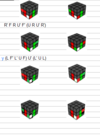
Thanks...

Thanks...
Last edited:
DuckubingCuber347
Veteran
Where can I find the most up to date Tripod LL algs. I am aware that I can just use SCDB but I'd just like to check to see if there is already a document ready to go.
Edit: Just curious, how many algs would it be for Tripod+1 where the 1 represent DFR not being solved?

Tripod ZBLL v1.5
I've already made a pfp about this but decided to make a post on the forums about it so it can be found easily for those looking for an EO Tripod doc.
Currently it might need revised so just tell me if there's anything wrong/missing.
Thanks

GenTheSnail
Veteran
| - | r' F2 r R U' R' U R U' R' |
| - | F' U' f R2 S' |
| r' F2 r R U R' U' R U R' | R' U' R U R U R' U' R U R' |
| R' F' R F R' F R2 U' R' | R U' R2 U2 R F' U' F (or S R S' R U2 R' U' R U R') |
Here you go
- Status
- Not open for further replies.
Similar threads
R
- Replies
- 7
- Views
- 2,041


