
Burrito
Veteran
- Joined
- Feb 27, 2022
- Messages
- 348
- Location
- del barrio de gángster y burritos
- WCA
- 2022SOPK01
- YouTube
- Visit Channel
After finding that the spreadsheet for Mehta is terrible for printing, I just went back to Roux.

Follow along with the video below to see how to install our site as a web app on your home screen.
Note: This feature may not be available in some browsers.


Good choice. Mehta is sub-optimal anyway. If you want a really good method that isn't roux, then try APB.After finding that the spreadsheet for Mehta is terrible for printing, I just went back to Roux.

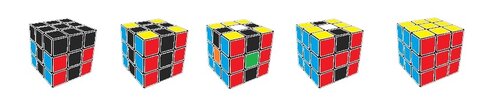




I mean, obviously funny(not haha funny), butreally funny reduction ideas for 3x3
1. Reduce the 3x3 to a Cube in a Cube Pattern and apply the alg that solves the pattern to solve the cube
2. Reduce the 3x3 to a Cube in a Cube in a Cube Pattern and apply the alg that solves the pattern to solve the cube.
It's a cool idea, but the main problem is that comms are already fast and you're just making life more difficult for yourself in memo (as you pointed out). It's unfortunate because the idea is actually quite fun.Has anyone ever seen a 3BLD method where you swap edges and corners at the same time?
In the last couple of days I came up with setup moves to PLLs for all the corners and edges.
I found that the setup moves are not as bad as I thought they would be. I made a spreadsheet with all possible combinations of 1 edge and 1 corner. Here's the link: https://docs.google.com/spreadsheets/d/10rt17l8auC-hStzhcCpKKyLxIEOC6OZJJG74DWAXgkU/edit?usp=sharing
I used buffers UBL and UB.
After you have done the corners (and the same amount of edges), you will be left with either 4 or 6 edges most of the time. You can solve these with any method you like, but it is easy to do with M2 because I used buffer UB. You can not get parity with this method.
The memo is very different and more difficult than normal memo. Because you need to remember 1 edge and 1 corner for each letter pair.
Maybe the memo will make this method impossible/ very hard to use, I don't know yet.
So has anyone seen any method like this? And if can come up with better setup moves for some cases, please let me know! I am interested in your thoughts about this method.

I haven't seen many intuitive / semi-intuitive LSLL methods, and I thought they could be interesting. As long as EO is done, blocks can quite easily be built on the top. So, I tried to make a method out of it - I don't know how practical it actually would be, but it's an idea.
Recognition for step 3 (kinda bad)
- EO
- Make 2 pairs on the top face (permuted correctly). This can also be done by building a square and then adding a corner.
- Solve the last 3 edges and corners (~250 algs)
Orientation of U layer corners
CP
EP
Examples (all of these built two pairs separately, but depending on the case it might be better to build a square)
Scramble: F U' F2 D' L2 F' L' F U2 L2 D F
F' U2 L' U L F // EO
U R U2 R' // Pair
U2 R U2 R' // Pair
R2 U2 R2 D' R U' R' D R2 U' R' U' R' U // Finish
28 STM
Scramble: D B2 U B2 U2 R2 D' F2 U F2 U R' B U2 B' U2 R' U2
F' U' L' U L F // EO
R U2 R' // Pair
U R U2 R' U2 R U R' // Pair
R' F2 R D' R' D F2 D' R D U // Finish
28 STM
Scramble: U R' F2 R F L F D2 L2 U2 L' B2 R B2 L' D2 L'
F' U2 F // EO
U2 R U2 R' // Pair
U2 R U R' U' F2 L' U L U L' U' L F2 // Worst possible second pair case (should make an alg)
U' R2 U2 R2 U2 F R D R2 D' R' F' U2 // Finish
34 STM
// Example with square + corner //
Scramble: F' L2 F2 R B2 R' F2 L2 U2 F2 R' F' L' R2 B' L U' R'
R' F R F' // EO
R U2 R' U R U' R' // Square
U2 R U R' // Corner
U R U' F2 R2 D R2 U R2 D' R U' R F2 R' U' // Finish (bad case)
I'm just putting this out there as a thing, it has some problems that make it not super viable, mainly the difficult recognition in step 3, however building blocks is RU gen regripless, quite ergonomic.
Well then I am gonna start generating algs for variant A or if they are already generated gonna start learning them.This could work too as a variant, probably better for CFOPers, I basically just combined steps 1 & 2.
// Example //
- EOPair (or EOSquare)
- Pair (or corner if square)
- Finish
Scramble: R2 B2 L2 D2 B' L2 B' L R' F' L' F R' F2 U'
U' r U R' U' M // EOPair (unintentional square)
R U R' U R U R' U2 // Pair
R U R U R2 D' R U R' D R2 U2 R2 // Finish
Edit: also interesting realisation for the final alg, you only need to look at the U layer, as 1 edge and 1 corner are not in the U layer, so are affected by pieces in the U-layer. So you can recognise the corner pattern, then probably the location of the U layer edges
Edit 2: There is actually more like 430 ish algs in the final step. I might work on a way to reduce this alg count.
// Major Edit - big change //
The reason for the huge amount of algs is because there are 5 possible configurations of two solved top layer pairs, leading to 5 algsets of ~85 algs each. This is not only impractical for being able to use the method, but one of the sets in particular has very bad cases. So, I decided that having a block with only 1 possible position would fare better for this method.
I have come up with some steps that should work, and the alg reduction is huge! There are three ways to go about it, I don't know which is better.
Variant A
- EOPair
- CPSquare (amount of algs is like ZBLS vs VHLS, you can have the pair and edge ready, then do it, or just do it)
- Finish (71 algs, position square at UBL)
Variant B
- EO
- CPPair
OR
- EOPair
- CP
OR even
- EOCP
THEN
- Finish (~170 algs) with the algset (variant B1)
OR
- Conjugated 2GLL (84 algs, harder recog) (variant B2)
Variant C
- EOPair
- Conjugated ZBLL (~430 algs I forgot how many)
I think variant A could be the best all round, so here's an example for it (I don't have CE with me right now so I cannot gen CP-based algs because the batch solver doesn't do that)
Examples
Scramble: R2 B2 D L2 D L2 D2 B2 R2 U' R B U B' R'
F' U F // EOPair
R2 U' L' U R' U' L R' // CPSquare (idrk algs for this)
R2 U R2 U' R2 U R2 U2 R2 U2 R2 U // Finish


