Tony Fisher
Veteran
Actually it would work for you more than most since the idea is for learning a solution. It would be pointless for someone already using CFOP.Wouldn't work for me because I use ZZ.

Follow along with the video below to see how to install our site as a web app on your home screen.
Note: This feature may not be available in some browsers.
Actually it would work for you more than most since the idea is for learning a solution. It would be pointless for someone already using CFOP.Wouldn't work for me because I use ZZ
(of course in real solves you'd rotate and solve them <R,U>). Here's the whole solve on alg.cubing.net.
Actually it would work for you more than most since the idea is for learning a solution. It would be pointless for someone already using CFOP.

(GLS) orient it so the U color is facing right
(ZZ-K) HKPLL+C- Edges only HKPLL
EO line U- Same as traditional EO line, but instead of using DF and DB edges, you can use either the UR/UL edges or the UF/UB edges
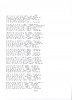
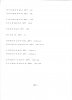
Thanks for all the feedback, helps a lot! TBH this was mostly to put out some ideas as well as get feedback/help me progress as a method designer. As for the pics of the algs, I will be replacing them with word/text docs, but I didn't generate the algs on my home computer and didn't think to make a copy in Google Drive or send them to myself. But I did have some printed versions, and I honestly couldn't be bothered to type it all out so I just made a copy of it lol.You're not accounting for the extra moves needed to do this. I think the majority of the cases require only one extra R U* R' kind of trigger to set up the corner, but some may require more. Either way, it's +3 moves two-thirds of the time unless you learn how to set up the pair while orienting the DFR corner as needed, which would then require more F2L algs.
Aka oriented L5E. Might be quite situational, because you usually don't save a lot of moves from not having to solve DR. On the other hand, it looks like oriented L5E with optimal algs is slightly shorter than EPLL (!!) so this might have some use for linear FMC. (But if you use speed-optimised algs, it completely loses this advantage.)
Been proposed at least thrice in this thread before. (The first mention is even on the first page of the thread!) Could work, but general opinion is that you could also just use <M,U> EPLL algs. Using the "wrong" edges for EOline also prevents you from using ZBLL and you'll never get an LL skip.
Edit: also, why are you taking a photo of a printout of a plain text document instead of just uploading the text files…

This variant has been proposed before as you suspected.I recently learned the Friedrich method and its pretty fast. But then I learned the Roux method and decided to learn it too just to see which is faster. In doing so I thought of this: what if I combined them. It would look like this...
Steps 1 and 2- These would be the same first 2 steps to the Roux method (make adjacent 1x2x3 blocks)
Step 3- Put the final 2 white edges on the top to finish the first 2 layers.
Step 4- Solve the bottom using PLL and OLL just like in the Friedrich method
This method would take out F2L, the longest part of the Friedrich method and allow you to use the middle layer to make pairings. But there has to be a reason this isn't used already so can someone tell me why this isn't used by anyone?
Is this after or slower than the Friedrich methodThis variant has been proposed before as you suspected.
CMLL+LSE is faster/better than FD/BD+OLL+PLL, and with considerably less algorithms.
???Is this after
It is basically bad roux, which is definitely slower than CFOP and Roux. Both methods are better in their pure state than when they are combined.Is this after or slower than the Friedrich method

I quite often use this when I do FreeFOP so I would say it's a perfectly viable alternative though EO may be better served as done in conjunction with the 2x2x3 (which is what I also sometimes do in FMC attempts at home(because I've never been to a comp))lol guys, originally I tried this out as a joke, but:
7 FB
5-6 <r,R,U> to solve 2x2x3
5 EO
12-13 F2L + phasing
14 ZZLL
= 43-45 STM
Here's the reddit post where I first pitch this to oyoat because I assume he'd be most familiar with how fast Petrus-related things can go. I also link to data I've collected to get these movecount estimates that I've given above.
This fixes the bad fingertricks/lookahead in the 2x2x3 step of Petrus (since it's <r,R,U> now and you can easily track where the two edges are going in inspection). Given that PDF is able to one-look FB + SBsquare pretty often, I wouldn't be surprised if people could be able to one-look the entire 2x2x3.
Here is a dumb corners first method I used to help me get familliar with the M slice. it is almost entirely intuitive, and a big beginners variant of roux:
1: Solve D corners and DL and DR edges
2: CLL
After this point the whole solve is 4 gen
Using L, R, U, and M, solve the equator edges.
After this, do a lse variant and done.
I'm hoping this could help people get used to usage of the M layer as a vital tool in speedsolving and intuitive solving.
I think LSE might be confusing for people when they're just starting out
So: corners + DLDR, <L,R,U,M> for belt, place DFDB, EOLL, EPLL?