From the 11 solve splits you posted it looks to me like your OLL and PLL are the strongest parts of your solve which makes sense because they are algorithm based. There is no trick to the cross other than practice and beginning to recognize relationships between how the pieces move relative to one another during solution...this is a hard skill to learn. The Jperm video referenced talks about using 1 piece to insert another and the "replacement technique." Those are the types of relationships i am talking about you will only be able to see with practice. You had some other threads or questions recently regarding F2L...Again, this is another portion of the solve that is heavily influenced by intuition and recognizing piece relationships. Slow and deliberate solves are your friends here. During OLL and PLL you can let algorithms be your success, i believe cross and F2L require a much more solid understanding of cube mechanics to be able to solve quickly and efficiently.
I am going to post a rather useless correction to your calcs. It's all in good fun and i just can't help myself...the lack of relating basic mathematics to real world situations is why i think many people think math is hard, boring, lame, useless, *insert every child's complaint about school here*. I'm happy to see a post like this on the forums.
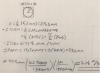
I would argue that the distance the hand travels during any given turn is equal to 1/4 of the circumference of a circle that can be inscribed within the square represented by the size of the cube (no regrip & no finger tricks). For a 57mm cube the hand actually travels 44.8mm/turn. This gives 2.78m/s per your method which is still quite fast.
As you said, tons of factors we are ignoring & it's just a thought-provoking exercise.
View attachment 12465