• Welcome to SpeedSolving.com — the world’s largest puzzle community!

    You’re currently browsing as a guest, which means you have limited access to discussions, resources, member profiles, and community features.

    Join 50,000+ cubers and puzzle enthusiasts from around the world to ask questions, share solves, improve faster, and be part of the community.

    Registration is free, fast, and easy — create your account today.

    Already a member? Log in here to hide this message and start participating.
I don't know if this method already exists, so the best way is to just post it here for everyone to discuss. In this method, I mixed the 8355 method and CFOP, taking the good parts from both, and cut the last step from 78 algorithms down to 41.

Here's the step breakdown: Cross (6 moves) + F2L-3 (25 moves) + Last 5 Edges (12 moves) + Last 5 Corners Orientation (12 moves) + Last 5 Corners Permutation (12 moves). Estimated total is around 61 moves. I'm still trying to optimize the Last 5 Edges part, but I don't have a solid system yet. So honestly, I only really optimized the Last 5 Corners, using a two-step L5C approach (the algs don't mess up the edges).

One thing worth pointing out: if you do the math roughly, it looks like even a two-step L5C would need hundreds of algs. But if you use U moves to group things up, a lot of cases can be treated as the same. Sure, U moves might *seem* like they mess up the edges, but our algs only touch the corners, so the edge order actually stays fine.

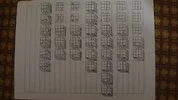
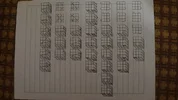
Here are my handwritten notes for all 41 cases. DSC01174.webpDSC01171.webp

I haven't figured out a solid way to optimize the Last 5 Edges yet, so I'll just leave that to the pros in the community.
 

Attachments

  • DSC01171.webp
    DSC01171.webp
    123.6 KB · Views: 4
  • DSC01174.webp
    DSC01174.webp
    105.9 KB · Views: 2
Yooo I really like this method


I was actually also looking for methods like this where you do 8355 but its just cross + 3 f2l pairs then the 5 edges, and then solving the corners either with the the 5 edges or separately in a few steps.

Last 5 edges is pretty intuitive so you don't need algroithems for it, you optimize it slowly after doing many solves.

Its really nice you made all these notes for the last 5 corners, I hope yoy can explain the image drawings so members can understand the cases more
 
It's a nice method ngl, but assuming that your 61 average move count is accurate, the algorithms would have to be pretty ergonomic/quick to execute or else It wouldn't work as a speed solving method. Definitely not for FMC.

Still, it looks pretty nice.

Love the notes and diagrams btw.

Edit (not related to method) - Bro why do these methods have to get moved all the time, they genuinely get far less attention.
 
Last edited:
It's a nice method ngl, but assuming that your 61 average move count is accurate, the algorithms would have to be pretty ergonomic/quick to execute or else It wouldn't work as a speed solving method. Definitely not for FMC.

Still, it looks pretty nice.

Love the notes and diagrams btw.

Edit (not related to method) - Bro why do these methods have to get moved all the time, they genuinely get far less attention.
Yea its really anoyying I keep getting warned for it and forget about this thread, no one genuinely wants to read sooo many combined method threads as if your forced to look into every thread posts in subforums and gotta scroll down for minutes just to find a interesting method you would want to read about.


Maybe a dedicated subforum, or just leaving the threads alone is good. "Hey guys post this wholeeee topic idea here" threads shouldn't be a base for mods to casually be warning and combining people's thread into them.


Its like saying all progression threads should just be combined into the "accomplishment/progression thread", or that all topics that dont have a subforum should casually be placed into the "no place for topic thread" or whatever its called by the unicorn pfp guy.
 
Yea its really anoyying I keep getting warned for it and forget about this thread, no one genuinely wants to read sooo many combined method threads as if your forced to look into every thread posts in subforums and gotta scroll down for minutes just to find a interesting method you would want to read about.
Like you've been told countless times now, no one is forcing you to read any of the posts in this thread. The only post you should read is the first one, which details a lot of commonly thought about methods that people think they're the first to create. So reading that post helps to stop a lot of duplicate method posts without the need to read through hundreds of pages just for the chance of a method being a duplicate. And please stop using this; it's not a valid reason to not use this thread. No one has ever been forced to look through the posts here, and if someone does, then that's because of their own free will, not by force. If you only want to read about methods, then use the wiki; it has lists of methods that you can easily search for without having to scroll hundreds of pages of people developing their own methods. Then from there, if you want to see if there are any posts about its development here, there is a useful search bar that you use to find posts with the specific method you want to read about. You're really making it seem like this thread is the only place you can read about methods when that's the furthest thing from the truth.

Maybe a dedicated subforum, or just leaving the threads alone is good. "Hey guys post this wholeeee topic idea here" threads shouldn't be a base for mods to casually be warning and combining people's thread into them.
There is a dedicated subforum, either Puzzle Theory or General Speedcubing Discussion, or potentially some other subforums I'm not thinking of. Regardless, those subforums exist for people to post methods ideas in AFTER they post them here. The reason why, which, guess what, you've been told about multiple times before, is because it reduces clutter and low-effort-method posts. So people are encouraged to post their methods here first, in order to get feedback on them without cluttering the main page. Then when people get enough feedback and help to improve or tweak the method and multiple people agree it deserves its own thread, then it can have its own thread dedicated to it. But that doesn't mean a lot of people who don't understand what a good method is are the ones deciding if it's a worthy method; it needs to be input from respected community members and method developers who have some idea of what they're doing.

Its like saying all progression threads should just be combined into the "accomplishment/progression thread", or that all topics that dont have a subforum should casually be placed into the "no place for topic thread" or whatever its called by the unicorn pfp guy.
Now as for this point, it is an utterly useless comparison of two completely different things. The entire point of putting potential methods into this thread is to reduce spam of frankly useless methods. Compare that to progression threads; they can't be quantifiably decided as useless without it being targeted at people you don't like. Progression threads stand as a place for one person to share their own progression without it being overshadowed by dozens of other posts. One's own progression is much more important to track and justifiably deserves its own thread. This doesn't apply the same to method development, as a lot of the methods that were posted outside of this thread were extremely low-effort, with people trying to improve LL or LSLL, which is arguably the most developed portion of any methods. If we allowed these low-effort threads to be created as often as progression threads, then there would be so many beginner cubers who don't understand puzzle theory or method development creating the "new best method!!!" with no understanding of why the method they just made is worse than CFOP/Roux/ZZ. Then forum members who actually understand why the method is pointless would need to inform them of why the method would never work. Now multiply that by dozens of threads, countless times a year; it gets pretty exhausting. Hey, why not put it all into one thread and have the first post detail a lot of those commonly thought-about ideas, then have potential method developers use that thread to improve their ideas first? Wait a minute, that sounds familiar; that's exactly what this thread does! Now, try to apply progression threads into that, and you get something that just doesn't make sense. Why would forum members need to regulate someone else's progression thread? That becomes pretty controlling, and it starts to become an issue. Your logic just doesn't work here because they are not the same, and that is why they are not treated the same. Method development is a much more objective thing, unlike progression threads, so it's much easier to dictate rules for them. So that's why you need to post your underdeveloped method ideas here before cluttering up the main page with a method that was never going to work from the start.
 
Like you've been told countless times now, no one is forcing you to read any of the posts in this thread. The only post you should read is the first one, which details a lot of commonly thought about methods that people think they're the first to create. So reading that post helps to stop a lot of duplicate method posts without the need to read through hundreds of pages just for the chance of a method being a duplicate. And please stop using this; it's not a valid reason to not use this thread. No one has ever been forced to look through the posts here, and if someone does, then that's because of their own free will, not by force. If you only want to read about methods, then use the wiki; it has lists of methods that you can easily search for without having to scroll hundreds of pages of people developing their own methods. Then from there, if you want to see if there are any posts about its development here, there is a useful search bar that you use to find posts with the specific method you want to read about. You're really making it seem like this thread is the only place you can read about methods when that's the furthest thing from the truth.


There is a dedicated subforum, either Puzzle Theory or General Speedcubing Discussion, or potentially some other subforums I'm not thinking of. Regardless, those subforums exist for people to post methods ideas in AFTER they post them here. The reason why, which, guess what, you've been told about multiple times before, is because it reduces clutter and low-effort-method posts. So people are encouraged to post their methods here first, in order to get feedback on them without cluttering the main page. Then when people get enough feedback and help to improve or tweak the method and multiple people agree it deserves its own thread, then it can have its own thread dedicated to it. But that doesn't mean a lot of people who don't understand what a good method is are the ones deciding if it's a worthy method; it needs to be input from respected community members and method developers who have some idea of what they're doing.


Now as for this point, it is an utterly useless comparison of two completely different things. The entire point of putting potential methods into this thread is to reduce spam of frankly useless methods. Compare that to progression threads; they can't be quantifiably decided as useless without it being targeted at people you don't like. Progression threads stand as a place for one person to share their own progression without it being overshadowed by dozens of other posts. One's own progression is much more important to track and justifiably deserves its own thread. This doesn't apply the same to method development, as a lot of the methods that were posted outside of this thread were extremely low-effort, with people trying to improve LL or LSLL, which is arguably the most developed portion of any methods. If we allowed these low-effort threads to be created as often as progression threads, then there would be so many beginner cubers who don't understand puzzle theory or method development creating the "new best method!!!" with no understanding of why the method they just made is worse than CFOP/Roux/ZZ. Then forum members who actually understand why the method is pointless would need to inform them of why the method would never work. Now multiply that by dozens of threads, countless times a year; it gets pretty exhausting. Hey, why not put it all into one thread and have the first post detail a lot of those commonly thought-about ideas, then have potential method developers use that thread to improve their ideas first? Wait a minute, that sounds familiar; that's exactly what this thread does! Now, try to apply progression threads into that, and you get something that just doesn't make sense. Why would forum members need to regulate someone else's progression thread? That becomes pretty controlling, and it starts to become an issue. Your logic just doesn't work here because they are not the same, and that is why they are not treated the same. Method development is a much more objective thing, unlike progression threads, so it's much easier to dictate rules for them. So that's why you need to post your underdeveloped method ideas here before cluttering up the main page with a method that was never going to work from the start.
ok I agree but shouldn't there be a method subset thread 2.0 atleast because there's way too many methods on here its a good idea that their grouped up but it is wayyy too difficult to find interesting methods when whole thread posts be grouped up and there being 438 pages.(Still didn't understand your point of it just being my own will, am I supposed to quit looking for methods if I'm technically not forced to scroll alot in a thread, by forced I meant the mods make the action for someone who wants to do that action forced to do something else)
If you can send me the speedsolving method list, I really like methods.

Thread 'On new method proposal threads [New members, please read!]' https://www.speedsolving.com/threads/on-new-method-proposal-threads-new-members-please-read.96979/
 
Last edited by a moderator:
ok I agree but shouldn't there be a method subset thread 2.0 atleast because there's way too many methods on here its a good idea that their grouped up but it is wayyy too difficult to find interesting methods when whole thread posts be grouped up and there being 438 pages.(Still didn't understand your point of it just being my own will, am I supposed to quit looking for methods if I'm technically not forced to scroll alot in a thread, by forced I meant the mods make the action for someone who wants to do that action forced to do something else)
I was saying that if people wanted to look through any and all posts made in this thread, that was their choice. It wasn't specifically directed at you or anyone else; I'm simply saying that if someone wanted to look through all the posts here, they are more than welcome to, but at the same time it's not something they are forced into.
The point is, I'm not forcing you to stop exploring methods; in fact, I would encourage it, as it's a very interesting aspect of cubing, but at the same time I want to keep the forums less cluttered and more usable for more people. And that is why this thread was created in the first place, so people could explore methods in a single place, keeping everything condensed but still useable. Especially the first post, as it has a ton of useful information for potential method developers to consider before they go posting anything they want without consideration.

If you can send me the speedsolving method list, I really like methods.
Here is the first thing I found when looking up methods. It has a large number of 3x3 methods listed, so you can spend a ton of time looking through them. Then if you find one that is interesting enough, and you want to see if there are any posts about it here. Then you can use the search function on the forums; I would recommend the advanced search, as it just works better. That way you can see if there's any added discussion about it that you wouldn't otherwise find in the wiki page.
There is also this general page that will link you to methods for other puzzles if that is also of interest to you.
And I'm sure there is even more you can find in the wiki if you just explore it for a while.
 
It's a nice method ngl, but assuming that your 61 average move count is accurate, the algorithms would have to be pretty ergonomic/quick to execute or else It wouldn't work as a speed solving method. Definitely not for FMC.

Still, it looks pretty nice.

Love the notes and diagrams btw.

Edit (not related to method) - Bro why do these methods have to get moved all the time, they genuinely get far less attention.

Yea its really anoyying I keep getting warned for it and forget about this thread, no one genuinely wants to read sooo many combined method threads as if your forced to look into every thread posts in subforums and gotta scroll down for minutes just to find a interesting method you would want to read about.


Maybe a dedicated subforum, or just leaving the threads alone is good. "Hey guys post this wholeeee topic idea here" threads shouldn't be a base for mods to casually be warning and combining people's thread into them.


Its like saying all progression threads should just be combined into the "accomplishment/progression thread", or that all topics that dont have a subforum should casually be placed into the "no place for topic thread" or whatever its called by the unicorn pfp guy.

@AJT17 already gave multiple good points (though a little more harshly than I personally would have worded them), but I have a few extra thoughts.

I made a much longer post on the matter here, but the brief summary is that new methods should be adequately developed, and should go through multiple rounds of feedback and tweaking, before they should be given their own thread. Unfortunately, the vast majority of proposed methods and subsets are either not very good or not very new, and so if they're posted to brand-new threads, they're going to a) confuse newer members of the speedsolving community, and b) start to annoy and frustrate members who have been around this site for a while. Getting feedback on this method thread avoids that, and "filters out" most of the lower-effort methods, or methods that have been proposed before. I personally have been on this website for nearly 10 years, and I have seen the same handful of methods get proposed countless times in their own threads. It starts to grind one's gears a bit.

I'm personally against making a "new method/subset idea thread 2.0", because in my opinion there is no real point. Nobody is expected to read every post here before proposing their own idea, and so it wouldn't solve any problem that I believe exists with this thread. What is really important when proposing a method is a) reading the initial post here, which has a list of commonly-proposed ideas (and honestly I would like to compile a slightly more thorough list of common ideas), and b) doing some critical thinking about how likely your idea is to have been thought up before, and about how good the method realistically is.

As a side note, when I move method proposals to this thread, I'm never mad or frustrated at the poster (assuming they haven't done the same thing multiple times before), and it certainly isn't done maliciously. I understand that most new members are unfamiliar with this dedicated thread, and my goal is to help guide people to where they're looking for.
 
Yooo I really like this method


I was actually also looking for methods like this where you do 8355 but its just cross + 3 f2l pairs then the 5 edges, and then solving the corners either with the the 5 edges or separately in a few steps.

Last 5 edges is pretty intuitive so you don't need algroithems for it, you optimize it slowly after doing many solves.

Its really nice you made all these notes for the last 5 corners, I hope yoy can explain the image drawings so members can understand the cases more
Each image corresponds to one algorithm. Going from left to right—for the page filled with letters, start from bottom to top, then go left to right. The left column is OL5C, and the right column is PL5C. Count which image it is, then count which algorithm it is, and that's the corresponding one. In the drawings, the shaded areas represent white/yellow positions, and the arrows indicate the exchange relationships.
It's a nice method ngl, but assuming that your 61 average move count is accurate, the algorithms would have to be pretty ergonomic/quick to execute or else It wouldn't work as a speed solving method. Definitely not for FMC.

Still, it looks pretty nice.

Love the notes and diagrams btw.

Edit (not related to method) - Bro why do these methods have to get moved all the time, they genuinely get far less attention.


If you look closely, you'll notice the algorithms are actually quite fingertrick-friendly (at least they felt smooth when I tested them), using RU, RUF, and RUD moves.
 
Yea its really anoyying I keep getting warned for it and forget about this thread, no one genuinely wants to read sooo many combined method threads as if your forced to look into every thread posts in subforums and gotta scroll down for minutes just to find a interesting method you would want to read about.


Maybe a dedicated subforum, or just leaving the threads alone is good. "Hey guys post this wholeeee topic idea here" threads shouldn't be a base for mods to casually be warning and combining people's thread into them.


Its like saying all progression threads should just be combined into the "accomplishment/progression thread", or that all topics that dont have a subforum should casually be placed into the "no place for topic thread" or whatever its called by the unicorn pfp guy.
nobody is forcing you to read all 438 pages😭
not even well-known method developers like athefre have looked through all the pages. This is an idea thread. Not an “all methods that have been possibly been invented” thread
From my perspective, this actually seems like a “safety net” because you can:
1. Share your idea that may or may not have been invented before without making a new thread
2. You can get feedback without making 5 paragraphs on your method
3. You won’t get warned for anything because you just put your idea in there

Also, if you have finally created an original method that has had significant development and feedback, then you can make a thread on your method. Think of this thread as a place where you can “draft” your ideas, then the method’s thread as a place to “show off and flex” your new method

Method development is also much broader and objective than progression threads. A method development thread is for methods and a progression thread is for progression. As AJT17 said, they are not the same thing. People won’t tell you that “this has already been created” in a progression thread because someone’s progress can’t be identical to another person’s progress. On the other hand, you can make a method identical to another method because its steps are concrete, and not like progress, which is “abstract”

I hope this made sense and wasn’t too long (like the other posts no offense *cough cough)
 
Over the past week or so I've been messing around with UEF8E on 6x6. It's one of countless weirdo borderline meme methods in the ss wiki currently, and while it has some major flaws (needing to memo 4 wings & needing to do a longer restoration step between F8E and L4E), the method has enough interesting stuff going for it that I felt compelled to play with the method. Here's a link to the original method - http://bbs.mf8-china.com/forum.php?mod=viewthread&tid=115522

The variant I'm proposing for 6x6 (works both for Yau and Redux) is one where you pair an entire edge, completely restore centers, do 3Rw2 U2 to split the paired edge in half, and only now proceed with standard UEF8E stuff (though it's a bit more like UEF9E since when we restore and undo the setup, we'll only have L3E remaining)

In terms of pros and cons comparing my variant to the original, the only thing the original method does slightly better is the restoration step. I don't know how many more moves it is on average using my 3Rw2 U2 setup, but I'm guessing it's in the 1-2 move range. Outside of that minor detail, not needing to memo 4 wings (idk if memoing 1 is even viable for speed events lol) while also getting an extra edge basically for free seems pretty sweet to me :)

One final thing I'll note is that you can often influence L3E during the last couple of moves of restoration. When your F9E is B2 U2 3Rw2 away from solved, you can throw in a 2Rw2 for free to try and get more pairs which is a neat trick. There's also probably some elegant way to solve a 10th edge but I'll leave that area of optimization to others if this ends up gaining any amount of traction

anyway that's about all I have for now. After less than a week of doing solves at home I already have a decent amount of sub 2:10s with the Yau version of this method. Given that I normally average over 2 mins in comp (albeit on no practice), and that I've always done edge pairing on E slice, I think that's at least a sign this method has a place in the "big x but not best" camp of substep methods. Also I think this method might be broken AF for 8x8+
 

Method I made for myself (in collab with others) that caters to what I want to ideally do and learn.
 
Hi everyone,

I recently came up with a different approach to solving the last three edge pairs (L3E) in the Yau 3-2-3 method for the 4x4 cube. I documented the approach in a short notebook and would like to share it here to see whether this idea has been discussed before or whether I may have made some mistakes.

https://ltwang888.github.io/resources/LT_Wang_Notebook_4_August_01_2026_v1.0.pdf

Any comments or suggestions would be greatly appreciated. Thank you!
 
This method is a 2x2 method based off guimond method where you orient the top & bottom, then solve the cube using an algorithm.
This method is where you orient the entire cube using an algorithm, then solve it using only _2 moves which a lot more intuitive.

1: Orient the cube
2: Solve the cube using _2 moves

I need to know how many algorithms the first step has. It probably would have so many algorithms, that it’s just unfeasible to make that many algs, but this is more as so an experimental method and I obviously won’t make the algs if it has way too many.
 
1: Orient the cube
2: Solve the cube using _2 moves

I need to know how many algorithms the first step has.

About 1625 according to Levi Gibson (but I have no idea how to verify/calculate that number), see from 2:35.


If you didn´t know already, there is an HTR solver powered by Feather´s algorithm adapted to the 2x2x2 cube.

I am using a zero-memorization variant in this thread.
 
Please read before posting

I'm making this thread for all of those ideas you have that are interesting, yet are not fully developed. This is a place to post them. I have come up with many ideas and didn't want to post a new thread for every one of them when most don't get very far. Perhaps if an idea gets very far, it may deserve its own thread, but until then, it should go here.

Be open and understanding
Everyone should be open to new ideas, yet also understanding if others don't think it will work.

Post all kinds of ideas
Feel free to post all kinds of ideas here. It does not necessarily have to be oriented around speedsolving. Ideas could range from fewest moves, blindfolding, speedsolving, OH, cube designs and more.

Be clear
Please try to be clear in your explanations of why something is a bad/good idea and use evidence to support your thoughts. Also be clear as to what idea you are referring to.

Avoid cluttering the thread
To avoid unnecessary clutter, you should edit a post to add more information rather than create a new one, unless you want to bump your idea. You should wait at a days since your last post on a certain topic to bump it. To present a new idea, you should present it in the same post as your last idea or bump if you do it on the same day.

Do Your Research
There are a lot of different methods out there. Please try to make sure your idea is new/original before posting. You should check out the methods pages on the wiki.

Here is a list of commonly suggested methods:
Belt - Anything that solves the cube like this (the belt does not always have to be made first / many times EO is solved with it). This is a broad category and there is a large variety of belt methods already out there and there is a good chance you will be repeating something.

F2L blocks - Solving a 2x2x3 block (as in Petrus) by solving 3 cross edges and the two pairs that go between them, solving two 1x2x3 blocks on opposite sides (as in Roux) by placing two cross edges and solving F2L pairs, or any other kind of block, but the already previously listed are the most common.

Cross variants - Solving the cross (or EO line) in a different manner to affect the solve later in some way. Common examples are only solving 3 cross edges, purposely solving the last cross edge as a different edge, and swapping two edges in the cross or EO line.

Last layer variants - There are for subgroups that the last layer is commonly broken down into. These are corner permutation, corner orientation, edge permutation, and edge orientation. Any combination of these in any order has been thought of before. Also, influencing any one of these in some way while placing the last F2L slot has most likely been thought of.

Corners/edges first - Solving either all or most of the corners or edges before solving much (if any) of the other is frequently suggested. In fact most of the early speedcubing methods were corners first.

PCMS - This technically is included in the corners first category, but it is suggested often enough that attention should be brought to it.

Big cube reduction variants - Reducing a 4x4 to a 2x2 has been suggested many times. Influencing edge orientation or the permutation of certain pieces while reducing the cube has been thought of as well.


If there is anything you think I should add to this list, you are welcome to suggest it.
_______________________________________________________________________________________________________________________

To start off, here's a idea I had that ended up similar to the Roux method. Because I liked how easy it was to make corner edge pairs using them M layer, I started making an F2L minus the M layer. I then proceeded to make 2 corner edge pairs in the top layer similar to what is done in Heise. These pairs should not interfere with the M layer and should contain either both BU or FU corners. In other words, you have both the left and right side complete minus 1 corner in each of them. You could then solve the remaining 2 corners and the M layer with an algorithm.

I thought this could better be adapted to speed solving by solving 2 corners while solving the last F2L pair. Then you could solve the UL and UR edges with M and U moves. In Roux, there are variants to solve the M layer last rather than the top 4 edges.

After realizing the similarities with roux, and realizing the ability to AUF the M slice separate from the corners of the top layer, I came up with this: Solve 2 1x2x3 blocks on opposite sides, AUF until you get to a CLL case, Solve the UL and UR edges without misplacing the U layer (you may temporarily move the U layer), solve the top 4 corners and the M layer with an algorithm that is reduced by the ability to AUF the M layer. It should be noted that an experienced solver wouldn't need to AUF to find a CLL case just to have to move the U layer to solve the UL and UR edges.

The number of cases could drastically be reduced by orienting edges while placing the UL and UR edges. You could also reduce it even further by using partial corner control while placing the last F2L slot finishing the second 1x2x3 block. Because CLL cases are recognized by swapping 2 corners, when you AUF to a CLL case and have the UR and UL edges solved, you leave only permutations with an odd number of swaps in the M layer giving you 4 possibilities compared to the 5 possibilities (including solved) that there would be with an even number of swaps. This is not true of CLL cases with corners correctly permuted. In all, I calculate 92 algorithms to solve the top 4 corners and the M layer using partial corner control and having edges preoriented (I did include CPLL but not cases with all corners solved and I did not include mirrors).
New method: BCO Method for 2x2

0.5: Solve 1/2 a layer (barely a step this is very short) (Block)
1: Orient Corners (Corner Orientation)
2: do an algorithm to solve the cube

This isnt a complete method by no means, so I’m asking how many algorithms would this be? I’m guessing a lot of Algs though
Also I kinda want to know all the substeps for this, like I know there is some PBL algorithms for the second step, but what else?
 
After i was a bit too optimistic before, I'll be more cautious this time :)
So let me just humbly ask:

What if in CFOP, after the cross, you don't build perfect pairs but pairs that end up having the edge perfectly placed and oriented, but the corner below it being only any bottom layer corner in any orientation? That way lookahead becomes much easier because you only need to spot ANY bottum layer corner. Also, movecount is reduced greatly because you can often choose between more than one option and choose the shorter one. Lucky cases and even already solved by chance pairs also become way more common, and it's easier to influence things positively because you need to be less specific.

The price for all of this: You need to do CLL on the bottom. Yikes!

BUT if you don't end OLL PLL, but CLL flip, CLL flip, ELL, it'll work fine!

Wait, what? Flip? That's my invention actually (as far as i know). Flip algorythms solve something, but they solve it towards the other side of the cube, effectively flipping sides. that way you can work on one side and then on the other without manually flipping the cube. In the case of CLL flip, it equals adding R2 L2, but since it's reasonably build into the algorythm, it is often only zero to one moves longer and in some cases even shorter that the non-flip variant! It does have three times as many cases, though.

So, the order would be: Cross, "dirty" pairs where the edges are perfect but the corners just any bottom layer corners in any orientation, which allows for better lookahead, fewer moves and easier influencing, and then CLL flip X 2, and then ELL.

The extra algorythm will likely eat away almost all moves saved by the shorter FTL phase, but the lookahead advantage remains, and also the advantage of easier influencing for pros. In the end, a really good speedcuber will likely have some movecount advantage over CFOP i think.

So everybody, what du you think? Easier lookahead but one more recognition. An extra algorythm, but easier shortcutting on the pairs.

I'm humbly interested i your opinions on this :)
 
New 3x3 method (i'm not sure if this has been discussed before)

Belt -1

Steps

1. make a cross

2. solve the belt along the e-axis, leaving 1 unsolved

3. use keyhole to solve all the corners

4. insert last edge while solving oll or Edge oll (idk what to use)

5. LL

if you have any feedback or suggestions, please point them out!
 
I recently had an idea for a method, here’s the steps:

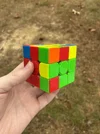
Start out by solving the cross and the first 3 f2l pairs. Then you put the last unsolved pair in the FR slot, like this:
IMG_5755.webp
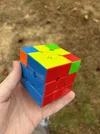
The solve a 1x2x2 block in the ULB corner, here’s a view of that from the back:
IMG_5756.webp
Then you solve the last 4 corners and the last 3 edges. I don’t know what the best way to do the last step would be, if anyone can help me with this or give me feedback it would be appreciated.
 
Back
Top