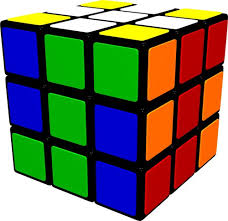
but it's not the case of not being used.
it's tricky to know if a corner is solved in the f2l or not.
I think it's not worth it and takes the full power of this method (lol)
Yeah but
1. You can remember which slots you solved
2. You can know the third colour on a corner when you see two colours. In this case, you could deduce what the bottom colour is on the corners on the front. If it is white, it is solved. This technique is also used in world class BLD corner tracing, so definitely implementable, especially if you only need to 'know' 4 corners.
capable of sub20 dnfs! the method: solve a side like a non cuber solve middle layer solve oll solve parity if needed (M2 U2 M2) solve pll on top x2 because rotations make solving faster solve pll on bottom alternatively you can do: CP PBL EP PBL but I didn't generate the algs yet
capable of sub20 dnfs! the method: solve a side like a non cuber solve middle layer solve oll solve parity if needed (M2 U2 M2) solve pll on top x2 because rotations make solving faster solve pll on bottom alternatively you can do: CP PBL EP PBL but I didn't generate the algs yet
Did about 5 solves, all around 15 seconds. I got 9.14 but apparently I accidentally did normal F2L there because the PLL on the bottom was an adjacent edge swap so essentially I only did a weird cross.
Did about 5 solves, all around 15 seconds. I got 9.14 but apparently I accidentally did normal F2L there because the PLL on the bottom was an adjacent edge swap so essentially I only did a weird cross.
Do yau but do any 3 edges for cross
on 3x3 stage, solve bottom face
middle layer edges as usual
solve oll + oll parity
with the power of 4x4 you can now solve pll+parity on top and then pll+parity on bottom
I think I found a good way to do 2 look PBL on 3x3
First look you solve corner permutations on both layers + bottom layer phasing
(this first look will solve corners permutation and cause the bottom layer edges to be solved or have just one pair of edges swapped)
Second look you solve last edges permutation with one alg from EPLL or OCELL
what if cfop combined with lbl on 4x4
first solve white center and edges, then solve half of green, blue, orange, and red centers and connect them to the edges
do 3x3 f2l to finish the first two layers (bit hard to recognize at first)
finish the centers with F Rw U Rw' U' F repeated a few times
finish 3rd layer (hard to explain, look at the example solve)
do an alg to solve oll (for now 2 look)
do an alg to solve pll (for now a few look)
I got a sub 1:15 average on this after 2 days of practising with it
ao5
ao5: 1:13.40
Time List:
1. 1:13.44 F D' R U2 R' F2 U2 L' R2 B2 L U2 F2 B' L R F' D F2 R Rw2 Fw2 R Uw2 D' L' Uw2 B2 R' Uw2 R U Rw2 Fw D2 F Uw2 R2 Fw Uw' Fw' U2 Fw Rw F' Rw
2. (1:17.32) B U L2 F2 D2 L2 R2 D R2 D F2 U L2 B' U' L' D B U2 F' L' Rw2 D' B2 Rw2 U2 B' U' Rw2 Uw2 B D R' U F Rw F2 Rw' Uw2 F Uw' Rw' Fw L2 U'
3. 1:11.55 D2 L' U2 R2 D L2 R2 B2 U L2 B2 D2 F2 U2 F' L D' R' D' L' Uw2 Rw2 B2 L2 D B Rw2 R2 Fw2 B Uw2 D' Fw2 Rw D2 F' U Rw2 Fw Rw2 R' Uw B R' F'
4. (1:09.88) L2 B2 L2 R2 U2 B' U2 B U2 B' D L' D' B U' F' R' D' L' U' Uw2 R2 B' Uw2 B' L Fw2 R' U2 F' L' Uw2 Fw2 Uw' R' U D Rw2 B2 Fw' U' R' Uw2 Fw Uw D
5. 1:15.21 R L2 U F R F2 L D B' L2 U2 L F2 B2 L B2 L D2 L' Rw2 F D F' L2 Uw2 Fw2 B' U' F2 Rw2 U2 R' D Rw Fw2 D2 Rw' Uw' L2 B2 F' Rw D' Fw' U'
example solve:
edit: idk if this is original, i did some research and couldn't find a method that was very similar to this tho
edit 2: anyone know where one can generate 4x4 algs?
Also, you can make it so when you solve a center another edge solves with it, like this:
The x2 is done on front of the scramble because I think the only cross color I can show alone is yellow, not white
what if cfop combined with lbl on 4x4
first solve white center and edges, then solve half of green, blue, orange, and red centers and connect them to the edges
do 3x3 f2l to finish the first two layers (bit hard to recognize at first)
finish the centers with F Rw U Rw' U' F repeated a few times
finish 3rd layer (hard to explain, look at the example solve)
do an alg to solve oll (for now 2 look)
do an alg to solve pll (for now a few look)
I got a sub 1:15 average on this after 2 days of practising with it
ao5
ao5: 1:13.40
Time List:
1. 1:13.44 F D' R U2 R' F2 U2 L' R2 B2 L U2 F2 B' L R F' D F2 R Rw2 Fw2 R Uw2 D' L' Uw2 B2 R' Uw2 R U Rw2 Fw D2 F Uw2 R2 Fw Uw' Fw' U2 Fw Rw F' Rw
2. (1:17.32) B U L2 F2 D2 L2 R2 D R2 D F2 U L2 B' U' L' D B U2 F' L' Rw2 D' B2 Rw2 U2 B' U' Rw2 Uw2 B D R' U F Rw F2 Rw' Uw2 F Uw' Rw' Fw L2 U'
3. 1:11.55 D2 L' U2 R2 D L2 R2 B2 U L2 B2 D2 F2 U2 F' L D' R' D' L' Uw2 Rw2 B2 L2 D B Rw2 R2 Fw2 B Uw2 D' Fw2 Rw D2 F' U Rw2 Fw Rw2 R' Uw B R' F'
4. (1:09.88) L2 B2 L2 R2 U2 B' U2 B U2 B' D L' D' B U' F' R' D' L' U' Uw2 R2 B' Uw2 B' L Fw2 R' U2 F' L' Uw2 Fw2 Uw' R' U D Rw2 B2 Fw' U' R' Uw2 Fw Uw D
5. 1:15.21 R L2 U F R F2 L D B' L2 U2 L F2 B2 L B2 L D2 L' Rw2 F D F' L2 Uw2 Fw2 B' U' F2 Rw2 U2 R' D Rw Fw2 D2 Rw' Uw' L2 B2 F' Rw D' Fw' U'
example solve:
edit: idk if this is original, i did some research and couldn't find a method that was very similar to this tho
edit 2: anyone know where one can generate 4x4 algs?
I'll post here a simple method to solve k4 last layer without needing to learn a bunch of commutators You will need sune variations for edge orientation, standard oll and pll, edge 3 cycles (intuitive) and edge 2 cycle (parity alg) the good news is that you won't face oll parity! yay \o/ (...
www.speedsolving.com
also there is k4 with algs for all 4x4 ELL cases with commutators
btw, not much related, but have you tried reducing the 4x4 to 2x2? it seems that you won't have parity that way, but is lot more moves
I want to try this sometime.
here is the tutorial
If I learn the LL as k4, (CLL + commutators)
I think this is somewhat viable.
EDIT: If you compare the number of moves of this against the number of moves on 4x4 world record single it's pretty decent. it would allow some 20~22 seconds solve
I just thought of CFOP PLL idea. Pseudo PLL (I don’t know how to use “pseudo” properly but I think it might fit here) : solve the cross with 2 opposite edges, the F2L and OLL normally, then you can choose when to swap with M2 U2 M2, before or after the PLL alg. This could help you get easier PLL cases, or it could be a method in between two look and full PLL because it would need less algs, but different recognitions. Example below. Thoughts?
EDIT: Maybe something similar could be done with oll, make oll parity with a flipped edge, and force a cross skip? Idk
I created a discord server where there are Italian Speedcuber. In the beginning we were working on creating the tutorial for CFBL or Platform to put the necessary cases and optimal algorithms for each one in order to make it able to compete method CFOP. The work is currently stopped. I don't know when the tutorial will be completed.
I just thought of CFOP PLL idea. Pseudo PLL (I don’t know how to use “pseudo” properly but I think it might fit here) : solve the cross with 2 opposite edges, the F2L and OLL normally, then you can choose when to swap with M2 U2 M2, before or after the PLL alg. This could help you get easier PLL cases, or it could be a method in between two look and full PLL because it would need less algs, but different recognitions. Example below. Thoughts?
EDIT: Maybe something similar could be done with oll, make oll parity with a flipped edge, and force a cross skip? Idk
I use that all the time on cfop when the opposite cross is easier to do than normal cross.
but you have more options than just pll.
you have opportunity to swap pieces on f2l, oll and pll
you can make some shorter f2l algs. if your f2l was easy and you didn't swap, you go to oll and you can choose between 3 olls.
if you go to pll you can choose between 2 plls. if you have just epll you can use ocell subset that has some really short and fast algs with <M,U>
I've come up with the idea of EObelt since 2021 but followed in a different route, since CO's gonna be an extremely large alg set.
I like EOline but it is difficult to follow the F2L pieces after it. CO is much easier to recognise,
especially when it's 2-look, where there's no need for looking at all the corners once.
My method (ECSCE? Perhaps):
1 EOBelt. Usually starts with an EOLine on the left. The two remaining edges are often easy to find with looking at the L F and R face.
2 2look-CO. Each alg orients 4 or less corners.
3 Separation. Separate white pieces with yellow. (No need for any permutations)
4 CP. 8 algs required.
5 EP. 60 algs required.
I found that only the 3rd step required to look at the D face, which made the recognition easier.
It's obviously available to adjust the final steps so that it'd be possible to use PBL.
Most of the algs are supposed to be RUD-gen.(at least right-handed)
Just plugging the method I've been thinking about for ~2 weeks in this thread: It sounds very good on paper, but I am not sure if it is fully viable for reasons such as tps and piece visibility while solving. It's for the most part rotationless and based on Petrus-style blockbuilding, and it has a Heise-style corner finish. I would like to see if I can make a (lucky) <40HTM example solve for it sometime in the future, but I suck at commutators...
I've been initially thinking about a new ZZ variant, but it evolved into an original and almost alg-less method for 3x3 (requires at most one alg to be learnt). It is very intuitive and has the following steps: EO223 First, do EO223. (Solve EO and a 2x2x3, but the recommended way is EO+223...