Well how about this. You do step one, then you make a 1x1x2. Do you think that would be too much?
Here is an option, how to reduce the number of second step algs. While orientation step, you need to move 3 same and 1 opposite stickers to both faces (for example, 3 white and 1 yellow stickers on top). After this, you need permute all pieces, (about 15 cases) although it’s still hard for fast recognition.
 
This is B2 or Briggs, average movecount not too far from Roux. CP is surprisingly hard to make efficient
Its 2gen pinkie pie, the version I made. I like ZZ-d's recog a lot more, mostly because 15 seconds is like about 60 times less than I need to trace corners... with ZZ-D style recog, I just need to plan first square+ D corners in inspection, and ZZ-D recog is pretty fast.
 
If you do this though, it's going to be as good or worse than roux... movecount is comparable, there are more algs, and there is a longer pause to recognize CP
 
If you do this though, it's going to be as good or worse than roux... movecount is comparable, there are more algs, and there is a longer pause to recognize CP
The pause isn't too bad(think recognizing first F2L pair), and if you learn the 2gen OLLCP subset(literally 57 algs same as 1look OLL, just 2.5-gen) the movecount is lower, and it is an actually viable pinkie pie variant.
 
It's not at all like recognizing the first F2L pair. You have to both set it up, which takes moves, and then recognize permutation of corners (which is fairly complex). I also don't believe the 2gen OLLCP claim. Let's take a look:

SBcancellations+forceULUR on D: ~4STM
2gen OLLCP: ~11 STM? probably?
7 STM LSE
= 22 STM

vs standard roux:
SB + CMLL: 8 STM
LSE: 14 STM
= 22 STM
 
Not sure if this is the correct place to post this but I recently had the idea that removing stickers might be a good way to help learn a method. Take CFOP for example-

1. Remove all stickers unrelated to the cross.
2. Spend several weeks doing nothing else but the cross.
3. Return the other F2L stickers.
4. Spend several weeks doing nothing else but the cross.
5. Spend several weeks doing nothing else but F2L.
5. Return the remaining stickers.
6. Spend several weeks doing nothing else but F2L.
7. Kind of breaks down a bit here. Just learn the final layer and practice the whole thing I guess.

The reason behind this is that colours should be easier to spot on a partially stickered cube. So the flow from recognition to execution should be smoother and faster. Hopefully once "perfected" adding stickers back shouldn't disrupt it too much since by then the person is doing the cross or whatever second nature.
I suspect this is either nonsense or it was thought of like 20 years ago. Curious to know which?

Actually, that would be cool. I would say a group of budiet cubes only partially stickered for different steps would be nice. However, it also goes to say that at times, some colors would just pop out much more than others. It's the theory behind my personal shades. Dark bit vibrant blue-green, medium yellow, and brighter red- orange. Great for recognition!
 
Actually, that would be cool. I would say a group of budiet cubes only partially stickered for different steps would be nice. However, it also goes to say that at times, some colors would just pop out much more than others. It's the theory behind my personal shades. Dark bit vibrant blue-green, medium yellow, and brighter red- orange. Great for recognition!
I actually took all the stickers except for the FB on my first cube(rubiks brand) and all the stickers except for F2B+CMLL on my Guanlong(what I used to learn full CMLL)
 
So I've been thinking about CP tracking. Instead of tracking the generators + the two pieces to be swapped, I'm thinking that instead you can track the the location of the sticker that belongs at BDL + the two pieces to be swapped. That lone sticker tells you where the generators are and where the F face is with respect to the generators. So now, for any given move, if it's R U L D with respect to the generators you just track how the two swap pieces + the lone sticker move as normal (since the normal movement of the lone sticker due to L or D moves will account for a rotation of the generators), and then if it's an F or B move (which you can easily tell since those face turns will be the only ones parallel to the sticker, if you get what i mean) then you use a memorized table of transformations to figure out how the key swap changes.
 
So I've been thinking about CP tracking. Instead of tracking the generators + the two pieces to be swapped, I'm thinking that instead you can track the the location of the sticker that belongs at BDL + the two pieces to be swapped. That lone sticker tells you where the generators are and where the F face is with respect to the generators. So now, for any given move, if it's R U L D with respect to the generators you just track how the two swap pieces + the lone sticker move as normal (since the normal movement of the lone sticker due to L or D moves will account for a rotation of the generators), and then if it's an F or B move (which you can easily tell since those face turns will be the only ones parallel to the sticker, if you get what i mean) then you use a memorized table of transformations to figure out how the key swap changes.
Hey this is what I was talking about when I proposed B2 and I've not properly been able to explain it to anyone properly so please please please find some good way to explain it.
 
Hey this is what I was talking about when I proposed B2 and I've not properly been able to explain it to anyone properly so please please please find some good way to explain it.

Hm I read through the B2 system. It looks like you're setting up to one of the configurations of pairs in http://www.jaapsch.net/puzzles/pgl25.htm , right?

I can try to explain but CP seems to be a very annoying subject to explain in general. I dont' think it's any more complex than BLD but the idea is more abstract i guess.

At this rate honestly, I wonder if it'd be best to straight up memorize the 120 permutations in <R,U> and solve into them :p
 
Hi, I have had an idea for a 2x2 method, which works as follows:
1)solve three corners of a layer;
2)insert the last corner and force an oll and pll skip.
Would this be a viable method? Also, how many algorithms would be necessary and would be move efficient? Thanks for any help.
 
Hi, I have had an idea for a 2x2 method, which works as follows:
1)solve three corners of a layer;
2)insert the last corner and force an oll and pll skip.
Would this be a viable method? Also, how many algorithms would be necessary and would be move efficient? Thanks for any help.

I thought of something like that too but I think there are tons and tons of algs, well over 100 I thinkm
 
Hi, I have had an idea for a 2x2 method, which works as follows:
1)solve three corners of a layer;
2)insert the last corner and force an oll and pll skip.
Would this be a viable method? Also, how many algorithms would be necessary and would be move efficient? Thanks for any help.

over 80 TCLL cases and then an additional 486 algs
 
Thanks, I suppose that it might be possible to learn at least most of the algs.
A better Idea is just CLL. If anyone here knows full CMLL, you already know a decent set of CLL algs. I am around 5 secs just casually 2x2-ing with full CLL(I dont ever intend to compete in 2x2, and I don't even do it that much)

I'm considering on making a video on how I recognize CLL algorithms, and explain it on a 2x2, since thats what I used to drill CMLL recog. The way I recog C(m)LL can actually be done with any colors, because it relies on the relationships between stickers and not any arbitrary colors or anything.
 
Here is an option, how to reduce the number of second step algs. While orientation step, you need to move 3 same and 1 opposite stickers to both faces (for example, 3 white and 1 yellow stickers on top). After this, you need permute all pieces, (about 15 cases) although it’s still hard for fast recognition
Yeah those could both work, and the recognition would be like ZZ-CT is to PLL
 
Actually, wouldn't a cube rotation followed by a commutator work for some cases. They tend to be efficient and can cycle pieces from one layer and another from the incomplete layer. As they are used in FMC, I am sure that they could be found fairly intuitively, using mirrors and inversions to reduce the number of distinct algorithms.
 
Not sure if this is the correct place to post this but I recently had the idea that removing stickers might be a good way to help learn a method. Take CFOP for example-

1. Remove all stickers unrelated to the cross.
2. Spend several weeks doing nothing else but the cross.
3. Return the other F2L stickers.
4. Spend several weeks doing nothing else but the cross.
5. Spend several weeks doing nothing else but F2L.
5. Return the remaining stickers.
6. Spend several weeks doing nothing else but F2L.
7. Kind of breaks down a bit here. Just learn the final layer and practice the whole thing I guess.

The reason behind this is that colours should be easier to spot on a partially stickered cube. So the flow from recognition to execution should be smoother and faster. Hopefully once "perfected" adding stickers back shouldn't disrupt it too much since by then the person is doing the cross or whatever second nature.
I suspect this is either nonsense or it was thought of like 20 years ago. Curious to know which?
Wouldn't work for me because I use ZZ :).
 
Wrote up some Python scripts for people who want to play with CP (lol, i feel like all these posts are basically just directed at shadowslice at this point).

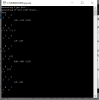
CP Explorer: Shows you, given the current permutation of corners, the key swap + location of DLF piece in parentheses if DLF is solved relative to DLB.
You can enter in moves in standard notation, though no rotations/wide moves/slice turns, and it'll update the position accordingly. There's also a special move "T" that just stands for a T perm, so you can set up single swap positions easily. Screenshot of it in action attached.

CP.py: stuff that makes CP Explorer work.
 

Attachments

  • Capture.PNG
    Capture.PNG
    23.4 KB · Views: 10
Last edited:
Back
Top