• Welcome to SpeedSolving.com — the world’s largest puzzle community!

    You’re currently browsing as a guest, which means you have limited access to discussions, resources, member profiles, and community features.

    Join 50,000+ cubers and puzzle enthusiasts from around the world to ask questions, share solves, improve faster, and be part of the community.

    Registration is free, fast, and easy — create your account today.

    Already a member? Log in here to hide this message and start participating.
No, recognition wouldn't be better. Think about it. You'd have to figure out where each piece is going in an instant. With my method, there are predetermined locations pieces need to be in, so recognition is basically instant. You just look, see where the pieces need to be, recognize your COLL at the same time and then execute your EPLL-COLL. This system is superior to COLL-EPLL by a long shot since COLL-EPLL can't be recognized fast enough.

Why is recognition for your method faster?

Your method:
1. Recognize COLL
2. Recall how edges are affected by that COLL and how they need to be permuted for the COLL alg to skip PLL
3. Permute edges with EPLL so they are in that position
4. Do COLL which will now skip PLL

Normal method:
1. Recognize COLL
2. Recall how edges are affected by that COLL so you will know the EPLL case after doing the alg
3. Do COLL alg
4. Do EPLL alg

In both cases you essentially recognize the same thing, and in both of them you do a COLL alg and an EPLL alg
 
New method for LSE(not really good,just posted for the sake of it)

1 EO (same)
2 Align the centers to their correct places( M' M M2 or solved) and fill the two empty edge slots(FD and BD) using only two algs,M' U2 M OR M U2 M'
3 Now you will be left with EPLL

Example:

Scramble: M' U2 M2 U M U' M2 U2 M' U' M U' M2
1 U' M' U' M' U2 M' U' M'
2 M2
M' U2 M U2 M U2 M'
3 M2 U M' U2 M U M2 U

Share your thoughts

EPLL is less efficient than L4E
 
Hey guys, I've been playing around with this for awhile. At first it was just an idea for 2GLL without learning all the algs but I realized this could easily become full ZB without that many algs.

I'll just start off with an example solve then explain what I'm doing if it isn't already obvious.

Scramble: U B2 L2 U' F2 L2 U F2 U' R2 U L D2 B L2 R2 D' R2 D2 B' F'

x2 y R2 U' L' F2 U' B2 // Cross
L U2 L' U L U' L' // First Pair
U R' U' R U' R' U R // Second Pair
L' U2 L U2 F R' F' R // Third Pair
d [F R' F' R] U [R U2 R' U' R U R'] // ZBLS
U' [R2 U R U R' U' R' U' R' U R'] U' [R U2 R' U2 L' U R U' R' L] // ZBLL

Yes that last part was one-look.

So basically you use sledgehammer or hedgeslammer to orient edges whilst tracking the pieces to build the last pair thus giving a less efficient ZBLS, then you use an edge permutation algorithm to give you the skip case for that specific COLL. You basically just have to memorize what each skip case is. In that case, I knew that I had to have a sort of two-piece bar in the back and the edges around the oriented corner along with the ladder had to look like a Z-perm.

So this is really just a 46 algorithm version of ZB. I hope no one came up with this already.

What if you fail to recognise the correct EP case and found yourself doing the LL in 3-looks rather than the 2 with COLL/EPLL ?
 
New method for LSE(not really good,just posted for the sake of it)

1 EO (same)
2 Align the centers to their correct places( M' M M2 or solved) and fill the two empty edge slots(FD and BD) using only two algs,M' U2 M OR M U2 M'
3 Now you will be left with EPLL

Example:

Scramble: M' U2 M2 U M U' M2 U2 M' U' M U' M2
1 U' M' U' M' U2 M' U' M'
2 M2
M' U2 M U2 M U2 M'
3 M2 U M' U2 M U M2 U

Share your thoughts

U2 M' U M' U2 M' U M' U M' U' M U' M2 U2 M' U2 M' is way more efficient. I think the only place to use EPLL in LSE is if u get F2L skip during EO.
 
That is why you need to insert fd and bd edges, to solve F2L

but that's very inefficient. if fd and bd solve by accident, then of course do EPLL. But solving fd bd on purpose instead of ul ur is bad.

edit: ninjad. @shadowslice: if they solve after F2B or EO then i will do EPLL.
 
Why is recognition for your method faster?

Your method:
1. Recognize COLL
2. Recall how edges are affected by that COLL and how they need to be permuted for the COLL alg to skip PLL
3. Permute edges with EPLL so they are in that position
4. Do COLL which will now skip PLL

Normal method:
1. Recognize COLL
2. Recall how edges are affected by that COLL so you will know the EPLL case after doing the alg
3. Do COLL alg
4. Do EPLL alg

In both cases you essentially recognize the same thing, and in both of them you do a COLL alg and an EPLL alg

Tell me, what's faster recogniton-wise, solving a U perm, or solving a U perm into a different U perm or a Z perm? Obviously it's easier to just solve a U perm. That's why recognition is faster for my method. It's easier to get pieces to predetermined positions where they line up with others than to see where they'll end up and what to do next.
 
What if you fail to recognise the correct EP case and found yourself doing the LL in 3-looks rather than the 2 with COLL/EPLL ?

Did you even read? That would make it 2-looks. The regular system is 1-LOOK. I don't know why people don't understand that. That would make it two-looks if you mess up. It's like messing up PLL. Initially it's one-looking, but it becomes 2-looking if you mess up. And if you consider everything, regular LL is 2-look, 2-alg. My method is 1-look, 2-alg. Messing up on OLL or PLL results in 3-look, 3-alg. Messing up on my method results in 2-looks, 3 algs. Ultimately, it's always a lower "look" count.
 
Kudz method

Idea (ZZxRoux hybrid, simmular to Briggs, but I haven't seen that yet)
1. EO+Roux FB (I think that is doable in preinspection or at least 2x2x1)
2. 2x1x1 block on R face w/ D parts (that might be extended to doing FD and BD edges too, since they are doable in max.5 moves and while doing it it can be done pretty frequently with U M2 or R U M2, which is not that much time consuming)
3. Last pair+CP
4. 1look EP+CO, 2GLL most time I think.

Pros:
"1LLL" possible
Movecount should be okey (sb?)
RUL M2 world
Big chance of micro skips
After FB it is almost 2gen
Maybe it is me or maybe it is great for lookahead
Easy to manipulate last etap

Cons:
CP on last pair (reco can suck)
Needs much inspection
FB could be a pain
If FD an BD are not in place cases might suck

I did example solve, but it wont be objective, cause I suck in blockbuilding, so without 1st etap
Scramble: R U R U2 R U2 R U2 R U' R2 U R2 U2 R' U' R U' R U' R2 U R' U' R2 M2 U' M2 U M2 U Rw2 U R' ofc i added M2s, just for my need

Solution:
2. R' Rw2 U' R' U2 R' U2 Rw2 U' R U R'
3. U R U' R'
4. R U' R' L' U2 L U L' U L R U2 R'
AUF: U'
Okey solve I guess
alg.cubing.net =)

Could sb pls give me movecount. I am starting to like this method, I might switch XDD. Depends on FB tho..
I need your opinion, if it is usable I will make a thread about it.

e: actually w/ DB and FD done this method is great. It is worth forcing. Maybe:
2. DB+FD+2x2x1?
 
Last edited:
Idea (ZZxRoux hybrid, simmular to Briggs, but I haven't seen that yet)
1. EO+Roux FB (I think that is doable in preinspection or at least 2x1x1)
2. 2x1x1 block on R face w/ D parts (that might be extended to doing FD and BD edges too, since they are doable in max.5 moves and while doing it it can be done pretty frequently with U M2 or R U M2, which is not that much time consuming)
3. Last pair+CP
4. 1look EP+CO, 2GLL most time I think.

Pros:
"1LLL" possible
Movecount should be okey (sb?)
RUL M2 world
Big chance of micro skips
After FB it is almost 2gen
Maybe it is me or maybe it is great for lookahead
Easy to manipulate last etap

Cons:
CP on last pair (reco can suck)
Needs much inspection
FB could be a pain
If FD an BD are not in place cases might suck

I did example solve, but it wont be objective, cause I suck in blockbuilding, so without 1st etap
Scramble: R U R U2 R U2 R U2 R U' R2 U R2 U2 R' U' R U' R U' R2 U R' U' R2 M2 U' M2 U M2 U Rw2 U R' ofc i added M2s, just for my need

Solution:
2. R' Rw2 U' R' U2 R' U2 Rw2 U' R U R'
3. U R U' R'
4. R U' R' L' U2 L U L' U L R U2 R'
AUF: U'
Okey solve I guess
alg.cubing.net =)

Could sb pls give me movecount. I am starting to like this method, I might switch XDD. Depends on FB tho..
I need your opinion, if it is usable I will make a thread about it.

e: actually w/ DB and FD done this method is great. It is worth forcing. Maybe:
2. DB+FD+2x1x1?

The DB+FB forcing makes the method essentially petrus :p.

That said it is a fun method and I think you would do pretty well to explore it some more.

The only 2 issues (1 with the method, one with the example solve) is that CPLS recog is not exactly the nicest thing in the world and that could be a hinderance with speedsolving (which is why Briggs and B2 have it in inspection). Also, you scrambled 2-gen so the CP is not affected (this is how i can do pseudo 2-gen in B2) so the LS will not be quite as nice as in that solve most of the time (I think 1/25 will be like that).

(also, do you mean a 2x2x1? Cause 2x1x1 is a pair.)

That said, if you develop a good recog for CPLS, then this would be a great method so i think you should definitely try it and develop it further :)

I scarmbled 2gen to do not affect EP.

e: I might be wrong, but this CP method is ~5 moves on avg, so that's why I like it

I know that this is skip to Petrus, doing this gives you less alg to learn.

I got one idea for CP reco, but first I need to learn it myself to see, if it is usable..

I meant 2x2x1 block sorry

Well the idea behind that was to take potential from every method.
With petrus block:
Screw CP, do WV+PLL
CP+2gen OLL+L6E
CP+RUM2 'LL'

Subsets usable with it
2GLL with FD and BD perm(basically L6E reco)
WV
PLL
L6E
CMLL as a CP
ZBLL without CP
more I think
CP reco should be done (if working) in few days. Could you please do movecount. Well If I would got CO reco new thread should be done =)

Umm.. The only way EP is not affected in a scramble is if you do 1-gen scrambles and 2 gen is preserve CP+EO. Pseudo 2-gen is just CP.

I think CPLS is around 5 moves on average. Maybe slightly more.

But yeah, I'm looking forward to the thread :)
 
Umm.. The only way EP is not affected in a scramble is if you do 1-gen scrambles and 2 gen is preserve CP+EO. Pseudo 2-gen is just CP.

I am new, okey? We can talk like this about CFOP XDDD.

Today I did few solves with that, method overall is okey and I think I got idea for CP,a bit combinatoric but...

e:
So I found it (I think) it will be really hard to write about it, but I can do that (I need to). I might do vid too. The only problem I got is that to reco CP is (if pair needs to be at DFR-FR spot) that to recognize it pair needs to be at UBL-UL spot, which probably will end with double AUF. Other thing is that corners can be oriented differently... For now I can say that reco is same (maybe better, cause no s/sa) as in COLLs, OLLCPs, CMLLs, etc

This method may do ZZ-Orbit better. We'll see. I am almost ready, writing it down will take at least one day.

e: well now I realized that I need I think 3 systems, cause CO agrrrr..
 
Last edited by a moderator:
Did you even read? That would make it 2-looks. The regular system is 1-LOOK. I don't know why people don't understand that. That would make it two-looks if you mess up. It's like messing up PLL. Initially it's one-looking, but it becomes 2-looking if you mess up. And if you consider everything, regular LL is 2-look, 2-alg. My method is 1-look, 2-alg. Messing up on OLL or PLL results in 3-look, 3-alg. Messing up on my method results in 2-looks, 3 algs. Ultimately, it's always a lower "look" count.

Okay.


Sent from my iPod touch using Tapatalk
 
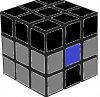
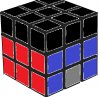
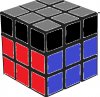
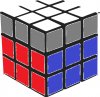
This is what I mean, since I think there is some misconception here (The grey is what it solves for):

F2B:
f2b.jpg
SMLE:
smle.jpg
OLL:
oll.jpg
PLL:
pll.jpg
 
Back
Top