Here's another method that might exist and/or might have like 267,876 algs
1) Solve the cross (the cross edges don't have to match with the centers)

1688840469208.png

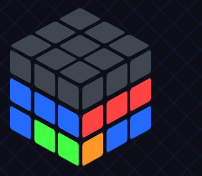
2) Do F2L to sole the middle layer but not the 1st layer
1688840682354.png

3) OLL
1688840839321.png

4) Solve Corners and/or Edges using U and D (Optional I think)

1688841026520.png

5) PBL
1688841061255.png

This could bee a good method for FMC.
I will call it cfOPL(Not a typo. Pronounced see-eff-op-l. C and F are lowercase because it is not completely solved. The PL stands for PBL or Permute layers.)
Tell me if there are any problems or if you have a better name. I was bored
It is more of a belt method variation than something completely original

 

Attachments

  • 1688840631635.png
    1688840631635.png
    19.2 KB · Views: 1
  • 1688840754767.png
    1688840754767.png
    20.1 KB · Views: 1
Here's another method that might exist and/or might have like 267,876 algs
1) Solve the cross (the cross edges don't have to match with the centers)
View attachment 25191
2) Do F2L to sole the middle layer but not the 1st layer
View attachment 25193
3) OLL
View attachment 25195
4) Solve Corners and/or Edges using U and D (Optional I think)
View attachment 25196
5) PBL
View attachment 25197
This could bee a good method for FMC.
I will call it cfOPL(Not a typo. Pronounced see-eff-op-l. C and F are lowercase because it is not completely solved. The PL stands for PBL or Permute layers.)
Tell me if there are any problems or if you have a better name. I was bored
It is more of a belt method variation than something completely original
This has been suggested before, I proposed the same method, and @Jorian Meeuse suggested that variation.


At least solve the side and the middle layer simultaneously, like F2L but you don't care what corner you use. This even makes for faster F2L on average because you have more options.
 
Last edited by a moderator:
Here's another method that might exist and/or might have like 267,876 algs
1) Solve the cross (the cross edges don't have to match with the centers)
View attachment 25191
2) Do F2L to sole the middle layer but not the 1st layer
View attachment 25193
3) OLL
View attachment 25195
4) Solve Corners and/or Edges using U and D (Optional I think)
View attachment 25196
5) PBL
View attachment 25197
This could bee a good method for FMC.
I will call it cfOPL(Not a typo. Pronounced see-eff-op-l. C and F are lowercase because it is not completely solved. The PL stands for PBL or Permute layers.)
Tell me if there are any problems or if you have a better name. I was bored
It is more of a belt method variation than something completely original


The issue with these types of methods is that while F2L in theory is a bit faster, PBL has a lot of algs and many are very unergonomic. You also have the potential of OLL “parity” which makes everything more annoying and slower
 
This has been suggested before, I proposed the same method, and @Jorian Meeuse suggested that variation.

Hey you're back!
 
Is this original?: I made an entire thread on this, all the pros and conns and stuff are explained in the article. Someone did post about this idea before me, it was not ripped off from them, I never saw their post until I already made my post, and I made all the algorithms, they never made any.

This method is called 3BL, and is a variant of CFOP. Instead of solving your cross, you still solve it, but only solve the white part to the white center, not the other side of the edge. You solve all the way up until PLL. Instead of a PLL algorithm, you do 1 of 132/68 (you’ll understand if you read the doc) PBL algorithms to solve the cross and the PLL stage!

Method Document: https://docs.google.com/document/u/0/d/1X36fviqTDq4BV1ZY1udoPfikENzc4tLdZ-LfknV8QcU/edit?pli=1
I posted this without seeing the method posted above lol.
 
Here's another method that might exist and/or might have like 267,876 algs
1) Solve the cross (the cross edges don't have to match with the centers)
View attachment 25191
2) Do F2L to sole the middle layer but not the 1st layer
View attachment 25193
3) OLL
View attachment 25195
4) Solve Corners and/or Edges using U and D (Optional I think)
View attachment 25196
5) PBL
View attachment 25197
This could bee a good method for FMC.
I will call it cfOPL(Not a typo. Pronounced see-eff-op-l. C and F are lowercase because it is not completely solved. The PL stands for PBL or Permute layers.)
Tell me if there are any problems or if you have a better name. I was bored
It is more of a belt method variation than something completely original
There should be around as many algorithms as Square-1 full PBL, which I can’t remember too well right now but I think 996 or 967 algorithms.
 
The issue with these types of methods is that while F2L in theory is a bit faster, PBL has a lot of algs and many are very unergonomic. You also have the potential of OLL “parity” which makes everything more annoying and slower
It would not have OLL parity because of the way that he says you solve it. Only possibly PLL parity.
 
Sorry for so many posts in a row, but I’m curious; Is there an already existing roux variant where you solve F2B, CMLL, L & R Edges, and M-Slice? I mad e a few algs for it with cube explorer when I thought of it. If you think I just described roux, roux has EO, I’m saying drop EO and solve the entire M-Slice at the end. This could also use a 2 look M-slice method too It should be around 32 algorithms for full M slice i think.
 
Sorry for so many posts in a row, but I’m curious; Is there an already existing roux variant where you solve F2B, CMLL, L & R Edges, and M-Slice? I mad e a few algs for it with cube explorer when I thought of it. If you think I just described roux, roux has EO, I’m saying drop EO and solve the entire M-Slice at the end. This could also use a 2 look M-slice method too It should be around 32 algorithms for full M slice i think.
The thing is, if EO is already done, you don't need to break up L and R in order to solve the M Edges.
If EO isn't done, those edges need to be taken out and reinserted again.

So you essentially change steps for the worse in every way.
 
I have an idea for a method

Xcross(pair in dbl)

make the last 3 pairs but they don’t have to be inserted into proper slots

OLL

PLL+misplaced pairs (105 algs including normal PLL)
110 if I'm not wrong, since you have to add the 5 Cases where PLL is done but the Slots are wrong.

So you gain 3 U moves(at most) for 5 times the PLL?
 
The thing is, if EO is already done, you don't need to break up L and R in order to solve the M Edges.
If EO isn't done, those edges need to be taken out and reinserted again.

So you essentially change steps for the worse in every way.
Yeah, that's a problem I had with it when I came up with it. I just wanted to suggest it, plus, if you get L & R already oriented, instead of doing EO, Just do L & R and then M-Slice. I dunno, I just thought of it.
 
Back
Top