• Welcome to SpeedSolving.com — the world’s largest puzzle community!

    You’re currently browsing as a guest, which means you have limited access to discussions, resources, member profiles, and community features.

    Join 50,000+ cubers and puzzle enthusiasts from around the world to ask questions, share solves, improve faster, and be part of the community.

    Registration is free, fast, and easy — create your account today.

    Already a member? Log in here to hide this message and start participating.
^
That Roux variation sound pretty similar to a variation of Waterman that Waterman himself proposed. You solve the first layer minus an edge followed by CLL. I've tried it out before. I always try to insert an edge for the second Roux block whole solving the top corners.


New (?) Roux Grip
I've always used the grip as described by Kirjava in his thread, but I used my pinky for single M moves and I overlay my fingers on the E slice over the D layer.

A while ago, a had a couple friends who I saw using doing H and Z perms with a different grip. They were alternating using there ring fingers to preform the M moves.

The grip they used is good for the permutations, but it doesn't give you freedom with the U layer for improvising while doing Roux L6E. From there grip I came up with a similar one. Since I'm more used to using my pinky than my ring finger, I held the two blocks with my ring fingers and thumbs while preforming the M moves with my two pinkies alternating. This frees up your pointer and middle finger on the left and right hand for doing double-flicks. This helps incase it is necessary to do two U2 turns (separated by an M move of course) because you can alternate which hand you double-flick with.
 
WV and Last 5 Edges 3x3 Method

So I have an idea for a new method.

1. 3-Piece Cross
2 3-Slot F2L
3. Winter Variation
4. Solve Last 5 Edges

Any ideas on how to get efficient algorithms?

I want to mainly use M-slices for the last step.

Also, how would I calculate the amount of cases of the last 5 edges?
 
Last edited:
Having a unsolved edge on D isn't efficient. It's like Petrus but not that good. Here's a way to solve last 5 edge in this. Place flipped D edge in DF, M' U2 M U M' U M ELL or if the piece is solved just ELL.
 
So I have an idea for a new method.

1. 3-Piece Cross
2 3-Slot F2L
3. Winter Variation
4. Solve Last 5 Edges

Any ideas on how to get efficient algorithms?

I want to mainly use M-slices for the last step.

Also, how would I calculate the amount of cases of the last 5 edges?

When do you plan to solve CP?
 
How about a ZooZoo method for ZZ+Roux? xD

Step 1: EO (NOT EOLine, just EO)

Step 2: <R,L,U,D> rouxblocks, this step is quite fun

From here there are 2 alternatives:

Step 3: COLL (40 algs) + one adjacent swap and one opposite swap, to give 42 algs in total
Step 4: LSE (with an EO skip, yay!)

or

Step 3: LSE (again with an EO skip)
Step 4: ZBLLs for all edges relatively solved (84 algs), thanks TDM

Not good for speed, but is quite a fun method. After solving the first block, second block could be solved with <L2,U,D> moves, which would be fun to do :p I will post example solves later. Just something random I thought of. Feel free to add example solves!
 
Last edited:
Step 4: Solve the pure corner twists, 7 algs
When did you solve CP? Also this isn't ZZ (it doesn't have an EOLine), it's just EORoux with no M/Rw during F2B.

My ZZ variant (which does have an EOLine): ZZ-1 (because it's like a square-1). Again, just a fun method which I invented because I don't have a square-1 yet but they look cool.

1- EOLine on left (cube is now <R,U,D>)
2- Cubeshape (i.e. orient corners and place the two edges that go in R. They don't have to permuted correctly) (can now be solved with <R2,U,D>, just like a square-1)
3- CO (separate corners into U and D layers)
4- EO (I usually use M' U2 M and x (R2 U2)3 x' for this, but it can be done with <R2,U,D>)
5- PUL (permute U layer. I'm generating <R2,U,D> algs for this now)
6- PDL (permute D layer. Do the last R2 in step 5 as an Lw2 and then permute the new U layer.

You can get parity in this method, either in one layer caused by the two R edges being swapped before steps 5 and 6 (use (R2 U2)3 for this), or parity in both layers (use M2 U2 M2 or / (-6,0) / (-6,0) / (0,6) / (0,6) / (0,6 /) for this). I've done some example solves already.
 
Last edited:
When did you solve CP? Also this isn't ZZ (it doesn't have an EOLine), it's just EORoux with no M/Rw during F2B.

Uh oh, that's a mistake, my bad :(
When did I call it ZZ? I just gave it such a name because it combined elements from both Roux and ZZ...

How many ZBLLs are there for all edges-relatively-solved cases?
 
Uh oh, that's a mistake, my bad :(
When did I call it ZZ? I just gave it such a name because it combined elements from both Roux and ZZ...

How many ZBLLs are there for all edges-relatively-solved cases?
You didn't call it ZZ, but I wouldn't really say it has elements of ZZ if it's got EO in it. More methods than just ZZ have an EO step.

I'm guessing:
7 OCLLs (8 including O, but O+H usually gives about the same number of algs as the other sets).
12 CPs (4 Ua perms, 4 Ub perms, 2 E perms, one X perm, one S)
7*12=84, including solved.

EDIT: More accurate calculations.
6*12=72
For the H OCLL, we have 2 for each A perm, two for E, one for X and one for S. 2*2+2+1+1=8
For the O OCLL, 1 for each A perm, one for E, one for X and one for S.
2*1+1+1+1=5
72+8+5=85, including solved.

The estimate was close.
 
Last edited:
You didn't call it ZZ, but I wouldn't really say it has elements of ZZ if it's got EO in it. More methods than just ZZ have an EO step.

I'm guessing:
7 OCLLs (8 including O, but O+H usually gives about the same number of algs as the other sets).
12 CPs (4 Ua perms, 4 Ub perms, 2 E perms, one X perm, one S)
7*12=84, including solved.

EDIT: More accurate calculations.
6*12=72
For the H OCLL, we have 2 for each A perm, two for E, one for X and one for S. 2*2+2+1+1=8
For the O OCLL, 1 for each A perm, one for E, one for X and one for S.
2*1+1+1+1=5
72+8+5=85, including solved.

The estimate was close.

Not just EO, even the 2 3x1x2 blocks are ZZ... well ZZ as well as Roux. But then the name doesn't matter, so forget that

Thanks for the number!
 
I was doing an example solve with your method:

L2 R F' B' U R U B U B2 R2 B2 L B2 D U F' U' R U'

x2 // Inspection
F' R' U R F' // EO
R2 D' R / U R' U' R U R' U' R // RBlock
M2 U' L2 U L U' L' / L' U' L U M2 U' M2 L' U L // LBlock
R U2 R' U' R U' R' U2 // UL+UR
U2 // Force possible LSE case
M2 M' U2 M // L4E
U2 R U2 L' U R' U' R L U' R' U R U2 R' U // ZZLL


You have to do COLL first (your first alternative to steps 3+4). If you do LSE then CLL, you'll have to end with ZZLL unless corners are permuted correctly.
Oh and you can't solve the second block with <L2,U,D> unless LF and LB are solved (or swapped).
 
Last edited:
NCR (No Cube Rotations) Method for the 3x3

Beginner Method:
1.) Left Roux block
2.) BD + 8EO
3.) Right Block
4.) COLL
5.) PLL

Advanced Method:
1.) Left Roux block
2.) EOF2L <R,r,U,M>
3.) OLS (WV,SV,EJF2L)
4.) PLL
________________________________________________________________

Pros:
-No cube rotations/regrips
-Good move count
-Easy to pick up, lots of room for growth
-Small algorithm investment (for beginner method)

Cons:
-Largely intuitive

Notes:
This method is a sort of mesh between all the popular methods today (Roux, Petrus, ZZ, CFOP). However, the thing that makes this method unique is the freedom of EOF2L, which can be done conveniently with no cube rotations or regrips. This way, the solver can move pieces faster and focus in only one area. This also makes it easy to transition from any method, using the former method's F2L as a base for EOF2L. The only downfall to this step is the amount of thinking that must be done. It is a large part of the solve and is highly intuitive, which can lead to slower solves than its algorithm-based counterparts.

The Roux block can easily be memorized during inspection and executed within the first couple seconds of the solve. Here the most thinking intensive part of the solve begins, diving right into EOF2L. This includes solving EO, DF/DB edges, and part of the right block. Beginners may find it easier to solve one edge and use the 8EO algs for reference until they master 2-gen EO. An advanced solver should be able to determine the orientation of all edges instantly (like Petrus or ZZ). An even more experienced solver may be able to orient the edges in conjunction with solving a block, or alternatively solve blocks carefully to influence EO. Personally, I orient the D edges first, then solve the rest and place the D edges. One can become proficient in recognition for EO and block building if they stick to one color scheme (ie. always white on D).

The EOF2L step is all just a big setup for OLS. If the edges are oriented and the solver has a good look-ahead, they can achieve an OLL skip every time. This has a noticeable difference in move count than inserting the pair, then doing COLL. For an advanced user, I suggest learning Winter/Summer Variation as well as EJF2L. Between these three sets, there are 70 algs (excluding mirrors for BR slot). Also, I have outlined which set is ideal for all EOF2L pair cases to help enhance look-ahead.

The last step is PLL, which I personally believe is underrated. In contrast to 2GLL, it solves the permutation of not only the edges, but also the corners at a low cost of moves. I realized that PLL is almost always a better choice than CP when it comes down to move count and an efficient solve (sorry ZZ-d). Plus, if you started as a CFOP user, you already have this alg set mastered.

To sum up, I think this method has a lot of potential. It is easy to pick up from another method, and gives a lot of room for growth and individuality (once people can get over the fact that a lot of the solve is intuitive). It offers a good move count and can be executed very fast. NCR may even have potential for one-handed solving. Most solves I have done fall around 55 STM. Overall, I think that NCR can be as fast as the top methods for people willing to become experienced with it.

Move Count:
Roux Block: ~8 STM
EOF2L: ?
OLS: 14.33 STM (by occurence)
PLL: 11.8 STM

8 + (?) + 14.33 + 11.8 = 34.13 + (?)

Therefore, your move count will vary greatly on how efficient you are at EOF2L. Usually, I average around 20 moves for this step, which yields a total of about 55.
Alg/Recog Sheets:
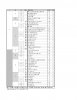
8EO if BD edge is solved, use chart to determine case: 8EOpic.jpg
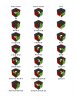
F2L cases with Edges Oriented optimized for each OLS set: EOF2L Casespic.jpg
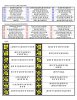
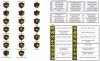
OLS Alg Sets: OLSpic.jpg
Build your own PLL set: http://algdb.net/Set/PLL

Notes:
-F2L cases are not organized in a certain order
-To determine WV/SV case, look at the corners in the order specified. A corner's orientation is a 0 if it is oriented correctly (up or down), a 1 if it is one turn clockwise from oriented correctly, and 2 if it is one turn anticlockwise from correct orientation. Do the alg backward for clarification
-The OLS recog scheme may seem dumb, but it lets you identify any case without AUF
-**None of these pictures are mine, most algs arent either and were compiled from different sources.
 
Last edited:
This is cool.

For EOF2L I like:
building a 1x2x2 block
EO with a mix of roux and FUF'
DB and DF
Build last pair for OLS

What do you consider the end of the EOF2L Step (for movecount)? I get ~15-18 moves if I consider EOF2L done when all Edges are oriented and only one F2L slot is left (pair not yet setup).

I messed around with doing EO by making a 1x2x2 and using R, r and U moves, it worked OK, but nothing too special. Usually I can get the EOF2L step in under 20 moves so 15-18 sounds about right. EOF2L is done when you have oriented all edges and with one slot open.

I count pairing the last slot part of OLS because i recognize 1 of 20 F2L cases with the edges oriented (20 out of 42 cases) and with that case determine whether the shortest solution for solving that pair will end up with either WV, SV, or EJF2L. With this in mind, i constructed a weighted (by occurence) average moves for pairing + OLS alg which comes out to be 14.33 STM. I just added the alg/recog sheets to my original post, go check them out. The one on this post is low quality
 

Attachments

  • Screen shot 2013-11-04 at 10.22.35 PM.jpg
    Screen shot 2013-11-04 at 10.22.35 PM.jpg
    92.4 KB · Views: 11
Last edited:
What about:

2x2x3 on DB
EO in that orientation
solve 1 front F2L pair and build another front F2L pair on U
insert pair while solving CO and CP (~130 algs)
EP5 as on http://athefre.110mb.com/Step5.html

in STM, this would be extremely efficient (~45 STM)
 
What about:

2x2x3 on DB
EO in that orientation
solve 1 front F2L pair and build another front F2L pair on U
insert pair while solving CO and CP (~130 algs)
EP5 as on http://athefre.110mb.com/Step5.html

in STM, this would be extremely efficient (~45 STM)
I was already thinking of something similar to this for FreeFOP, except instead of orienting edges after the 223, I'd do as you did until the last step, orient them at the same time as placing the last F2L edge using M and U, and end with EPLL. An alternative which had less algs was to only orient corners during the last F2L pair (WV/SV) and finish with PLL instead. I don't know how efficient either of these would be though.
 
What about:

2x2x3 on DB
EO in that orientation
solve 1 front F2L pair and build another front F2L pair on U
insert pair while solving CO and CP (~130 algs)
EP5 as on http://athefre.110mb.com/Step5.html

in STM, this would be extremely efficient (~45 STM)

The only criticism I have is solving the front block with F moves seems pretty awkward. I had another idea on how to work with EP that would only add 6 moves on average outlined here: Phasing + OLS
Would be a lot faster to do RUR'U' than recognize another alg, but taking in CO, CP, and EP is a lot in one step. I think it might be viable but apparently it wasnt too popular.

I was working on EOCP a while back and never finished it. I was working on breaking it up into two different steps, ie. (change CP only, change CP and 2 edges, change CP and 4 edges, change only 2 edges). I have CP down, but the number of EO cases is overwhelming from an alg perspective. There are 6 unique CP cases: 1 solved, and 5 different unsolved cases. I wont go into detail because it is complicated, but the CP changes every U or F move you make. So you have 6 unique CP cases and 64 unique CP cases for a grand total of 384 unique EOCP cases. The thing i really need help with is a viable recog system so I can cut down on the cases. From there I can manage and make algs myself.

Some things on recog and cases:
Edges:
1= UB, 2= UR, 3= UF, 4= UL, 5= FL, 6= FD, 7= FR

EO Cases (64)
0 Edges Misoriented (1)
2 Edges Misoriented (21)
0 on U
L- (5,6) (6,7)
Line- (5,7)
1 on U- (1,5) (1,6) (1,7) (2,5) (2,6) (2,7) (3,5) (3,6) (3,7) (4,5) (4,6) (4,7)
2 on U
L- (1,2) (1,4) (2,3) (3,4)
Line- (1,3) (2,4)
4 Edges Misoriented (35)
1 on U- (1,5,6,7) (2,5,6,7) (3,5,6,7) (4,5,6,7)
2 on U
L- (1,2,5,6) (1,2,5,7) (1,2,6,7) (1,4,5,6) (1,4,5,7) (1,4,6,7) (2,3,5,6) (2,3,5,7) (2,3,6,7) (3,4,5,6) (3,4,5,7) (3,4,6,7)
Line- (1,2,5,6) (1,3,5,7) (1,3,6,7) (2,4,5,6) (2,4,5,7) (2,4,6,7)
3 on U- (1,2,3,5) (1,2,3,6) (1,2,3,7) (1,2,4,5) (1,2,4,6) (1,2,4,7) (1,3,4,5) (1,3,4,6) (1,3,4,7) (2,3,4,5) (2,3,4,6) (2,3,4,7)
4 on U- (1,2,3,4)
6 Edges Misoriented (7)
3 on U- (1,2,3,5,6,7) (1,3,4,5,6,7) (1,3,4,5,6,7) (2,3,4,5,6,7)
4 on U- (1,2,3,4,5,6) (1,2,3,4,5,7) (1,2,3,4,6,7)
EOCP could potentially be even more efficient:
1.) 2x2x3 on BD
2.) EOCP
3.) Front block
4.) 2GLL (CO/EP)
 
Back
Top