
• Welcome to SpeedSolving.com — the world’s largest puzzle community!

    You’re currently browsing as a guest, which means you have limited access to discussions, resources, member profiles, and community features.

    Join 50,000+ cubers and puzzle enthusiasts from around the world to ask questions, share solves, improve faster, and be part of the community.

    Registration is free, fast, and easy — create your account today.

    Already a member? Log in here to hide this message and start participating.
Hi

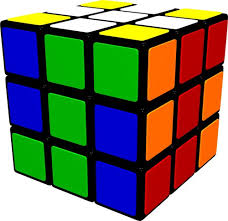
Here is a hybrid beginner method that was developed based on my years of cubing. It is based on understanding the cube and use less moves than classic layer by layer. It is quite intuitive and basically use just sexy moves and the inverse, keyhole, commutator concepts. The idea is this

1) Solve the cross intuitively
2) Solve 3 corners
3) solve 3 edges using keyholes (7 edges oriented and permutted)
4) Orient and Permute Remaining 5 edges ( Senarios: 1 Good, 4 bad, 3 Good, 2 bad)
5a) Invert cube with the unsolved 4 corners as bottom layer. Use the last unsolved corner at UFR position to solve last remaining corners (use only RUR’U’ and URU’R’). Use D moves as setup moves
5b) Solve till last 2 corners ( 3 scenarios: Solved, 1 twisted CW and another CCW and vice versa)
5c) Solve last 3 corners using commuters by forcing a skip.

Example 1:
Example 2 :

Feel free to ask me question. ( There are additional videos for orientation of last 5 edges)
 
Hi

Here is a hybrid beginner method that was developed based on my years of cubing. It is based on understanding the cube and use less moves than classic layer by layer. It is quite intuitive and basically use just sexy moves and the inverse, keyhole, commutator concepts. The idea is this

1) Solve the cross intuitively
2) Solve 3 corners
3) solve 3 edges using keyholes (7 edges oriented and permutted)
4) Orient and Permute Remaining 5 edges ( Senarios: 1 Good, 4 bad, 3 Good, 2 bad)
5a) Invert cube with the unsolved 4 corners as bottom layer. Use the last unsolved corner at UFR position to solve last remaining corners (use only RUR’U’ and URU’R’). Use D moves as setup moves
5b) Solve till last 2 corners ( 3 scenarios: Solved, 1 twisted CW and another CCW and vice versa)
5c) Solve last 3 corners using commuters by forcing a skip.

Example 1:
Example 2 :

Feel free to ask me question. ( There are additional videos for orientation of last 5 edges)
this looks a lot like 8355/sam/miris

 
this looks a lot like 8355/sam/miris

Basically it was developed independently as I already know edges first technique before I know what others had developed, I had another tutorial on that as well ( it use sledge hammer and inverse sledge hammer). The add on steps are as follows. I had 2 skip techniques for last 5 corners
 
Hi

Here is a hybrid beginner method that was developed based on my years of cubing. It is based on understanding the cube and use less moves than classic layer by layer. It is quite intuitive and basically use just sexy moves and the inverse, keyhole, commutator concepts. The idea is this

1) Solve the cross intuitively
2) Solve 3 corners
3) solve 3 edges using keyholes (7 edges oriented and permutted)
4) Orient and Permute Remaining 5 edges ( Senarios: 1 Good, 4 bad, 3 Good, 2 bad)
5a) Invert cube with the unsolved 4 corners as bottom layer. Use the last unsolved corner at UFR position to solve last remaining corners (use only RUR’U’ and URU’R’). Use D moves as setup moves
5b) Solve till last 2 corners ( 3 scenarios: Solved, 1 twisted CW and another CCW and vice versa)
5c) Solve last 3 corners using commuters by forcing a skip.

Example 1:
Example 2 :

Feel free to ask me question. ( There are additional videos for orientation of last 5 edges)
this looks a lot like 8355/sam/miris

Nope. It is 8355.
 
new os idea?
1. 2x2x3 in inspection
2. While in inspection choose either Mehta TDR, petrus, ZB, which ever fits the rest of the solve best.
 
Idk if someone probably already made this method now, but long time ago when I was still using Lazy CFOP, one of the side methods I made was ZZ-1/a.

ZZ-1/a is the same concept of ZZ-a, except that you use Anti-ZBLL.

Steps:
1. EOLine except you force top layer edges to be bad (unless...).
- It depends on certain cases, if all top layer edges are good, just do regular ZZ. If you have 1-3 good ones, it depends on certain EO cases. You choose the shortest move count, either ZZ-a or ZZ-1/a. Most in all, you always choose the shortest move count option.
2. ZZF2L
3. Anti-ZBLL
- During this time, I wasn't that advanced, so I just did CLL and Dotted ELL, in which I completely forgot how to do now.

Anti-ZBLL was a little helpful because last layer cases are easier to recognize. But that's the only Pro side I can think of.
Forcing yourself to do EOLine with bad top layer edges can be a trip, so it's best to just decide depending on the scramble, whether to do ZZ-a or ZZ-1/a, instead of just sticking with one method.
 
Ok so how about this

1. F2L without DF edge
2. L5EOP (20 algs)
3. ZBLL (493 algs)

With L5EOP since the corners arent solved, I feel like it could have better and faster algs. This method can result in a low move count as I got a sub10 with this method off camera. No I'm not gonna recon. I also feel like this can result in a low movecount solve.

9.937 D2 R2 U2 F2 L2 U2 B2 R' D2 R' B2 R F U F U F' L D2 B'
It does have some potential, but it also requires learning all of ZBLL.

A way to eliminate learning L5EOP is to do an EO 3/4 Cross (with the solved cross edges being in DL, DB, and DR, and therefore eliminating the need to do EO later in the solve), then do ZZF2L. You would then solve DF with <U> M' U2 M, then do ZBLL. So the steps would be:

1. EO 3/4 Cross
2. ZZF2L
3. Solve DF
4. ZBLL

But doing that basically just turns it into a worse ZZ-a. Anything where the first step is F2L is probably going to be worse than CFOP, just because F2L is already so optimized that there's almost no way to make it better. (At it's most basic level, obviously. You can always come up with new F2L algs, but you can't make the fundamental idea of how F2L works much better than it already is.)
I just said solve F2L, not do 3/4 of cross then F2L. I average easily sub-20 with this method because I know most L5eop cases and only about 100 ZBLL (rough estimate).
 
Back
Top