I don't know how many people will see this, but I wanted to make a post clarifying the differences among conjugation, transformation, and pseudo/non-matching blocks. Recently the terminology has been used interchangeably.
Conjugation:
Conjugation is very broad. This is the general term for A B A'. You perform a setup, do some moves, then undo the setup. You have performed a setup so that you can easily perform the moves in "B". The A setup moves cause the puzzle to be in an offset state, changing the appearance. Then you undo the offset later. However, traditionally there is no further intent within this setup move. It wasn't until around 10 years ago that the technique of offsetting a layer was applied with the intent to reduce large algorithm sets and the overall move count of a method. That is where the term Transformation comes in. It refers to this specific technique.
Transformation:
Transformation is the application of a conjugate to change the state of the cube to gain a large advantage in the future. This is a relatively new term in the community. Transformation technically is conjugation, but there is a big difference in the intent. The reason for the application is completely different from the traditional use of A B A' setup, moves, setup undo. In transformation you are intentionally trying to change a case into another. You are taking advantage of the state of the pieces to improve the rest of the solve. Transformation is used to reduce the number of moves and the number of cases in a method. Conjugation doesn't specifically refer to this intent; it is a general term. Transformation is a different technique under the conjugation umbrella.
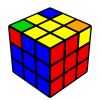
Setup = L' U R U' L U R' U'. This is one of the Sune orientation cases. But if you use the URF+UR pair and do an R' turn, you get the below state.
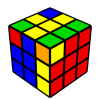
You have now transformed a Sune case into an L case. This is the L case solved by r U R U' L' U R' U'. So if you do r U R U' L' U R' U' then R (which undoes the R' turn in the last example), it will be solved.
Example methods/applications: NMLL, A2, CTLS, 42, and
other case reduction applications.
Pseudo/Non-Matching:
This is when pieces are put together in such a way that the colors don't match. This is referring to the building process. We are only talking about the current state of the pieces. It is all about what everything looks like right now - not about your future intent.
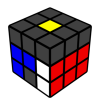
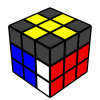
Example methods/applications: Roux, Heise, ZZ, FMC, A2, A3, and it can be used in pretty much everything else.
In summary, the difference is in intent. In language, we have many separate words to clarify intention and reason. It is important to understand the differences for clarity. When someone says "conjugated Roux" or "conjugated ZBLL", it isn't clear what is meant and it requires them to provide an explanation. Do they mean Roux/ZZ with non-matching blocks? For Roux, do they mean 42? For ZZ, do they mean CTLS? Or do they mean something else? Because pseudo/non-matching and transformation fall under conjugation, it is important to use the correct term for the specific technique that is being used.




