• Welcome to SpeedSolving.com — the world’s largest puzzle community!

    You’re currently browsing as a guest, which means you have limited access to discussions, resources, member profiles, and community features.

    Join 50,000+ cubers and puzzle enthusiasts from around the world to ask questions, share solves, improve faster, and be part of the community.

    Registration is free, fast, and easy — create your account today.

    Already a member? Log in here to hide this message and start participating.
@Shiv3r Seems pretty good, but L4E edge pairing could obviously use some work. What if you only solved and placed three cross edges in their spots, finished paring the rest of your edges, used Hexagonal Fransisco-keyhole F2L and solved the last 10-11 pieces however you wanted to? Would that make L4E edge pairing easier? It seems decent. Also this seriously needs a different name lol
 
Last edited:
Today I thought of a new method for 3x3.

The method is similar to corners first and is called FCL which stands for
1. First Layer (Build a first layer like you would in beginners method)
2. Corners (Orient and permute the corners in one step, similar to CLL on 2x2)
3. Last Eight Edges (Solve the edges in one step, 2 look and 1 look variations is available)

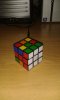
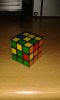
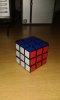
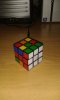
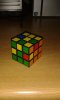
This is a graphic demonstration of what the cube should look like after each stage.

20170408_190514.jpg After First Layer.
20170408_190530.jpg After Corners.
20170408_190424.jpg After L8E. Solved!

If anyone is good at making algs please help me create the algs for this method. Also tell me in the comment section if you think this method will be better than the beginners method or just how good it generally will be.
 

Attachments

  • 20170408_190514 (1).jpg
    20170408_190514 (1).jpg
    393.9 KB · Views: 3
  • 20170408_190530.jpg
    20170408_190530.jpg
    440.5 KB · Views: 2
Today I thought of a new method for 3x3.

The method is similar to corners first and is called FCL which stands for
1. First Layer (Build a first layer like you would in beginners method)
2. Corners (Orient and permute the corners in one step, similar to CLL on 2x2)
3. Last Eight Edges (Solve the edges in one step, 2 look and 1 look variations is available)

This is a graphic demonstration of what the cube should look like after each stage.

View attachment 7758 After First Layer.
View attachment 7759 After Corners.
View attachment 7757 After L8E. Solved!

If anyone is good at making algs please help me create the algs for this method. Also tell me in the comment section if you think this method will be better than the beginners method or just how good it generally will be.
This is known, since 1982, as Waterman method.
 
Random probably bad method idea: New setup to Lewis Step 5
1: LR Centers
2: FB
3: D&B centers +DB edge
4: SB (K4/Edge pairing/Blockbuilding) + U&F Centers
5: Lewis Step 5
 
5LS means 5-Look solve. And no there's 0.5 look. I won't argue about that here let's just say a look is 1 recog 1 alg.

So CFOP is 7 Looks:
1 Cross
4 F2L
1 OLL
1 PLL

Roux is 7:
1 FB (You should be)
2 SB
1 CMLL
3 LSE

Petrus is 6:
2 2x2x3
1 EO
2 F2L
1 LL

ZZ is 6:
1 EOLine
4 F2L
1 LL

Even with 1LLL CFOP has 6 looks.
The lowest we got is 6. That's because our LSLL is always a 2 Look. CT reminds be of CFOP PLL/OLL. It's a 2LSLL just like how OP is a 2LLL. ZZ was a genius by doing EO and that drastically reduced ~4k algs into ~500 algs.
Now what can we do to reduced 1LSLL so that's it's manageable? Sure 1LLL is great and all but it only achieved a 6LS. We don't need to be restricted to LSLL we should be creative about this and not restrict ourselves. What can we do like how ZZ did EOLine to reduce the cases, what can we do to reduce the cases for LSLL so we can achieve 5LS?!

Edit: I did it. I made a 5LS or 5-Look Solve method. Whether you're interested oe just want to see how it works just go find the post 1LLSLL System that has 500 less algs than 1LLL. It's not. I've fixed my math. It's 4339 algs.
 
Random probably bad method idea: New setup to Lewis Step 5
1: LR Centers
2: FB
3: D&B centers +DB edge
4: SB (K4/Edge pairing/Blockbuilding) + U&F Centers
5: Lewis Step 5
This is similar to something I made for 4x4 a while ago. I did LR centers, then 3x3 blocks on like the squares for roux, then BD edge and D&B centers. Then, Centers, 323 and F2L. So, different finish, but similar way building up to it.
 
To begin, I'm assuming you mean "recognition" as recognizing a specific case with an algorithm commonly designated to it. I think the categorization of "look" in F2L is a bit murky due to lookahead. For example, if we can plan out the first one or two pairs in inspection? Shouldn't we count that planning as 1-look? In addition, what if we are able to plan our solution for an F2L pair without even having to recognizing the pair? To elaborate, once you get decent at lookahead, you should be able to track the following F2L pair as you are solving the current one. What this will do is allow you to find the pieces quicker, thus reducing pauses. What it won't necessarily do is allow you to recognize the case significantly quicker, at least in my experience. As I was learning to do lookahead, I could track the pieces, but I still paused just a bit to recognize the case I had. I had to recognize the case and execute the algorithm, your definition of a "look". However, once you get to a certain speed, you don't even need to track necessarily. You just see the positions of the pieces and work out what the next part of your solution without really having to necessarily track the pieces. Most notably, I'd say this can happen when either a corner or edge is in its right place. There's no point in tracking, you just know what's going to happen. You're not exactly "recognizing a case", so is it a "look"? In addition, what if you can predict PLL based on the OLL? Is it a look still? What if someone performed a cancellation in a transition between pairs? Is that still 2 looks, or just 1 look. There's so many algorithm/lookahead recognition strategies nowadays that it seems very difficult to really be able to categorize something as a "look".

For clarification, I'm putting your definition of "recognition" and adding "at-the-time recognition", which is what I interpreted it as. This basically means that it requires you to recognize the case when you see it. Some examples of how it could go in CFOP could be down to its greatest reduction:

1. Cross+F2L-1
2. Rest of F2L done via lookahead, no at-the-time recognition required
3. OLL
4. PLL

or even:

1. All of F2L done incredibly fluidly with lookahead. As you solve a pair, you are able to plan the next pair solution without having to do "at-the-time" recognition.
2. OLL
3. PLL

and to it's very limits:

1. All of F2L done via fluid lookahead.
2. 1LLL/ZBLL, as you said.

For elite speedcubers, I'd argue that with lookahead they are probably around the 4/3-look solve right now. Their F2L is so fluid and lacking recog pause that it seems like they just know the moves to do next, and there's no need to recognize a case, because it's just muscle memory after so much practice. I know I can do that sometimes.

Overall, my point is that what a "look" is nowadays has a ton of gray matter, and it's difficult to really discern what is considered a "look" in a solve anymore, especially on an elite level. That being said, I believe a complete 1LLL set would be interesting to develop, though I believe there'd be little following for it.

But then again, there's always Jabari...
 
  • Like
Reactions: TDM
To begin, I'm assuming you mean "recognition" as recognizing a specific case with an algorithm commonly designated to it. I think the categorization of "look" in F2L is a bit murky due to lookahead. For example, if we can plan out the first one or two pairs in inspection? Shouldn't we count that planning as 1-look? In addition, what if we are able to plan our solution for an F2L pair without even having to recognizing the pair? To elaborate, once you get decent at lookahead, you should be able to track the following F2L pair as you are solving the current one. What this will do is allow you to find the pieces quicker, thus reducing pauses. What it won't necessarily do is allow you to recognize the case significantly quicker, at least in my experience. As I was learning to do lookahead, I could track the pieces, but I still paused just a bit to recognize the case I had. I had to recognize the case and execute the algorithm, your definition of a "look". However, once you get to a certain speed, you don't even need to track necessarily. You just see the positions of the pieces and work out what the next part of your solution without really having to necessarily track the pieces. Most notably, I'd say this can happen when either a corner or edge is in its right place. There's no point in tracking, you just know what's going to happen. You're not exactly "recognizing a case", so is it a "look"? In addition, what if you can predict PLL based on the OLL? Is it a look still? What if someone performed a cancellation in a transition between pairs? Is that still 2 looks, or just 1 look. There's so many algorithm/lookahead recognition strategies nowadays that it seems very difficult to really be able to categorize something as a "look".

For clarification, I'm putting your definition of "recognition" and adding "at-the-time recognition", which is what I interpreted it as. This basically means that it requires you to recognize the case when you see it. Some examples of how it could go in CFOP could be down to its greatest reduction:

1. Cross+F2L-1
2. Rest of F2L done via lookahead, no at-the-time recognition required
3. OLL
4. PLL

or even:

1. All of F2L done incredibly fluidly with lookahead. As you solve a pair, you are able to plan the next pair solution without having to do "at-the-time" recognition.
2. OLL
3. PLL

and to it's very limits:

1. All of F2L done via fluid lookahead.
2. 1LLL/ZBLL, as you said.

For elite speedcubers, I'd argue that with lookahead they are probably around the 4/3-look solve right now. Their F2L is so fluid and lacking recog pause that it seems like they just know the moves to do next, and there's no need to recognize a case, because it's just muscle memory after so much practice. I know I can do that sometimes.

Overall, my point is that what a "look" is nowadays has a ton of gray matter, and it's difficult to really discern what is considered a "look" in a solve anymore, especially on an elite level. That being said, I believe a complete 1LLL set would be interesting to develop, though I believe there'd be little following for it.

But then again, there's always Jabari...

Yes if you can plan something out like a solution to 2 pairs with just I recog that is 1 Look. F2L in it's most "beginner form" is 4 Looks. You are correct to say that elite speedcubers have reduced some F2L case from 4 to 3 or even to 2 looks.

Just like how LL at its "basic form" is a 2 Look. We need some way to optimise F2L as it is still somewhat "4 looks".

What I define a look is 1 recog and 1 alg.

What the hell does an alg means since we solve some OLLs with a combination of 2 algs? It's kind of hard to explain this like how Sune F sexy F' is better than a 2 looking an OLL.

Okay let's say 1 look is when you recognize then you execute an alg until you can't recognize the next moves anymore. Lookahead does "skip" looks.

Let's say a look is like how many moves you do can blind before you need to stop and check the cube.
Technically SpeedBLD is a 1LS.

Predicting PLL is from OLL is a 1 Look! Because you can execute that algs w/o looking. But it's 2 algs?! Actually the term alg is more of the gray matter here. Tbh we're just solving the cube w/ 1 hell of a long alg.

To summarize a look is you recognize and the moves you execute w/o looking until you need to recognize.

Lookahead is a great "cheat" since we, well, LOOKAHEAD. Think about looking looking ahead in 5LS Method.
 
This is assuming no lookahead. In reality, counting the number of "looks" is absolutely pointless, since people aren't going to be pausing 4 times during F2L. In fact many people don't usually pause once during F2L. Counting pauses makes far more sense:

CFOP: 2 pauses (OLL recog, PLL recog)
Roux: 1 pause (CMLL recog)
ZZ: 1-2 pauses depending on LSLL variant

(this is assuming an intermediate level of solving, not including tricks like OLL/PLL/CMLL prediction. Many advanced solvers may not even need to pause at all)
 
Here's a crazy, not-quite-woken-up-yet-this-morning idea:
1. EOLine
2. Corners (this wouldn't need to be split in two, would it?)
3. L10E. This is the tricky one. The simple way would be use 3-gen setup moves to place 3 or 4 edges with U, H, or Z perms. That would essentially make this step 3 looks, for a total of 5, unless you get a skip. I haven't figured out the move count or even the alg count to do, for example, DR, DL, FR, and FL edges in one alg, then do an x' or y2 rotation and finish L6E in another single alg. I'm not at all convinced about the usefulness of this method as a speedsolving method, but it could meet the goal of 5 looks or less. You would be giving up a lot by being forced to solve the corners with RUL to preserve EOLine.
 
Last edited:
This is assuming no lookahead. In reality, counting the number of "looks" is absolutely pointless, since people aren't going to be pausing 4 times during F2L. In fact many people don't usually pause once during F2L. Counting pauses makes far more sense:

CFOP: 2 pauses (OLL recog, PLL recog)
Roux: 1 pause (CMLL recog)
ZZ: 1-2 pauses depending on LSLL variant

(this is assuming an intermediate level of solving, not including tricks like OLL/PLL/CMLL prediction. Many advanced solvers may not even need to pause at all)

Look is how much you can do brain dead that's why less looks can be "good". *Look is so arbirtrary and everyone seems to have diff
meanings. Let's just it's how much you do brain dead with one look at the cube. A literal look, how much can you discern from that info and how can you get while doing brain dead. That's why lookahead is great since we start looking to something else that's why less looks can be efficient(assuming you use an optimal alg). Looks can be sort of thought like a step. LIKE ONE. So the less of it is great. Like how 2Ling and 2x2 "is" less better than 1Ling it.
 
Here's a crazy, not-quite-woken-up-yet-this-morning idea:
1. EOLine
2. Corners (this wouldn't need to be split in two, would it?)
3. L10E. This is the tricky one. The simple way would be use 3-gen setup moves to place 3 or 4 edges with U, H, or Z perms. That would essentially make this step 3 looks, for a total of 5, unless you get a skip. I haven't figured out the move count or even the alg count to do, for example, DR, DL, FR, and FL edges in one alg, then do an x' or y2 rotation and finish L6E in another single alg. I'm not at all convinced about the usefulness of this method as a speedsolving method, but it could meet the goal of 5 looks or less. You would be giving up a lot by being forced to solve the corners with RUL to preserve EOLine.

Corners can be 1Looked but since edges parity are not solve there's 8! x 3^7 cases.

We also want method feasible. But that many algs just to master that method will take too long. Even if you did reduce the case during EOLine but I may be wrong.
 
Corners can be 1Looked but since edges parity are not solve there's 8! x 3^7 cases.

We also want method feasible. But that many algs just to master that method will take too long. Even if you did reduce the case during EOLine but I may be wrong.
L10E would almost certainly need to be split. I'm not much for cube math, but I'm certain that you would drastically reduce the number of cases by EO, and if you could do it in 2 looks, which I think is possible, that's still a total of 4 looks.
 
3 ideas:
CP with TSLE- use a TSLE tree (see below) to get to one of the 3 move cases and finish TSLE and CP with one alg.
http://gyroninja.net/files/tsle.pdf
Improved Hexagonal Francisco
1) CP and Hexagon- possible, but a stretch. My idea is to build the 1x2x3 on D at the back and insert DLF like in 2-gen redux
2a) 3 belt edges
2b) Insert last edge whilst forcing arrow 4-flip case (like BLS, optional)
3) L5C
4) L5E
Francisco style big cube method
I don't know if or how this would work.
 
Last edited:
Back
Top