• Welcome to SpeedSolving.com — the world’s largest puzzle community!

    You’re currently browsing as a guest, which means you have limited access to discussions, resources, member profiles, and community features.

    Join 50,000+ cubers and puzzle enthusiasts from around the world to ask questions, share solves, improve faster, and be part of the community.

    Registration is free, fast, and easy — create your account today.

    Already a member? Log in here to hide this message and start participating.
Status
Not open for further replies.
I will race these three algs. Thank you !

Well, while I'm at it...

I'm looking for two <RU> algs that twist UBL and DFR.
For the moment I use :
• R U R U2 R' L' U' L U' L' U2 L R U R2 to turn DFR clockwise
• R2 U' R' L' U2 L U L' U L R U2 R' U' R' to turn DFR counter-clockwise
There should be more efficient algorithms for this.
R U R' U R U2 R U2 R' U' R U' R' U2 R' U2
R U' R U2 R' U2 R' U' R U R U' R' U2 R' U2

R2 U R2 U R U' R' U' R U R2 U R2 U' R U'
R2 U R2 U R U' R U R2 U' R2 U' R' U R' U'

and inverses

U2 R U2 R U R' U R U2 R' U2 R' U' R U' R'
U2 R U2 R U R' U' R' U R U2 R U2 R' U R'

U R' U R2 U' R2 U' R' U R U R' U' R2 U' R2
U R U' R U R2 U R2 U' R' U R' U' R2 U' R2
 
how did you come up with this? i use R2 U', left antisune, right antisune, and inverse

I took the optimal two-twist alg [F' R D2 R' F, U2] and tried to convert some of the moves to wide moves, then cycled some stuff around.
 
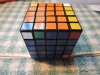
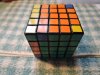
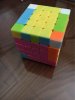
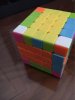
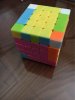
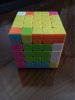
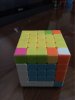
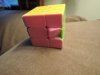
Can I have help on my 5x5 yellow pair I don't know what to do. (Edit: There a 3 pictures because I accidently put the same one in two times)
 

Attachments

  • RenderedContent-331F6AAA-ACBD-4D5D-A955-5B5FA78F5595.JPG
    RenderedContent-331F6AAA-ACBD-4D5D-A955-5B5FA78F5595.JPG
    72.1 KB · Views: 6
  • RenderedContent-CFCCA70B-080E-44DB-A5F1-448638DE1F5E.JPG
    RenderedContent-CFCCA70B-080E-44DB-A5F1-448638DE1F5E.JPG
    63.7 KB · Views: 5
  • RenderedContent-331F6AAA-ACBD-4D5D-A955-5B5FA78F5595.JPG
    RenderedContent-331F6AAA-ACBD-4D5D-A955-5B5FA78F5595.JPG
    72.1 KB · Views: 5
This one should be easy since I saw others do it on YouTube. I have 2 2 block bars on 2 sides(like you will see in the pictures). The other 2 are already solved
 

Attachments

  • RenderedContent-E95373B9-49E9-4353-A181-9B8AACEFC5CC.JPG
    RenderedContent-E95373B9-49E9-4353-A181-9B8AACEFC5CC.JPG
    68.8 KB · Views: 4
  • RenderedContent-5F94A560-EF68-4A15-B04E-5E6E2174CE5E.JPG
    RenderedContent-5F94A560-EF68-4A15-B04E-5E6E2174CE5E.JPG
    59.1 KB · Views: 3
Going based off of the first image:
z F2 y d2 R U R' F R' F' R d2 //Solve yellow and orange edge in BL
z' r2 B2 U2 l U2 r' U2 r U2 F2 r F2 l' B2 r2 //Same as 4x4 parity algorithm, but if you want to apply it to 7x7+ you need to be slightly creative
View on alg.cubing.net
There's probably a nicer alg for that specific case but 5x5 isn't a big focus of mine right now, so I wouldn't know. That should do unless you're trying to get fast.
 
There's probably a nicer alg for that specific case but 5x5 isn't a big focus of mine right now, so I wouldn't know.

I like the direct alg for this much more than the "OLL parity" algs, actually! It's pretty nice: r U2 r U2 F2 r F2 l' U2 l U2 r2.

This one should be easy since I saw others do it on YouTube. I have 2 2 block bars on 2 sides(like you will see in the pictures). The other 2 are already solved

I just linked two websites containing every last-two-edges case, and this case is somewhere in those lists if only you'd bothered to look!
 
I don't know if this is the best place to put it, but here goes nothing.
I use the lin method for square 1, and if you arent fimilarier (idk how to spell that) with the method what you do is do cubeshape, first 2 blocks and db edge, insert last edge and corner permutation, and finally epll. How many algs would it be to combine epll with insert last edge and corner permutation. If this already exists please point me towards what this is called. it would be like zbll for squan!
I've been calling it PLL+1 personally. My notes don't include odd parity cases, and there are:
-21 PLL
-12 solved CP (non-PLL, these fall into L5E)
-60 adj CP (non-PLL)
-12 diag CP (non-PLL)

So that's 105 total, so roughly double that (211 I think) if you're not doing CSP, and a smaller number if you reduce by symmetry. Rob has L5E algs: https://docs.google.com/spreadsheets/d/1QZaWYYQlvKzVapUHbAE0ImyboE3xLuxXZTsdmtYAGZE/edit#gid=0

I've been working on the rest of even parity PLL+1. It's mostly documented now, but not other-people friendly yet. I can post what I have at the weekend if you (or anyone else) really wants. However, it's listed by my experimental recognition method which I don't think anyone else is interested in (it's similar to what I discuss for (parity) LL on 4x4, link in my sig), no images yet and there won't be any time soon, and some of the algs could be improved probably.
WOW! thank you so much. I might learn csp then! I am still quite slow, but I know full lin and all of the top eplls so I would like to keep learning stuff while I improve. How much of this do you know (pll +1)? Also, how long did it take you to learn full csp? thanks for all of your help!
 
WOW! thank you so much. I might learn csp then! I am still quite slow, but I know full lin and all of the top eplls so I would like to keep learning stuff while I improve. How much of this do you know (pll +1)? Also, how long did it take you to learn full csp? thanks for all of your help!
PLL+1 algs: https://pastebin.com/6uucch7N. Not the nicest looking resource, but better than nothing. I'll improve it when I have time. I know very little of it so far, going to try to learn it before Worlds, but that might not go to plan.

I'm the wrong person to ask about how CSP takes to learn, I had to develop it and document it starting from not knowing cubeshape and so I knew some already by the time I actually started actively learning it, and I still didn't know full cubeshape at that point.
 
What is the alg for this parity?

Rotate that centre by 90° and another one by 90° in the opposite direction with a commutator like [M' U M, E]. Alternatively, just keep doing R U until it's solved. (Warning: may take a very long time.)
 
The M'U'*3 M'U2 M'U'*3 M' alg is too confusing because of the 3 MUs once you execute it. I don't want the commutator version and the M'U'*3 MU*3 version either since they're slow for me and inefficient. All the alg on algdb and SS wiki are not fingertrick friendly MU algs.
 
Status
Not open for further replies.
Back
Top