
Navigation
Install the app
How to install the app on iOS
Follow along with the video below to see how to install our site as a web app on your home screen.
Note: This feature may not be available in some browsers.
More options
-
 Welcome to SpeedSolving.com — the world’s largest puzzle community!
You’re currently browsing as a guest, which means you have limited access to discussions, resources, member profiles, and community features.
Join 50,000+ cubers and puzzle enthusiasts from around the world to ask questions, share solves, improve faster, and be part of the community.
Registration is free, fast, and easy — create your account today.
Already a member? Log in here to hide this message and start participating.
You are using an out of date browser. It may not display this or other websites correctly.
You should upgrade or use an alternative browser.
You should upgrade or use an alternative browser.
[Help Thread] Big Cubes Discussion


One Wheel
Legend
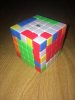
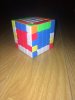
yes look at my paint View attachment 7362 (because i mix the cube)
Strictly speaking that's not a solvable position: one of the blue - white edges and one of the orange - yellow edges need to be flipped. But then you can put two tredges in the E layer and use variants of Uw [flip] Uw' to group edges and get down to a single edge, either with or without parity.

One Wheel
Legend
Try F' L F L' Dw' L' U' L F' L F L' Dw to pair up one orange - yellow wing and midge.
L' U L Dw' L' U' L F' L F L' Dw should complete the orange - yellow edge in the FR slot. The same principle works for the remaining edges.
L' U L Dw' L' U' L F' L F L' Dw should complete the orange - yellow edge in the FR slot. The same principle works for the remaining edges.

shadowslice e
Legend
There probably are algs which solve it directly but most people will solve one of the tredges and then sort out the last two (possibly with an alg but often still intuitively).I just made it and i took a picture!
But is there a specific algorithm for this configuration? Or you just take some algo and put the togetter?

cuber314159
Legend
I noticed other 7*7 solvers made a 5*5 center and then the edges, is this better than solving the 3*3 centers then reducing the 5*5 center so it's like solving the 3*3 centers using edge paring and if it is then can I have some annoying case algs
One Wheel
Legend
I noticed other 7*7 solvers made a 5*5 center and then the edges, is this better than solving the 3*3 centers then reducing the 5*5 center so it's like solving the 3*3 centers using edge paring and if it is then can I have some annoying case algs
I'm not sure I follow. Are you talking about using Yau or Hoya,and pairing up a few edges before center reduction is complete, or are you talking about a different method of center reduction?
cuber314159
Legend
I don't know what method it is I just pair the 2' ' edges to solve the 5*5 centers
CubingGenius
Regular
- Joined
- Jul 3, 2016
- Messages
- 238
I'm not very good at 5x5. This is what I do at the moment:
- Solve 2 opposite centres and put them on the L and R face
- Pair up 2 edges that don't have L/R colour for EOline and place them in DL and DR
- Solve the other 4 centres while preserving the 2 edges
- Pair up the edges while solving and preserving EO (EOpairing)
- Do a D move and solve like a 3x3 with EOline complete
The fourth step at the end is very difficult though. Does anyone have some EOpairing 5x5 algorithms that would be useful, especially for L4E?
One Wheel
Legend
I'm not very good at 5x5. This is what I do at the moment:
- Solve 2 opposite centres and put them on the L and R face
- Pair up 2 edges that don't have L/R colour for EOline and place them in DL and DR
- Solve the other 4 centres while preserving the 2 edges
- Pair up the edges while solving and preserving EO (EOpairing)
- Do a D move and solve like a 3x3 with EOline complete
The fourth step at the end is very difficult though. Does anyone have some EOpairing 5x5 algorithms that would be useful, especially for L4E?
ZZ is a great method for 3x3, but my understanding is that the general consensus is that it really doesn't transfer well to bigger cubes. I personally recommend the following Yau variant:
1. Solve two opposite centers on R and L (cross color and opposite)
2. Solve 3 cross edges on M slice, placing on left as they are solved.
3. Put cross on the bottom and solve remaining cross edge. If a way to do this while preserving the centers is obvious, do so then place the final cross edge using a F or R move as appropriate. Otherwise free slice and place the final cross piece using some variant of R U R U' R2.
4. Solve next 4 edges using free slice. Place edges in U layer when solved.
5. Restore centers, then solve next 3 edges by:
a) placing a scrambled edge in U layer, free slice, replace solved edge with scrambled edge from U layer, restore centers. Or
b) slice, flip (R U R' F R' F' R), slice back.
6. Final edge will be solved or have edge parity. If one of the colors on an edge with edge parity is your LL color, solve it after F2L, otherwise do it now.
7. F2L
8. OLL
8. PLL
Take my advice with more than a few grains of salt: I'm currently running barely sub-3:30 on 5x5, although I think in relative terms my best puzzle is either 4x4 at about 1:55 or 5x5 at about 3:25-3:30.
cuber314159
Legend
I am also sub 3:30 usually on 5x5x5 but my method is simply as follows:ZZ is a great method for 3x3, but my understanding is that the general consensus is that it really doesn't transfer well to bigger cubes. I personally recommend the following Yau variant:
1. Solve two opposite centers on R and L (cross color and opposite)
2. Solve 3 cross edges on M slice, placing on left as they are solved.
3. Put cross on the bottom and solve remaining cross edge. If a way to do this while preserving the centers is obvious, do so then place the final cross edge using a F or R move as appropriate. Otherwise free slice and place the final cross piece using some variant of R U R U' R2.
4. Solve next 4 edges using free slice. Place edges in U layer when solved.
5. Restore centers, then solve next 3 edges by:
a) placing a scrambled edge in U layer, free slice, replace solved edge with scrambled edge from U layer, restore centers. Or
b) slice, flip (R U R' F R' F' R), slice back.
6. Final edge will be solved or have edge parity. If one of the colors on an edge with edge parity is your LL color, solve it after F2L, otherwise do it now.
7. F2L
8. OLL
8. PLL
Take my advice with more than a few grains of salt: I'm currently running barely sub-3:30 on 5x5, although I think in relative terms my best puzzle is either 4x4 at about 1:55 or 5x5 at about 3:25-3:30.
Solve all six centres
Solve all 12 edges, parity algorithm comes in useful for the last edge
Cross
F2L
OLL
OLL
I would possibly consider learning to pair 2 edges during the last two centres but I don't generally do that unless it is obvious how to (as in watching someone who does not use F2L ignore an easy pair)

GenTheSnail
Veteran
I'm not super bad at 5x5 (sub-2:30ish) but I just go freeslice->cfop even though I main zz on 3x3.I'm not very good at 5x5. This is what I do at the moment:
- Solve 2 opposite centres and put them on the L and R face
- Pair up 2 edges that don't have L/R colour for EOline and place them in DL and DR
- Solve the other 4 centres while preserving the 2 edges
- Pair up the edges while solving and preserving EO (EOpairing)
- Do a D move and solve like a 3x3 with EOline complete
The fourth step at the end is very difficult though. Does anyone have some EOpairing 5x5 algorithms that would be useful, especially for L4E?
Over in the Hoya Discussion, there was some talk a little bit ago about big cube ZZ. You might want to check that out.
@AlphaSheep had a fairly detailed method.

AlphaSheep
Veteran
From all of my experimentation, it seems that preserving EO during pairing uses more moves than solving EO afterwards, and messes up lookahead (I think lookahead is more important than anything else during big cube edges) . Your edges on D are already oriented, so if you push two oriented edges to BR and BL during pairing, then all of your bad edges will be in U and FR and FL. That gives almost instant recognition with practice, and you can orient them all in very few moves (often around 4 moves).The fourth step at the end is very difficult though. Does anyone have some EOpairing 5x5 algorithms that would be useful, especially for L4E?
CubingGenius
Regular
- Joined
- Jul 3, 2016
- Messages
- 238
So should I do something like this?
- Solve D, B, L and R centres
- Solve DF and DB edge pairs and put them in DL and DR
- Solve the last 2 centres
- Pair 3 edge pairs, orient them and place them in DR, BL and BR
- Pair up the rest of the edge pairs whilst preserving EO of the other edges made in the last few steps and then orient them
- Do a D'/D move to complete EOline
- ZZF2L
- COLL/EPLL for 4x4/6x6 followed by EPLL+parity, ZBLL/COLL+EPLL for 5x5/7x7
Sounds good?
One Wheel
Legend
I'm just getting started on 7x7. Are there any wrong ways to do centers? At this point my order is a 3x1 block attached to the center, then expand that to 3x5 using 3x1 blocks, and finally add 2 5x1 blocks. Occasionally I'll see a case that will allow me to use 4x1 or 4x2 blocks to build up to 4x4, 4x5, and finally add a 5x1 to finish the center.

sqAree
Veteran
I'm just getting started on 7x7. Are there any wrong ways to do centers? At this point my order is a 3x1 block attached to the center, then expand that to 3x5 using 3x1 blocks, and finally add 2 5x1 blocks. Occasionally I'll see a case that will allow me to use 4x1 or 4x2 blocks to build up to 4x4, 4x5, and finally add a 5x1 to finish the center.
There are many possible ways to do 7x7 centers but if they're good or not always depends on the situation on the cube. Only use a certain way when it is efficient.
But the standard way is center line -> 4 more lines (line = 5x1 block).

Octopanda
Member
I average 5 minutes with the 5x5, 10 minutes with the 6x6, and 14 minutes with the 7x7. Is it just a lot of practice with bigger cubes that helps you get faster? Or is there something that I'm missing? I'm currently solving the centers, then freestyle the first 8 edges and then regularly deal with the last 4, do my parity (if needed), and then solve like a 3x3.
S
Scruggsy13
Guest
I average 5 minutes with the 5x5, 10 minutes with the 6x6, and 14 minutes with the 7x7. Is it just a lot of practice with bigger cubes that helps you get faster? Or is there something that I'm missing? I'm currently solving the centers, then freestyle the first 8 edges and then regularly deal with the last 4, do my parity (if needed), and then solve like a 3x3.
tl;dr - yes, you need to practice a lot
- Use good cubes. Hardware is tremendously important for big cubes.
- Be comfortable with color neutral centers. If there's a block of centers already solved, use it. Don't restrict yourself to one or two colors.
- Be efficient with your edges. Solve four to the U layer, flip the cube over, and solve the next four. That way you can minimize the number of rotations you need to do.
- I solve edges in groups. By this I mean I have three edge groups: yellow edges, white edges, and E-slice edges. I'll solve, say, all of the yellow ones first, followed by all of the white ones, followed by the last four. I don't always use this order, but (at least for me) it helps me minimize pauses in edges because I only have to focus on certain pieces. You may not find this helpful, but I do.
- You need to get used to 3x3 stage. It's only a 3x3, but it still slows you down if you're using crappy algorithms that are not well suited for big cubes (e.g. <M, U> algorithms).
But yeah, getting good at big cubes mostly comes down to practice and experimentation.
One Wheel
Legend
- I solve edges in groups. By this I mean I have three edge groups: yellow edges, white edges, and E-slice edges. I'll solve, say, all of the yellow ones first, followed by all of the white ones, followed by the last four. I don't always use this order, but (at least for me) it helps me minimize pauses in edges because I only have to focus on certain pieces. You may not find this helpful, but I do.
If you save one opposite cross color for your last edge on 6x6 then you can finish f2l and then figure out whether you need to switch inner or outer wings if you end up with edge parity. That way you don't have to do 2 OLL parity algs.
Similar threads

- Replies
- 3
- Views
- 955


- Replies
- 4
- Views
- 405


- Replies
- 4
- Views
- 883

- Replies
- 1
- Views
- 488