Sub1Hour
Veteran
Treat each layer of edges like 5x5 edges. Think about it as 3 5x5 edges stacked on top of each other. Just do slice flip slice and such until you get them solved. (parity is highly likely)How do I get the last 2 edges on a 9x9?

Follow along with the video below to see how to install our site as a web app on your home screen.
Note: This feature may not be available in some browsers.

Treat each layer of edges like 5x5 edges. Think about it as 3 5x5 edges stacked on top of each other. Just do slice flip slice and such until you get them solved. (parity is highly likely)How do I get the last 2 edges on a 9x9?

How do I get the last 2 edges on a 9x9?


Flipping is generally considered the best way to solve this, but here are some alternatives:Hello!
I have a doubt about an edge parity configuration.
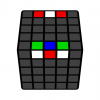
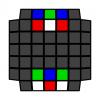
As you can see from the pics, it's simply the (Rw2 F2 U2 Rw2 U2 F2 Rw2) method, but with a flipped edge.
I'd like to know if there is a direct algorithm to solve this case, instead of flipping an edge and than proceed as per above.
Thanks!


Yeah, that sounds about right. If you don't like yau there is another method called Hoya where its got similar principles as yau like making cross before finishing edges and 3-2-3 can also be used. Its a fun method but I prefer yau on 4x4 and redux for 5-7Good question. Let's go through every step of Yau to see why it is used by all the top 4x4 solvers. The first step is first two centers.This is the same as redux except that if you are not color neutral, you are limited to white and yellow. This might seem bad but because the centers on a 4x4 are so simple compared to other big cubes, the difference is almost nonexistent. The next step is to build 3 cross edges on the center. This is very efficient especially in comparison to free slice edge pairing. The next step is the last 4 centers. As you mentioned, you are kind of limited by the cross edges. But again, 4x4 centers are very simple. I would say you are only adding about 8 moves to the centers. Next is the last cross edge, which is basically just to finish up the cross for later. After that, you have the last 8 edges, which can be done quickly because you don't have to look at the bottom. Finally, you have 3x3 stage, which is way better (if you use CFOP). The cross is already done, and on big cubes, inspecting the cross and performing it quickly is one of the hardest parts of 3x3 stage. everything after is basically the same.
So, to recap-
Also, you were wondering about the move count. I believe Yau has less moves than redux, maybe by about 5-10 less (depends on parity).
- First two centers are barely worse if at all.
- First 3 edges are super efficient.
- Last four centers are slightly worse.
- Last cross edge is not anything super different.
- Remaining edges can be done very fast with 3-2-3 or other pairing methods, and you don't have to look at the bottom.
- 3x3 stage is much faster and easier for lookahead.
Psst this thread is for 5/6/7; you should've posted this in the thread for 4.What makes Yau so much greater than redux on 4x4? It seems weird to just solve three edges. It majorly bandages the cube and turns F, U, B, and D moves into (adjust L layer) F/U/B/D. It just seems like it majorly shoots up the move-count for no real benefit.
Here's four scrambles with solutions up to reduction+cross with both redux and Yau; guess which one took 7.5 moves less on average.I believe Yau has less moves than redux, maybe by about 5-10 less (depends on parity).

It says in OP's post you can talk about 4x4.Psst this thread is for 5/6/7; you should've posted this in the thread for 4.


There’s a method called 4z4 but i personally don’t know if it’s worth it.Yau works for Cfop and zz varients

It would be very hard to do ZZ as you wouldn't get inspection time for EO.Yau works for Cfop and zz varients