Reed Merrill
Regular
Agreed, but it might not be very likely, seems like they're more into ZZ over there  . Waffo uses roux though!
Follow along with the video below to see how to install our site as a web app on your home screen.
Note: This feature may not be available in some browsers.
. Waffo uses roux though!


I believe the consensus was that it encited too much negativityhttps://www.speedsolving.com/forum/threads/2016-forum-awards.62882/
Why did no one do this for 2017?
A classmate just told me that the cutoff for 4×4×4 at Singapore Open dropped from 70 seconds to 60 seconds…

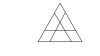
Jing Pyraminxis there a tetrahedron puzzle where each side looks like this?
(not a pyraminx)

Found this alg for an A perm, thought it was cool:
Aa: (y') r2 U r2 U' r2 U' D r2 U' r2 U r2 D' U
Ab: (y) D U ' r2 U' r2 U r2 D' U r2 U r2 U' r2 U'
Got the idea from earlier when someone mentioned using the wide R turn T perm for their A perms and I wondered if it could be applied to the (R U) T perm that I had learned earlier this year. I really like it as a non-rotation A perm (I always despised the original A perms specifically because of their rotation beforehand). I actually used it in a comp earlier this week. It's not the most amazing because it is a very wide turning alg but I think it has a nice flow to it.
Edit: Last move on Aa could be an E slice move, if you're trying to fingertrick it. Same for the first move of Ab


"All WCA Events Completion" ClubCould someone please explain the different levels of cubing members when people say either "Platinum, Gold etc. Members" I know what and how someone gets the platinum level, but the rest I have not been able to find any information on. Thank you all very much in advance for taking the time to help answer.
Thanks, IK I wasn't the one asking but I had wondered before. Is there an up to date version?
Thank you @Mike Hughey very much for the link.

Can you give an example? I'm familiar with those terms as logical fallacies but I don't think I've seen them used in the context of puzzles.Since I think I have enough reputation on this forum that I can sacrifice some of it by disagreeing with existing convention: I think "false equivalence" and "false equivocation", as applied to puzzles with identical pieces, are bad and misleading terms and people should stop using them. The problem now is to come up with a sufficiently catchy replacement term, I guess.
(I've mentioned this (once) in r/cubers before and maybe I hadn't built up enough of a reputation there as "that guy who knows a lot about puzzle theory", because people started arguing back with horrendously shaky arguments demonstrating exactly why I disliked those terms.)
That's one example, although I don't think it's a common usage. And calling apparent corner twists "parity" gets me too, because the definition of the word "parity" came from mathematics and it means whether something is even or odd, nothing more.Ok, I tested out my Google before posting, and I found a post where someone refers to what some call "parity" involving a twisted single-coloured corner on a mastermorphix as "false equivalency". I agree with you, "false equivalency" is a terrible term here, but I also agree that "parity".
As I understand them, they're applied to puzzles with identical parts that can be swapped, e.g. the edges of a mastermorphix. (And like you've pointed out, depending on the exact stickering, a sudoku cube might have identical pieces too.) Swapping such pieces, on a puzzle that has a parity constraint, then leads to a "parity-like" situation where you have to do the seemingly impossible task of swapping only two pieces. The solution is to do a pair of 2-cycles instead, which is an even permutation.Can you give an example? I'm familiar with those terms as logical fallacies but I don't think I've seen them used in the context of puzzles.