
Navigation
Install the app
How to install the app on iOS
Follow along with the video below to see how to install our site as a web app on your home screen.
Note: This feature may not be available in some browsers.
More options
-
 Welcome to SpeedSolving.com — the world’s largest puzzle community!
You’re currently browsing as a guest, which means you have limited access to discussions, resources, member profiles, and community features.
Join 50,000+ cubers and puzzle enthusiasts from around the world to ask questions, share solves, improve faster, and be part of the community.
Registration is free, fast, and easy — create your account today.
Already a member? Log in here to hide this message and start participating.
You are using an out of date browser. It may not display this or other websites correctly.
You should upgrade or use an alternative browser.
You should upgrade or use an alternative browser.
ZZ-CT Thread
- Thread starter 4Chan
- Start date
PapaSmurf
Veteran
Just do ZBLL with some modifications. CT isn't great when compared with it and yes 493 algs is a lot, but it's easily manageable by anyone who can learn algs properly (which includes you, person reading this).
ribbon method
Regular
- Joined
- Aug 3, 2020
- Messages
- 86
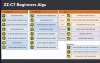
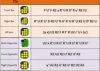
I found a 2look version of ttll or begginers version if you want to call it that i found it 9n reddit and I will attach the regular document and close up shots as well see if you could optimize them
Attachments

Username: Username:
Veteran
Beginner algs are beginner algs, they aren't meant to be optimized, if you want, see Gyroninja's algs here: https://gyroninja.net/zzct/zzct.html#page, but those algs can be optimized as well.I found a 2look version of ttll or begginers version if you want to call it that i found it 9n reddit and I will attach the regular document and close up shots as well see if you could optimize them
(lol optimizing meant genning new algs, not really pumping up existing algs, I could probably gen some algs)
Last edited:
zzcuberman
Veteran
- Joined
- Jul 27, 2020
- Messages
- 314
Generating and getting good algs takes time just asking someone isnt gonna get it done. They have to be motivated lol!

@kubesolver has joined the chatGenerating and getting good algs takes time just asking someone isnt gonna get it done. They have to be motivated lol!

kubesolver
Premium Member
- Joined
- Nov 15, 2019
- Messages
- 446
not sure what you mean@kubesolver has joined the chat
 yes, the kubesolver can gen algs.
But in the process of "Generating and getting good algs" generating is like <1% and getting the good ones is >99% work.
zzcuberman
Veteran
- Joined
- Jul 27, 2020
- Messages
- 314
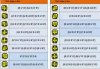
These are my bar cases! Exchange algs anyone? so i can get a very up to date list! If you look at any of them specifically the ones i generated are ok but the last one in the right bar list is WAYY better then anyones ive seen and its 14 moves. The list goes with Justin taylors ttll list.
Attachments

TheSlykrCubr
Veteran
About to start TSLE, wish me luck. I would also like to know what N, Cw and Ccw stand for, since the website that i'm using to learn the algorithms splits the cases up into those 3.

GenTheSnail
Veteran
"Cw" and "Ccw" stand for "Clockwise" and "Counter Clockwise". Those terms usually apply to the direction of the edge cycles, but it could also refer to the direction of the corner cycles. However, given that this is TSLE and there aren't edge or corner cycles to worry about, I think they mean the direction of the corner twists. If you read through the earlier parts of this thread, there are examples of people using "+" and "-" to show twist direction, and "o" to show that the corner isn't twisted (which I think was how the algs on gyroninja's site were organized and labeled). I would assume that in this case "N" means that the corner has not been twisted.About to start TSLE, wish me luck. I would also like to know what N, Cw and Ccw stand for, since the website that i'm using to learn the algorithms splits the cases up into those 3.
zzcuberman
Veteran
- Joined
- Jul 27, 2020
- Messages
- 314
I use C++
TheSlykrCubr
Veteran
thanks. do you know a way to put tsle and tell into cfop? Just because I'm no good at eo steps
ribbon method
Regular
- Joined
- Aug 3, 2020
- Messages
- 86
if that's what u want then do ribbon methodthanks. do you know a way to put tsle and tell into cfop? Just because I'm no good at eo steps
zzcuberman
Veteran
- Joined
- Jul 27, 2020
- Messages
- 314
It would be way less efficient to be honest

OreKehStrah
Veteran
TSLE is irrelevant IMO. Instead just make one of the F2L pairs using either the correct corner or pick one of the four last layer corners and treat the yellow sticker as if it was the white sticker of the correct corner and form the pair with it instead. When done right, it should give you a normal OLL case when F2L is complete, only with a LL corner in the F2L and an F2L corner in the LL. You can then do OLL and TTLL. This gives you more choices during your F2L and avoids the need to learn anything new besides TTLL.thanks. do you know a way to put tsle and tell into cfop? Just because I'm no good at eo steps
zzcuberman
Veteran
- Joined
- Jul 27, 2020
- Messages
- 314
Thats wasted movesTSLE is irrelevant IMO. Instead just make one of the F2L pairs using either the correct corner or pick one of the four last layer corners and treat the yellow sticker as if it was the white sticker of the correct corner and form the pair with it instead. When done right, it should give you a normal OLL case when F2L is complete, only with a LL corner in the F2L and an F2L corner in the LL. You can then do OLL and TTLL. This gives you more choices during your F2L and avoids the need to learn anything new besides TTLL.
OreKehStrah
Veteran
How is it wasted moves? There are many times where you can do a 3-4 move solution to solve an F2L edge plus a LL corner oriented correctly.Thats wasted moves
Plus Execution Speed > Movecount
Need proof? Just a simple example is how the standard U perm went from 9 to 11 moves, because the 11 move solution is faster.
zzcuberman
Veteran
- Joined
- Jul 27, 2020
- Messages
- 314
Inserting the corner with the edge and doing oll and pll/ttll is a waste of 3 moves when you can just orient all the corners and insert at the same timeHow is it wasted moves? There are many times where you can do a 3-4 move solution to solve an F2L edge plus a LL corner oriented correctly.
Plus Execution Speed > Movecount
Need proof? Just a simple example is how the standard U perm went from 9 to 11 moves, because the 11 move solution is faster.
zzcuberman
Veteran
- Joined
- Jul 27, 2020
- Messages
- 314
Also the S slice U perm is gawd tier if you can do it right
OreKehStrah
Veteran
3 moves is insignificant in comparison to the time it takes to do TSLE. You have to do a 3-4 move insert just to randomly insert the edge into the slot, then take time to recognize and execute on the TSLE case, taking far more time. Plus you have less options this way as you lowkey have to insert in the FR slot unless you want to do mirroring, which would be a lot of annoying work for little benefit.Inserting the corner with the edge and doing oll and pll/ttll is a waste of 3 moves when you can just orient all the corners and insert at the same time
Also I know about the U perms. I use three different kinds of algs, just depending on the AUF.
Similar threads

- Replies
- 34
- Views
- 693


- Replies
- 21
- Views
- 1,092


- Replies
- 2
- Views
- 276
