[Help Thread] ZZ and ZB Discussion

I never really officially said that I was switching to ZZ, but I have, so I thought I should post something about it.
I've set new PB's in the week that I've used it, and I am learning COLL. You can really help me get better if you reconstruct one of my solves and/or critique it.
Thanks!
New ZZ uesr, F perm

Good luck! ZZ <3
 
I've decided to use October as a strictly ZZ month to try and at least get decent with it. I'm currently ~14s when I do over time inspection EOLine, throw the cross together, and do that sexy natural feeling rotationless CFOP to finish. ~36s when I try to block build efficiently :fp

Should I bother orienting the top layer edges during EOLine when I have no intention of learning 1LLL? I'm sub ~1.5 on all OLLs and sub 1.7 with al PLLs, so I don't see the real benefit of reducing the OLL to the seven corner ones. I can't help but think that it's not worth the extra restriction of orienting the last layer edges when with the extra freedom more could be done to influence the first block, or even do EOLine+first square.

If you want to use COLL/EPLL, which is faster than OLL/PLL, than yes, you should orient the last layer edges. Now would be a great time to learn COLL, if you don't already know it, because it is a good add-on to CFOP.
If you want to get good at ZZ, specifically EOL, orient all the edges.
If you want to have an 8x greater chance of an LL skip, orient all edges.

If you don't want to use COLL/EPLL, then don't orient the edges. You will still remember your OLL's very well by the time you're done with ZZ, as opposed to probably forgetting some.

I'm glad you chose to try ZZ. Let us know how it goes.
And work on that blockbuilding :)
 
Last edited:
i feel it's more restricted to only orient 8 out of the 12
personally i just wanna look at an edge and think whether it's good or bad, not whether it's good/bad AND not a top layer edge.

orienting the edges has nothing with whether you intend to do 1LLL or not, it's about allowing a nice flexibility of what LL you could do, heck you could even just go WV and OLL skip every time if you do desired.
and you can already influence the first block/go XEO-line to begin with if you really wanted to.

That's probably right. I just don't have enough experience.

Edit: This was rushed and there are many errors in the tables, I also don't think I explained it well. A better explanation with clear tables is coming.

It doesn't matter however because now I'm very interested in ZBLL. I was learning some T cases for fun months ago but never got into the recognition because I didn't actually use ZZ (or petrus). Now I see it's basically just an edge oriented OLL and a PLL fused together (I'm slow, I know).

So, I figure since there's only seven OLL possibilities, it can't be that hard to get used to recognizing the PLL case even though the corners are twisted, since it's always the same stickers on each case that represent each side. I see that H is the only OLL where there is no angle at which you can see all 6 stickers for 2 sided PLL recognition, and that Pi is the most difficult to recognize.

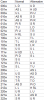
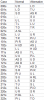
These tables show what OLL case you end up with when inserting the final pair. They both use the FR slot, for the sake of consistency in the tables. In practice it's of course not restricted to any particular slot. T, U, L, H, Pi, S, and AS refer to the OLL case, and U, R, D, and L refer to the direction it points when looking at the U face head on like on the wiki

Keep in mind these don't mean actually doing the WV or SV algorithms, these are tables of what results from just inserting the pair normally. Also keep in mind that I'm very new to ZZ and for all I know this is a bad idea due to requiring that you have a WV or SV case in the first place, which is not always going to happen at the end of efficient block building. I also know there are probably better alternatives, but I find this interesting none the less.


Winter Variation
"Normal" is R U' R'
"Alternative" is R U2 R'
"- -" is OLL skip

attachment.php
Summer Variation
"Normal" is R U R'
"Alternative" is R U' R' U' R U' R (long but fast, and not often used)
"- -" is OLL skip

attachment.php


For example, inserting the 202w case with a normal quarter turn insert will result in an upside-down T OLL case.

So from this we can see that every "Normal" insertion of a WV case is the same as doing the "Alternative" insert of a corresponding SV case, and every "Alternative" insertion of a WV case is the same as doing a "Normal" insertion of a corresponding SV case.

For example, inserting 000w as "Normal" gives the same as inserting 000s as "Alternative", and vice versa. This is because they're essentially the same case.

This means that inserting a SV case with R U R' is the same as inserting it's corresponding WV case with R U2 R', and inserting a SV case with R U' R' U' R U' R' is the same as inserting it's corresponding WV case with R U' R'. So cut this next table in have by referring to WV "Normal" and SV "Alternative" together as "Quarter", and WV "Alternative" and SV "Normal" together as "Half", referring to the quarter (normal) and half (alternative) turn inserts of the WV cases.
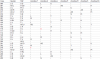
Avoiding Cases
This table shows which case you end up with when you selectively avoid certain cases.

attachment.php


For example, when you get case 202, and you insert it with a half turn, you get a Pi OLL. If you want to not get the Pi OLL, you need to instead insert it with a quarter turn, which results in a T case. So you can see that for the 202 case, under "Avoiding Pi", there is a "T". Notice that the 110 and 210 cases have red letters under "Avoiding U" and "Avoiding T" respectively. This means that you cannot avoid T or U cases completely, as inserting a 202 or a 110 will result in a U or a T whether you insert it with a half or a quarter.

Using this we can completely avoid getting Pi and H cases through selective insertion based on the WV or SV case. The other benefit is that this means you already know which OLL case you'll have, and it's AUF, long before it shows up on the cube. When recognizing a ZBLL case based on OLL and PLL combination, this means half the recognition is already done. It also means that you will know exactly which stickers to look for on the twisted corners.


For example, look at this OLL image where there is no PLL.

visualcube.php


Notice which stickers are the same color. Those are the stickers that represent each side. With practice of only five cases, which are the easiest of the seven thanks to the stuff above, you will know exactly which stickers to look for before even getting to the last layer, due to knowing not only which OLL you'll be getting, which which way it's facing as well. This means that all you need to do is simple two sided PLL recognition, which we already know is fast, and your ZBLL case is the rotation of the PLL case relative to the OLL case.

Look at this one and notice the orange, orange, red on the left and the green, green, orange on the right, showing that this is a Jb PLL.

visualcube.php


This was difficult at first, but I practiced it by using csTimer to do PLL scrambles and then twisting the corners without looking at the cube to make it a T case. I looked at the cube as I started the timer and once I knew the PLL case, stopped the timer. I have been doing full two sided PLL recognition for almost a year and I can do it in less than a second on a T case after ~1 hour of practice. Considering there are only five cases to learn, and only from certain angles, I think this is very realistic. Doing recognition by the rotation of the PLL relative to the OLL makes it so that each case has a clean, unique feel to it visually, which helps drastically with the recall after the recognition. When I happened across cases I actually knew, I didn't have to think about which algorithm goes with it, I just went into it like I do with regular PLL.


Also, it turns out that the only one of the seven corner twisted cases that does not have a two sided viewing angle that shows all six PLL stickers is H, and that the hardest to recognize is Pi. These just happen to be the two that we don't need to learn, which is nice.

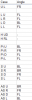
So, here is a table of ideal viewing angles for each case and direction, that I feel give the easiest recognition.
attachment.php


Here are my personal choices of which insertions to do per case, and the resulting OLL case, direction, and viewing angle.
attachment.php
 

Attachments

  • WV_Table.png
    WV_Table.png
    9.9 KB · Views: 128
  • SV_Table.png
    SV_Table.png
    9.8 KB · Views: 126
  • Avoiding_Cases_Table.png
    Avoiding_Cases_Table.png
    18.5 KB · Views: 128
  • Viewing_Angles.png
    Viewing_Angles.png
    6.1 KB · Views: 123
  • Personal_Choices.png
    Personal_Choices.png
    22.6 KB · Views: 13
  • Personal_Choices.png
    Personal_Choices.png
    29.3 KB · Views: 127
Last edited:
Holy long post! Looks really well done, though. I'm going to put the main of it in a spoiler, though.
This is to reduce people's load-time of the page.

Thank you, I didn't think of that. I have experimented some more and actually have a big edit coming anyway.
 
Re: ZZ/ZB Home Thread

That's actually quite interesting. Sometimes I wonder if I should bother to spend time looking for sky way to predict oll from f2l bit I never got around to it, seemed to be too much of a hassle to figure out so I never rally pursued the idea further
 
PLEASE don't learn them based off of the 000w etc. that I have in those tables, I mixed up the 1s and 2s and some are just flat out wrong. I will soon post a table that uses the correct convention, with an explanation of how to read it, and graphics to go with each case anyway.

However, I have something in the works now that is a much better system than what I wrote last night. The goal originally was to eliminate the need to learn some of the ZBLL groups without having to actually learn a ton of algorithms. The easier ZBLL recognition part was an after thought. Now, I have changed the insertion a little bit to standardize the resulting OLLs AUF, meaning that once you get to the last layer, you will always see one of the five OLLs and it will always be facing the same way. This makes recognition easier to learn and faster in practice, beacuse it's always the exact same stickers that make up the two sides of the PLL. It also makes the learning and recall of ZBLL easier and faster because you don't have to remember which AUF to start on for each ZBLL case, you just learn the initial AUF as part of the case. It's a couple extra moves, but they're U turns and perfectly consistent, so no thought is necessary.

Anyway, to anyone who is interested, please don't start practicing those tables.

What does 000w mean, and so on?

The tables are wrong, wait for the update. In the mean time you can read here to see how to read it: http://www.speedsolving.com/wiki/index.php/Summer_Variation
 
I had more time today to toy with this. I don't really have enough experience to say if this is any good, but I do know it makes ZBLL recognition pretty much as trivial as two sided PLL recognition. What I don't know is if the reliance on even having a SV or WV case in the first place (not always the case when finishing the block efficiently) and the couple extra U turns is acceptable for the extra LL speed. The faster last layer could out weight the few extra moves, and that would be great.

PDF: https://docs.google.com/open?id=0ByIBsFW2-j9rMkJNdEZDTWU3TTg

What I did was add U turns to the end of each insertion so that the resulting OLL is always facing the same way. This meant that it's always the exact same stickers, the ones in orange and green, that you would look at. This results in extremely fast recognition with very little practice, assuming you can already do two sided PLL recognition. Then, looking at the SV and WV alg lists online, I saw that the S and AS cases were actually very fast R/U gen algorithms. I decided to just put those in since they're just about as fast as a normal insertion, so why learn all the S and AS cases just for that? This means that not only do you not need to learn Pi or H cases due to the selective insertions given for each case, but now you don't need S or AS. In fact, 25 of the 52 cases result in a fully oriented state, and you get a PLL last layer with a massive increase in LL skips. I'll be calling the fully oriented state an OLL skip, even though that's not what WV or SV really are, just for simplicity. So this leaves us with 252 ZBLL cases not needed, with the remaining 216 left in the T, U, and L sets. With mirrors and inverses, this number decreases greatly, and many of them are trivial like Sune+U+AntiSune and other combinations.

So, the result (in the PDF link above) shows that you'll only need to learn some lightning fast R/U gen algorithms for minority of the cases, all of which result in an "OLL skip". One uses L' and M, and another is a fast one using D, but that's only two and they're very short, easy, and fast. You also only need to get used to recognizing the PLL from just three corner twist states, each of which will always be facing the same way so this is trivial. As you can see, the great majority of the non-"OLL skip" cases are just quick insertions with a particular U turn after it. So when learning the T cases, for example, you would learn each one starting with the two oriented corners on the right as shown in the third column. If the algorithm you're using needs the two oriented corners on the bottom, for example, you would make the initial U turn part of the algorithm. This removes any thought besides which PLL case you have and the direction it's facing.


Now for a walk-through...

Set up your cube with: L' U R' U' R L U2 R' U' R U R U2 R' U R U' R'

The FR slot corner is at UBR and the edge is at UL. Just from the look of it, how the same color is on top of the edge and corner and the way they will be joined, you already know it will be a WV case. Now do R U R' to join the pair, and watch the corner orientations come together to form case 012w. See here for how to read the 221w, 101s, and so on. Look up the 012w case in the list, and note the insertion given. It says to use a half turn insert, ending with a U2. Instead, try a quarter turn insert by continuing with U2 R U' R'. See that you get a Pi case? This is the avoidance part. By simply inserting in the alternative way, we avoid Pi and H cases completely. Undo the quarter turn insert with R U R' U2. Instead, insert it with the sequence given in the list by placing the pair at the back left with a U', and insert with R U2 R'. This results in a T case, and then we do a U2 to make it face the same direction it will always be facing when you get a T case due to the ending U turns. As a result, you will already know to look at the stickers shown in orange on the table as the left side, and the green sticker positions as the front side. These two sides tell you which PLL case you have, and which direction it's facing. The direction it's facing combined with whether you have T, U, or L is your ZBLL case. That's it. Finish with U R' U R U2 r' R' F R F' r.


So lets step through that again. Set it up once more.

1. Initial state
We already know we will have a WV case just from experience with solving the slot.

2. R U R'
Now we know which WV case it is, and automatically insert it the practiced way, ending U turn and all. This is perfectly consistent so the ending U turn is just muscle memory and very fast without needing any conscious thought.

3. U' R U2 R' U2
As we insert the, we know two things. We know that it will be a T case, and which exact six stickers to look for to recognize the PLL. In this case it will be Ja. I consider the front of a Ja PLL case to be the side with three of the same color, so for me this looks like it's facing right. Since when learning the ZBLL cases, we learned all of the T cases starting with the two oriented corners on the right, as they are right now, we do not need to recall the starting rotation of the algorithm because it is always the same and simply part of it.

4. U R' U R U2 r' R' F R F' r or whatever algorithm you want
Done!


So the overall process adds a few more moves before the ZBLL/PLL, but I would imagine saves many. I don't know if it saves moves compared to CLL/ELL, but I think the trivialized recognition and recall of a significantly smaller number of ZBLL cases is interesting. Any thoughts from more experienced ZZ users?
 
If I understand well, this is the anti-ZZ-blah, isn't it?

I'm looking into ZZ-blah now, and I think you're right. Actually his is probably much better with the smaller amount of cases.

However, I do like this approach of using two sided PLL recognition for the ZBLL case such that the rotation of the PLL is essentially all that's needed to know what case you have. I have been practicing this a bit by doing PLL scrambles on csTimer, twisting the corners into a T case without looking at it, then doing a random slot insertion backwards. I only know T-Ua, T-Ub, T-H, T-Z, and T-T cases, but that's 15 cases out of 72 so I come across them a decent amount. When I don't know the ZBLL, I just do the PLL and then T-None or whatever you want to call it. The recognition and recall really easy because the T, U, and L cases are so easy to see the PLL case on. Also I'm not sure what the difference in skip count is, but 25out of 54 times this approach results in a one PLL LL, which is almost half the time. In fact that makes me wonder if it's at all better than just straight up WV and SV. It's not like the longer WV and SV algorithms are that bad.
 

Yeah I had a feeling it wasn't original. Now I'm actually just doing the first two layers like normal and then PLL -> OLL for fun. Recognizing the PLL case and doing that first (just to force ZBLL recognition practice) then solving the corner orientation is obviously slower, but I'm getting faster (< 1.5s) at simply seeing which OLL case is forming, without the WV or SV crap, then recognizing the PLL case from any of the seven OLL cases. Now and then I come across a case I know and it's very satisfying to end the solve like that without using any gimmicks. I'm not exactly learning full ZBLL, but I think I will finish off the T cases. Recognition of ZBLL can be as fast as PLL if you're already fast with two sided PLL recognition, or at least it feels like it so far. Either way I'm reserving judgment until the end of October.

Block-building look ahead is my main issue right now.
 
ZZ users, what are your cfop times like in relation to your ZZ? I average 19 atm with ZZ and I was suprised to find I average 23 tonight with cfop (with no practice). I was much quicker than I expected, and I was pausing a lot too, I feel as though if I practiced cfop for a week or two, I would be around the same time I am at ZZ. :/
 
they differ more and more per time spent with zz... when i used zz for a month, then did a cfop average of 12, i first noticed it was better than my best cfop average before i switched (so zz helped me get better at cfop, lol.)
i also could get pretty good singles twohanded, but the times were more like alloverdaplace, ranging from 13-26 while being constantly 17 with zz.

nowadays, i still can get good times with cfop, but i mess up most of them because i try to blockbuild, think i have messed up eo (which isnt there :P) or stuff like that.

i average 16 with zz, 23+ with cfop :)

EDIT: the fact that i have to do 2Look-OLL on 50% of the cases makes my times worse as well.
 
Back
Top