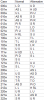
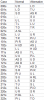
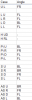
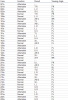
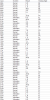
I had more time today to toy with this. I don't really have enough experience to say if this is any good, but I do know it makes ZBLL recognition pretty much as trivial as two sided PLL recognition. What I don't know is if the reliance on even having a SV or WV case in the first place (not always the case when finishing the block efficiently) and the couple extra U turns is acceptable for the extra LL speed. The faster last layer could out weight the few extra moves, and that would be great.
PDF:
https://docs.google.com/open?id=0ByIBsFW2-j9rMkJNdEZDTWU3TTg
What I did was add U turns to the end of each insertion so that the resulting OLL is always facing the same way. This meant that it's always the exact same stickers, the ones in orange and green, that you would look at. This results in extremely fast recognition with very little practice, assuming you can already do two sided PLL recognition. Then, looking at the SV and WV alg lists online, I saw that the S and AS cases were actually very fast R/U gen algorithms. I decided to just put those in since they're just about as fast as a normal insertion, so why learn all the S and AS cases just for that? This means that not only do you not need to learn Pi or H cases due to the selective insertions given for each case, but now you don't need S or AS. In fact, 25 of the 52 cases result in a fully oriented state, and you get a PLL last layer with a massive increase in LL skips. I'll be calling the fully oriented state an OLL skip, even though that's not what WV or SV really are, just for simplicity. So this leaves us with 252 ZBLL cases
not needed, with the remaining 216 left in the T, U, and L sets. With mirrors and inverses, this number decreases greatly, and many of them are trivial like Sune+U+AntiSune and other combinations.
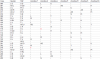
So, the result (in the PDF link above) shows that you'll only need to learn some lightning fast R/U gen algorithms for minority of the cases, all of which result in an "OLL skip". One uses L' and M, and another is a fast one using D, but that's only two and they're very short, easy, and fast. You also only need to get used to recognizing the PLL from just three corner twist states, each of which will always be facing the same way so this is trivial. As you can see, the great majority of the non-"OLL skip" cases are just quick insertions with a particular U turn after it. So when learning the T cases, for example, you would learn each one starting with the two oriented corners on the right as shown in the third column. If the algorithm you're using needs the two oriented corners on the bottom, for example, you would make the initial U turn part of the algorithm. This removes any thought besides which PLL case you have and the direction it's facing.
Now for a walk-through...
Set up your cube with:
L' U R' U' R L U2 R' U' R U R U2 R' U R U' R'
The FR slot corner is at UBR and the edge is at UL. Just from the look of it, how the same color is on top of the edge and corner and the way they will be joined, you already know it will be a WV case. Now do
R U R' to join the pair, and watch the corner orientations come together to form case 012w. See
here for how to read the 221w, 101s, and so on. Look up the 012w case in the list, and note the insertion given. It says to use a half turn insert, ending with a U2. Instead, try a quarter turn insert by continuing with
U2 R U' R'. See that you get a Pi case? This is the avoidance part. By simply inserting in the alternative way, we avoid Pi and H cases completely. Undo the quarter turn insert with
R U R' U2. Instead, insert it with the sequence given in the list by placing the pair at the back left with a
U', and insert with
R U2 R'. This results in a T case, and then we do a
U2 to make it face the same direction it will always be facing when you get a T case due to the ending U turns. As a result, you will already know to look at the stickers shown in orange on the table as the left side, and the green sticker positions as the front side. These two sides tell you which PLL case you have, and which direction it's facing. The direction it's facing combined with whether you have T, U, or L
is your ZBLL case. That's it. Finish with U R' U R U2 r' R' F R F' r.
So lets step through that again. Set it up once more.
1.
Initial state
We already know we will have a WV case just from experience with solving the slot.
2.
R U R'
Now we know which WV case it is, and automatically insert it the practiced way, ending U turn and all. This is perfectly consistent so the ending U turn is just muscle memory and very fast without needing any conscious thought.
3.
U' R U2 R' U2
As we insert the, we know two things. We know that it will be a T case, and which exact six stickers to look for to recognize the PLL. In this case it will be Ja. I consider the front of a Ja PLL case to be the side with three of the same color, so for me this looks like it's facing right. Since when learning the ZBLL cases, we learned all of the T cases starting with the two oriented corners on the right, as they are right now, we do not need to recall the starting rotation of the algorithm because it is always the same and simply part of it.
4.
U R' U R U2 r' R' F R F' r or whatever algorithm you want
Done!
So the overall process adds a few more moves before the ZBLL/PLL, but I would imagine saves many. I don't know if it saves moves compared to CLL/ELL, but I think the trivialized recognition and recall of a significantly smaller number of ZBLL cases is interesting. Any thoughts from more experienced ZZ users?