Blindfolded M2 Help and Discussion thread

About breaking into new cycles, most would recommend you shoot to UB (if it's not already been "used"), because it only requires an M2 and another M2 at the end. If UB is "taken", then shoot to another sticker which requires 3 setup moves (the least possible after 0).

I have a different approach, I always break into a new cycle by shooting to where the UB/UF/DB sticker is, because I flip the M edges at the end, so if I shoot to these sticker first, I know I don't have to flip them at the end, and that's good, so far I don't think I've ever had to flip more than 2 edges with this approach, yeah.
 
M2 Scenario help

Hey Cubers..

This is my first post and hence I would appreciate any feedback regarding my queries (including redirection to an existing similar thread).

I am reading various theories since last few days for 3x3 blindfold solving and planning to give 3OP corners and M2 edges a go. I am comfortable with corners but for edges, its taking time to completely understand the way M2 works. For example, in my very first scramble, edges (rather stickers) were in this order:

FU - BU - FD -....

For this particular scenario,

1. FU is straight forward (U2 M' U2 M') being the first edge in the pair. But for BU - Do i need an algorithm corresponding to FD? But DF is my buffer position.

2. The third is FD - Do I need to do anything for this?

3. Which one should I memorise after the third edge? Because the BU has already been covered in the first three edges? Any random sticker? any preference?

4. How do I know at the end of the edge solve that 2 or 4 edges need flipping? and which ones?

Thanks in advance!
 
1) UB and BU are always the same regardless of being the first or second in a pair (unlike UF/FU and BD/DB). UB is always just M2, BU would always be the same algorithm also, I use (U'M')*3 U'M (U'M')*4 (thanks ville) but there are other algorithms for it so whatever you already use would be fine.

2) No, this is your buffer piece (or at least belongs to the buffer position, regardless of its orientation). For a piece in a cycle that belongs to FD or DF your goal is to just start a new cycle on any edge that hasn't been used yet while remembering which edge you used. When you come back to this position in your cycle, you will either be done with the edges, or need to start another new cycle if there are still unsolved edges.

3) Use any unsolved edge to start the new cycle, but remember to remember which edge you used.

4) You should note which edges are flipped incorrectly in position during memorization. The number of incorrectly oriented edges MUST be even, so if you notice just one edge (or three, or any odd number) that is flipped in position, then you know that your buffer will also have to be flipped. If you notice an even number of edges incorrectly oriented in position during memorization then your buffer has to be solved at the end of your cycles, and the only edges that need to be flipped will be the ones that your noticed were flipped during memorization.

5) welcome to the forums ;]

Edit: DF is your buffer position? The algorithm you gave for FU will not work in this case, you need another one for it to be solved correctly. The algorithm you gave is U2 M' U2 M', which solves UF, not FU. If you were to use this algorithm for FU, that edge would be flipped at the end. Although this may be what you're trying to do, I think that's the way stefan does, or originally did it. I personally don't like having to keep track of flipped M slice edges just to be able to use an easier algorithm.
 
Last edited:
1) UB and BU are always the same regardless of being the first or second in a pair (unlike UF/FU and BD/DB). UB is always just M2, BU would always be the same algorithm also, I use (U'M')*3 U'M (U'M')*4 (thanks ville) but there are other algorithms for it so whatever you already use would be fine.

2) No, this is your buffer piece (or at least belongs to the buffer position, regardless of its orientation). For a piece that belongs to FD or DF, your goal is to just start a new cycle on any edge that hasn't been used yet while remembering which edge you used. When you come back to this position in your cycle, you will either be done with the edges, or need to start another new cycle if there are still unsolved edges.

3) Use any unsolved edge to start the new cycle, but remember to remember which edge you used.

4) You should note which edges are flipped incorrectly in position during memorization. Edges MUST be correctly/incorrectly oriented in pairs, so if you notice just one edge (or three, or any odd number) that is flipped in position, then you know that your buffer will also have to be flipped. If you notice an even number of edges incorrectly oriented in position during memorization then your buffer must be solved at the end of your cycles, and the only edges that need to be flipped will be the ones that your noticed were flipped during memorization.

5) welcome to the forums ;]
Thanks Ellis. Thanks was extremely helpful. Just one quick queston about your comment on #1.
You mentioned that for BU the algorithm you use is (U'M')*3 U'M (U'M')*4. The algo on Stefan's page (http://www.stefan-pochmann.de/spocc/blindsolving/M2R2/#moreExamples) is just M2 for BU. Any particular reason for your choice?
 
Yes, sorry... read my edit. I don't particularly like the way stefan originally treated the M slice edges. I like to have unique algorithm for every M slice edge.... so UF would be different than FU and UB different from BU. I don't like having to keep track of flipped edges on the M slice and would rather solve them always with just one algorithm. I think it is also easier to visualize the cycles this way.

I don't really know of anyone who actually does it that way, UB the same as BU... so I always tend to just think everyone who does M2 uses unique algorithms for these edges. There are other ways to treat the M slice edges, like how macky does it in his guide, but I feel like the way stefan shows on his site is the least common method of doing it (not sure though).
 
Last edited:
Oh I see.. I was actually blind(fold)ly following everything from stefan's page and didnt reach the stage of flipped M2 edges. Actually I could not find any other detailed description/alternative approach (other than Macky's) for M2.

I loved your suggestion of having unique algo for each edge (sticker). Would you mind sharing your thoughts and M slice edge unique algorithms here?

Thanks a ton!
 
Sure... I must say first that I personally like Macky's single M slice edges the best. I haven't really started using them myself because I've not been blindfold cubing all that much recently, but it is my goal to switch to those at some point. What's great about these is that 1) they are all short... no long algorithms and of course no misoriented edges that need flipping at the end. and 2) there is no need to switch to the opposite M edge if it is the second in a pair, it is already accounted for. If you are just starting to learn M2, I would probably go with this method. http://www.cubefreak.net/BLD/M2_guide.html#resolution ... (look at the "Case 2: One sticker in M" box) it may take slightly more effort to learn and utilize rather than just the raw algorithms, but I feel that it is worth it.

Having said that, I learned M2 from Eric Limeback's tutorial on youtube, so I currently use his M slice algorithms which are listed in the description. The only one that I do differently is BU. So here is the list that I use:

UB- M2
BU- (U'M')*3 U'M (U'M')*4
UF- U2 M' U2 M'
FU- F E R U R' E' R U' R' F' M2
DB- M U2 M U2
BD- M2 D R' U R' U' M' U R U' M R D'

So remember that if one of these edges needs to be solved (UF/FU and BD/DB only) when the centers are already flipped, then do the opposite algorithm... so for example, BD becomes FU and UF becomes DB.

Stefan also already suggested using commutators for the harder M slice edges in the Improvements for M2/R2 thread, I have not tried this myself but it may be worth checking out.
 
Last edited:
That was really helpful! :-)
Only and only because of your post above.. am going to give Macky's approach a go! :-)

Thanks for everything!
 
Help needed with M2 edges

Hi,
I have been learning bld solving for a few days and I need some help with solving the edges. When breaking into a new cycle you shoot to a random unsolved edge. But when you are memorizing, and you go back to solve that spot how do you remember what edge to solve next because the edge that is currently in that spot is not the one that will be there when you are solving it. Please help. Thanks
 
You break into a new cycle because your buffer gets solved. When you get to that edge again, it will resolve your buffer; there isn't another edge for you to solve (Unless there is still more cycles).
 
Hi,
I have been learning bld solving for a few days and I need some help with solving the edges. When breaking into a new cycle you shoot to a random unsolved edge. But when you are memorizing, and you go back to solve that spot how do you remember what edge to solve next because the edge that is currently in that spot is not the one that will be there when you are solving it. Please help. Thanks

What I do with cycle breaks is I just have a few default locations to shoot to, which are usually just really easy targets, like the one that only requires an M2 to solve (A in my lettering scheme). I keep track of if that edge is solved or not. And when you get back to that piece, one of two things happen. 1, you're done memoing edges, congrats! 2, you have more pieces left to solve. After several blindsolves it becomes easy to see if you've gotten all of your edges, but if you want you can just put your fingers on the pieces you have already solved while going through your memo. Hope this helps! Also Noah has a great tutorial on cycle breaks on Cubing World, you should go check it out.
 
M2 method help please!

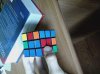
20140904_172025.jpg20140904_171950.jpg20140904_172001.jpg20140904_172009.jpg20140904_172023.jpg
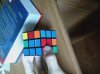
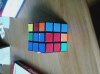
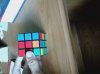
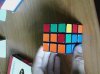
I have all of my edges solved except two. I added pictures so you can see. Any help please? Can anyone tell me what to do to finish the solve?
 
sorry yeah my camera took the pics sideways for some reason. I have blue on the top and red facing me(white on my left, yellow on my right, green on bottom, orange on back) Anything you could suggest? Is there no easy solution?
 
If they are the only edges left then do M2 D' L2 D M2 D' L2 D, which solves the M-slice and swaps UL and UB. Those edges will get solved when solving the corners.

Were you doing a sighted solve?
 
Back
Top