

Wish Lin
Veteran
There are a lot of curvy copter discussions in the past couple weeks, so I figured to do this:
Here is an old thread talking about basically the same thing:
https://www.speedsolving.com/threads/curvy-copter-oll-and-pll-algorithms.45494/
In the thread, OP called the algs OLL/PLL algs but that's not actually correct IMO since the algs only deal with CORNERS but not the entire layer, so I think they should be called OL4C/PL4C(orient/permute last 4 corners) algs and these algs in general should be called L4C(last 4 corners) algs. Also I will just use F R B L as the notation for UF, UR, UB and UL edge’s 180 degree turn.
The algs in that old thread are easy to remember but slow due to repeated, hard to fingertrick moves. Here are some better but harder to remember ones that I found:
A good fingertrick I found is use your left hand to move L and flick(pushing) B with your right index finger from home grip, need some practice to get fast at, but it's quite good. I try to make the algs to have as much L and B moves as possible.
Thanks to @whatshisbucket ‘s program, all of the algs here are proven move optimal.
 Sune: L B L B R B L B R L (RedKB inverse)
 AntiSune: L R B L B R B L B L (RedKB)
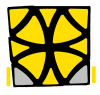 T: F R B L B R B L B F (by @whatshisbucket )
 U: (R B L B)2
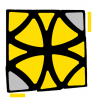 L: (B L B R)2 (U inverse)
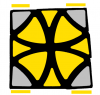 H: L F L F R F R B L R F L R B (by @whatshisbucket)
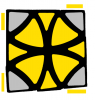 Pi: R B R B F L B R B L R F (by @whatshisbucket )
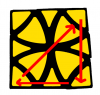 Aa perm: B L F R B R F R B L R B
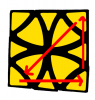 Ab perm: B R L B R F R B R F L B
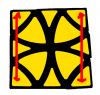 E perm: (R B R F R B R) (L B L F L B L) (by @whatshisbucket )
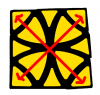 X perm: (F L F R B R) F (L R) F (L B L F R F) (by @whatshisbucket )
Here is an old thread talking about basically the same thing:
https://www.speedsolving.com/threads/curvy-copter-oll-and-pll-algorithms.45494/
In the thread, OP called the algs OLL/PLL algs but that's not actually correct IMO since the algs only deal with CORNERS but not the entire layer, so I think they should be called OL4C/PL4C(orient/permute last 4 corners) algs and these algs in general should be called L4C(last 4 corners) algs. Also I will just use F R B L as the notation for UF, UR, UB and UL edge’s 180 degree turn.
The algs in that old thread are easy to remember but slow due to repeated, hard to fingertrick moves. Here are some better but harder to remember ones that I found:
A good fingertrick I found is use your left hand to move L and flick(pushing) B with your right index finger from home grip, need some practice to get fast at, but it's quite good. I try to make the algs to have as much L and B moves as possible.
Thanks to @whatshisbucket ‘s program, all of the algs here are proven move optimal.
T: F R B L B R B L B F (by @whatshisbucket ) L: (B L B R)2 (U inverse) H: L F L F R F R B L R F L R B (by @whatshisbucket) Pi: R B R B F L B R B L R F (by @whatshisbucket )Aa perm: B L F R B R F R B L R BAb perm: B R L B R F R B R F L B E perm: (R B R F R B R) (L B L F L B L) (by @whatshisbucket ) X perm: (F L F R B R) F (L R) F (L B L F R F) (by @whatshisbucket )
Last edited:


