• Welcome to SpeedSolving.com — the world’s largest puzzle community!

    You’re currently browsing as a guest, which means you have limited access to discussions, resources, member profiles, and community features.

    Join 50,000+ cubers and puzzle enthusiasts from around the world to ask questions, share solves, improve faster, and be part of the community.

    Registration is free, fast, and easy — create your account today.

    Already a member? Log in here to hide this message and start participating.

Probability Thread

Wouldn't the edge pieces have 2 orientations? Also your good at this, want more things to find out or should I stop now.
 
Wouldn't the edge pieces have 2 orientations? Also your good at this, want more things to find out or should I stop now.
On a 4x4, the edges aren't centered. If you take out an edge piece and flip it around, you won't be able to put it back in because the hook that connects it to the rest of the puzzle will be pointing the wrong way. On a 5x5, for example, the very center edge has two orientations, but the two edges on either side both only have one, for the same reason.
 
Each center color can be swapped with other center pieces of the same color 4! = 24 different ways. There are six colors, so 24 * 6 = 144.

It is 4!^6, not 4!*6
So the number of possibilites is 24!*24!/(4!^6)*8!*3^8.
And I would divide this number by 24 because of the 24 different possible orientations of the cube in space.

For an nxnxn with n even we have (n-2)*12 edges which make (n-2)/2 edge clusters with 24 edges each. We have (n-2)^2*6 centers which make (n-2)^2/4 center clusters with 24 centers each. So there are

24!^((n-2)/2)*(24!/(4!^6))^((n-2)^2/4)*8!*3^8 /24

possibilites to build an nxnxn cube with even n.
 
Hay ya'll, I'm having a brain fart because I'm studying for finals.

What's the probability that all 5 corners are oriented during Last Slot?
I don't know how to account for redundant cases correctly due to AUF because I'm a retard who is bad at maths.

EDIT: The answer is 1/81, thanks notKevin!! :)
 
Last edited:
Hello,
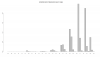
I've digged out an old thread from polish forum where I estimated probablilities of getting an specific bld case(number of targets & number of twists for each edges and corners) by doing simulation in R. Since I had lazy weekend I've decided to do write this code again. Here is the table with results of this simulation:

k=c()
twists=c()
for(j in 1:300000){
a=sample(1:12)
h=0
i=1
obr=sample(c(0,1),11,replace=T)
if(sum(obr)%%2==1){obr[12]=1}else{obr[12]=0}
obr=obr+1
twists[j]=sum(as.numeric(a==c(1:12))==obr)
while(a!=i&a!=0){
h=h+1
ind=a
a=a[a]
a[ind]=0}
for(i in 2:12){
if(a!=i&a!=0){h=h+2}
while(a!=i&a!=0){
h=h+1
ind=a
a=a[a]
a[ind]=0
}
}
k[j]=h
}

results=paste(k,twists,sep=',')
wyniki=c(table(results)[27:length(table(results))],table(results)[1:26])
#^here i had to "re-sort" this table results because it was previously#
#sorted automaticly like this:14,4 15,1 15,2 <-(!)-> 4,3 4,4 4,5... etc#
barplot(height=wyniki/length(k),main="probability barplot of (targets,twist) cases for edges")
tablica=table(targets=k,twists)
dd <- addmargins(tablica, FUN = list(Total = sum), quiet = TRUE)
write.table(dd,file="dane.csv",sep=",",row.names=T)
}

In this table first column means number of targets, first row- numbers of twists. For instance, if i want calculate probability of getting 7-9 targets with maximum 2 twists, i read records from a table: (70+314+471+627+2067+2229+4131+8941+6042)/300000=8,297333%
"targets-twists","0","1","2","3","4","5","6","7","Total"
"3",0,0,0,0,1,0,0,0,1
"4",0,0,2,0,0,0,0,0,2
"5",1,7,11,12,11,5,1,0,48
"6",6,44,67,86,42,18,0,1,264
"7",70,314,471,345,110,7,0,0,1317
"8",627,2067,2229,999,136,10,0,0,6068
"9",4131,8941,6042,1160,97,5,0,0,20376
"10",18423,25064,7096,709,51,0,0,0,51343
"11",51388,30150,4174,365,17,0,0,0,86094
"12",63957,17032,1846,114,0,0,0,0,82949
"13",34568,5636,583,6,0,0,0,0,40793
"14",8278,1385,69,0,0,0,0,0,9732
"15",752,237,1,0,0,0,0,0,990
"16",13,10,0,0,0,0,0,0,23
"Total",182214,90887,22591,3796,465,45,1,1,300000
"targets-twists","0","1","2","3","4","5","Total"
"0",1,2,3,5,3,1,15
"1",6,18,16,13,6,0,59
"2",44,111,95,63,10,1,324
"3",320,658,543,177,34,4,1736
"4",2096,3217,1914,394,43,2,7666
"5",10207,11040,3736,323,18,0,25324
"6",35277,23422,3306,226,8,0,62239
"7",74702,21358,1665,125,0,0,97850
"8",67991,8612,759,0,0,0,77362
"9",22453,2578,82,0,0,0,25113
"10",1815,497,0,0,0,0,2312
"Total",214912,71513,12119,1326,122,8,300000


If You want to calculate probability of getting certain case(for instance 10 or 12 targets for edges with maximum 2 twist AND 6-8 targets for corners with maximum one corner twist, You calculate probablilites separate for edges and corners, than multiply those and multiply by 2. P(A)*P(B)*2
 

Attachments

  • Rplot.png
    Rplot.png
    14.8 KB · Views: 22
If you take apart a megaminx and put it back together, what are the odds it would be solveable?

There's a 1/3 chance of the corner orientation being solvable, 1/2 chance of the edge orientation being solvable, 1/2 chance of corner permutation being solvable, and 1/2 chance of edge permutation being solvable, so multiplying them together gives 1 in 24.
 
There's a 1/3 chance of the corner orientation being solvable, 1/2 chance of the edge orientation being solvable, 1/2 chance of corner permutation being solvable, and 1/2 chance of edge permutation being solvable, so multiplying them together gives 1 in 24.
wouldnt permutation be betweet both edges and corners? a 2-cycle would make the corners theoreticly unsolvable, but having the edges also need a 2-cycle would fix it.
 
wouldnt permutation be betweet both edges and corners? a 2-cycle would make the corners theoreticly unsolvable, but having the edges also need a 2-cycle would fix it.
Nope, megaminx works a little differently from a 3x3. Every twist is an even permutation of corners and an even permutation of edges, so you can't do a 2-cycle of edges even when ignoring corners and vice versa. 1/24 is the correct answer to the original question.
 
What are the chances of getting a 3x3 skip on 4x4 ?
I think it would just be
1/(43,252,003,274,489,856,000 * 2 * 2)

=1/173,008,013,097,959,424,000

Chance of getting a solved 3x3 stage with oll / pll parity. (using like redux)
 
Ok, i think this might be a little complicated and hard to understand now..

Note: I count y2 as two rotations.

Its about 4x4. I'm using Yau. Its about edge pairing after i placed the last cross edge.
What i would have done normally:
1: Uw. 2: looking at the LFU edge piece. 3: placing the matching edge in RFD. 4: Rotating y. Repeating step 2 and 3. Repeating step 4. repeating step 2 and 3. 5: Uw'. 6: Rotating y2 . Now i have 3 solved dedges and a unsolved in LF and can continue.
Of course, that method is kinda bad, too many rotations.

Now i have two alternatives on which i want to know, which one requires less cube rotations on average.

First variant:

step 1 and 2 and 3 are the same as above. 4: placing the BRD edge without rotating if that is possible with just R and U moves. If not, then rotate and place it "normally" as i did above. Then i'd place the next edges "normally" again. Just rotating if its not doable with just R and U or L and U moves. i get to the position then, where i just have a unsolved dedge in LF then. This method requires 0 to 4 rotations.

Second variant:

1 Uw. 2: This is really the only difference: I look at the LBU edge now, not at the LFU. Then i just go on with the steps of the first variant. The advantage is, that i can place the first two edges without any cube rotations as i allow myself to do F moves. If i don't need a rotation then for the last edge, i would need one rotation (y') to get the unsolved dedge to LF.

Hope you got my point. In the first variant i don't even need one cube rotation if anythings perfect. i the second variant, i need at least one rotation (the y' at the end) but i don't do any rotations for the second edge.

So with which of the two variants i end up with less rotations?

P:S.: I know that i could just do B moves in both variants and safe the rotations completely and i know, that its probably best to choose between the variants if i see the corresponding edges in a real solve, but thats not the point. Its about the pure probability
 
Last edited:
Anyone know how many CLL cases a megaminx has?

Let's say we count mirrors and inverses as distinct cases, and assume all the edges are already solved. The only cases with rotational symmetry are the skip case, the two O PLLs and the two "star" PLLs. (Not sure what the common names for these PLLs are; I don't do megaminx much.) Thus there are ((5!/2)(3^4)−5)/5 + 5 = 976 CLL cases in total.

If we don't assume the edges are solved, then we may fix (say) the UFR corner as a reference; this gives (4!/2)(3^4) = 972 cases without accounting for rotationally-equivalent cases. In addition to the CLL-skip case, there's now one more case with rotational symmetry, so there're (972−2)/5 + 2 = 196 CLL cases if edges aren't solved.

If we do count mirrored cases as the same, then the numbers drop to 506 (edges solved) and 116 (edges not solved); if we also count inverses as the same, then they further drop to 314 (edges solved) and 76 (edges not solved).

Edit: The numbers in the previous paragraph were wrong (there was a bug in the code I was using to check) and have been fixed.
 
Last edited:
Back
Top