Hi,
CP beginner here.
I skipped all previous steps from the yruru tutorial and got straight to the pictures at https://devagio.github.io/YruRU/CPLINE/DLS/dls.html.
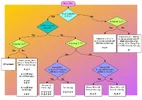
I grabbed a 2x2x2 cube, did a T-permutation and expected I would be in the swap UFR-UBR case now. However, when applying the F' U F algorithm, it will not bring me to the <R,U> reduction as expected. How do the picture and algorithm work then?
Also, I could start from a solved 2x2x2 cube, do a T-permutation, then do a y' rotation. I would expect that the swap UFR-UBR case is changed to the swap UBR-UBL case now because the DL corners are still solved even after the y' rotation. That means I could take the algorithm F' U F from the swap UFR-UBR case and modify it to the R' U R for the swap UBR-UBL case. However, R and U turns only can not swap 2 corners. So again, how do the picture and algorithm work?