Competition Questions

CornerCutter

Veteran
Joined
Jan 19, 2016
Messages
1,969
Location
Cubing at my desk - USA
YouTube
Visit Channel
Hi,

I'm quite new to the WCA competitions and had a few question about them.

1. What are all the possible ways to get a DNF and what happens if you get one? What does it do to your Ao5?

2. I am planning to go to a competition soon, so when do you know to replace the stickers on your cube? On my cube they are peeling, but they are not that bad.
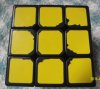
sticker.jpg


Thanks.
 
1. What are all the possible ways to get a DNF and what happens if you get one? What does it do to your Ao5?
2. I am planning to go to a competition soon, so when do you know to replace the stickers on your cube? On my cube they are peeling, but they are not that bad.

1. Main reasons for DNF's are: solving your cube without starting the timer, not solving your cube, or touching your cube too soon after stopping the timer. Beginners often do the last one. For average of 5, the worst solve is ignored, so try not to get 2 DNF's.
2. Your cube is fine.
 
What you want is Article A of the regs. The delegate can also DNF a solve/average/DQ a competitor for infractions of the regulations, but this shouldn't happen unless you do something dumb. So just be a decent human being, and read Article A and you'll be good.

You may also want to watch Chris Olson's fantastic competitor guide. Like it's very possibly the best video on youtube.
 
The other most common DNF is for actually not solving the cube.

Your cube may or may not be rejected, depending on the delegate. I suggest new stickers if you want to be safe.
 
Two scenarios: which if either are DNFs? In each case the cube is fully functional, it just loses a little stability. In the first, being a stickerless cube, the whole piece including the mechanism is the same color. The second is a piece of the hidden layer that will pop halfway out. It usually happens on the last turn or two of PLL, and it's faster to pull the piece out and set it aside and finish solving than to fit it back in.
1.
20160412_111808.jpg


2.
20160412_111637.jpg
 
Speaking as a delegate on #2. If this cube was presented at a competition, I would allow it for the competition, but I would recommend restickering for the next competition you plan to attend. They have to be quite bad for me to completely reject them.
 
Two scenarios: which if either are DNFs? In each case the cube is fully functional, it just loses a little stability. In the first, being a stickerless cube, the whole piece including the mechanism is the same color. The second is a piece of the hidden layer that will pop halfway out. It usually happens on the last turn or two of PLL, and it's faster to pull the piece out and set it aside and finish solving than to fit it back in.
1. View attachment 6103

2. View attachment 6104
Both of those are fine. The first because the piece only has one colour on it and the second because it doesn't affect the outside appearance (I presume) and it remains fully functional.
 
Thanks for the answers. I have a couple more questions.

1. For OH solving, can you touch the puzzle with both hands during the inspection time?

2. After you finish you solve and the puzzle still has to have a U2 done to it, is that a +2 penalty or a DNF?

Thanks.:)
 
To back things up using actual Regulations:

1. You can use both hands

Article C (One-Handed Solving) specifies that the same procedure as Article A (regular speedsolving) applies, with only a couple of exceptions during the solve part of the attempt. If you look at the headings of A1-A7, you'll see that this applies to A4-A6.

Just to make things extra clear, we also have Guideline about this:


Article 10 (Solved State) specifies that each misalignment between two adjacent slices counts as a +2 penalty. It refers to the definition of a move in Article 12, which also states that U2 counts as a single move.
 
They're designed to be as clear as possible. If you have questions about the solving procedures, take a closer look. If that doesn't help, then ask questions.

Yeah, it's really important to read the regs all the way through. I've heard of many times when the judges make a bad call because they didn't read the regs, and the competitor didn't either so they couldn't defend themselves. If you read the regs, you know your rights and responsibilities as a competitor.
Plus, it's good to know certain things that result in +2s and DNFs. Many people practice at home starting with the cube in their hands already, which is bad practice, as in a competition that would result in a penalty.

Ok..........I just wanted to be sure about them. I am starting to learn OH solving so I didn't want to break any rules even when I'm just practicing.
 
But that's what they said about stickerless before that rule was changed. Because I have two 2x2's a pillowed v-cube and a rubiks cube. I have a competition coming up and I need a good cube that doesn't lock up and is legal, I just got angry at my stupid 1 year before self for buying a stupid pillowed cube... IDK. ANGRY AGAIN!

I'll just get a new cube.
 
Back
Top