
• Welcome to SpeedSolving.com — the world’s largest puzzle community!

    You’re currently browsing as a guest, which means you have limited access to discussions, resources, member profiles, and community features.

    Join 50,000+ cubers and puzzle enthusiasts from around the world to ask questions, share solves, improve faster, and be part of the community.

    Registration is free, fast, and easy — create your account today.

    Already a member? Log in here to hide this message and start participating.

Probability Thread

I think I can pretty much guarantee that the inclusion of antisymmetry is not going to change the overall look of the graphs very much (except for scaling factors). The 1212 cases are dominated by 801 cases each having a probability of 1/972.

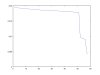
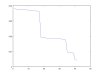
OK thanks, I think you are right. To complete the situation, here are the probabilities for the 58 OLL cases (57 + the solved OLL case) computed over 1,000,000 cube solves. As expected, close to enough to uniform. See the diagram ollprob.jpg. If I reduce all symmetric cases (as explained in my previous post) I get 41 different patterns and the uniformity breaks: ollsym.jpg. There are roughly 3 categories: the most probable 20 cases are still equiprobable, then the next 15, and then the remaining 6 which are less likely than 1%. Anyway, the symmetric cases I suspect cannot be solved by the same algorithm so this will not give a hint in which order to learn the OLL.
 
Got a PLL skip and an OLL skip at the same time this morning, but it was a hand-scramble so I can't reconstruct. What are the chances of that?
 
Got a PLL skip and an OLL skip at the same time this morning, but it was a hand-scramble so I can't reconstruct. What are the chances of that?

1/15552

I once got 10 gperms in a row before at a comp. 5 was from 1st round and 5was from 2nd what is the probability of that happening?

If there were only 2 rounds (or three rounds and you made it through 2 of them) then this probability is:
(2/9)^10

If you competed in three rounds, and you're curious about this same situation, then it makes sense to ask a slightly different question:

Given that you competed in three rounds, what's the probability that you get at least 10 consecutive G perms in your 15 official solves?

Turns out that probability is about 7*10^(-7)

Clicky

--edit--

That probability is a little misleading because I think you would have made a post like this if you had gotten 10 of any PLL in a row. The probability that you got any PLL at least 10 times in a row in three rounds (or even in two rounds) would be greater than the probabilities listed, but still on the order of 10^(-6) for the first significant digit
 
Last edited:
1/15552


If there were only 2 rounds (or three rounds and you made it through 2 of them) then this probability is:
(2/9)^10

If you competed in three rounds, and you're curious about this same situation, then it makes sense to ask a slightly different question:

Given that you competed in three rounds, what's the probability that you get at least 10 consecutive G perms in your 15 official solves?

Turns out that probability is about 7*10^(-7)

Clicky
I don't know that stuff, can you explain it to me more simply etc: 1/X
 
I don't know that stuff, can you explain it to me more simply etc: 1/X

(2/9)^10 is approximately 1/3405063

The probability that you get at least 10 consecutive G-perms in 3 rounds of official solves is approximately 1/1525860

The probability in both of those situations for getting any PLL, and not restricting to just G perm, would be on the order of about 10 times larger than each of those numbers.
 
Wow, a 1/15552 change of getting a OLL and an PLL skip at the same time?! I feel special...
Considering it was a handscramble, don't feel so special... it's way more likely that you just accidentally gave yourself a position that would be solved after a relatively obvious F2L. The 1/15552 number is for random scrambles (and it assumes you don't do anything at all to affect the LL during F2L).
 
Considering it was a handscramble, don't feel so special... it's way more likely that you just accidentally gave yourself a position that would be solved after a relatively obvious F2L. The 1/15552 number is for random scrambles (and it assumes you don't do anything at all to affect the LL during F2L).

I assure you that the scramble was a random scramble, which I achieve by applying random turns to the cube for a long while, and then making sure it's completely scrambled before inspection. Neither did I do anything to affect the last layer, but just normal F2L.
 
Last edited:
I assure you that the scramble was a random scramble, which I achieve by applying random turns to the cube for a long while, and then making sure it's completely scrambled before inspection. Neither did I do anything to affect the last layer, but just normal F2L.
How do you know that it was completely random?
 
How do you know that it was completely random?


Either that's a very dumb question or we're using different dictionaries.

If it's a dumb question then here's my (dumb) answer: the colours were completely messed up.

If we're using different dictionaries, then here's the definition of 'random' according to Oxford dictionaries: "made, done, or happening [or scrambled] without method or conscious decision."
I'm pretty sure you conciously decided which move to make when hand scrambling?
 

Either that's a very dumb question or we're using different dictionaries.

It's certainly not a dumb question. Humans are absolutely terrible judges of whether or not something is random. We normally judge something as random if we see no obvious patterns, whereas something truly random is usually quite likely to have some patterns. A lack of a pattern is a form of order, so when we judge a scramble based on whether or not they "look random", we are actually biasing the scramble to one with some form of order.


Either that's a very dumb question or we're using different dictionaries.

If it's a dumb question then here's my (dumb) answer: the colours were completely messed up.

If we're using different dictionaries, then here's the definition of 'random' according to Oxford dictionaries: "made, done, or happening [or scrambled] without method or conscious decision."

You obviously don't know what random scrambles are...
 
You obviously don't know what random scrambles are...

Yep, I have concluded we use different dictionaries. So...enlighten me - what is a random scramble?

It's certainly not a dumb question. Humans are absolutely terrible judges of whether or not something is random. We normally judge something as random if we see no obvious patterns, whereas something truly random is usually quite likely to have some patterns. A lack of a pattern is a form of order, so when we judge a scramble based on whether or not they "look random", we are actually biasing the scramble to one with some form of order.

Exactly what are the chances of getting a un-random scramble by hand-scrambling it for 30 seconds at 3 tps?

I'm pretty sure you conciously decided which move to make when hand scrambling?

And just how could I do that?
 
Last edited:
Exactly what are the chances of getting a un-random scramble by hand-scrambling it for 30 seconds at 3 tps?

Your question doesn't make sense. If it's a truly random scramble, then the probability of getting a solved cube is exactly the same as the probability of getting any other scrambled state.

Yep, I have concluded we use different dictionaries. So...enlighten me - what is a random scramble?

Random sequences of moves, even ones generated by a computer, are pretty terrible scrambles, because they are far more likely to result in some states, and far less likely to reach some others. The way the official scrambling programs work is that they choose a state at random from all possible states with equal likelihood (basically by placing pieces in random positions and in with random orientations), and then calculate a sequence of moves that will reach that state.
 
Your question doesn't make sense. If it's a truly random scramble, then the probability of getting a solved cube is exactly the same as the probability of getting any other scrambled state.


OK: I scrambled the cube, randomly or not randomly, whichever way you prefer. I had an OLL skip. I then had a PLL skip. The chances of that are less than or equal to 1/15552. Happy?


Random sequences of moves, even ones generated by a computer, are pretty terrible scrambles, because they are far more likely to result in some states, and far less likely to reach some others. The way the official scrambling programs work is that they choose a state at random from all possible states with equal likelihood (basically by placing pieces in random positions and in with random orientations), and then calculate a sequence of moves that will reach that state.

So what you're saying, is that if I throw a bunch of sticks on the floor a hundred times within a certain area, it would not be as random as if I put each stick down a hundred times, deliberately, and recorded each 'random' set-up, knowing not to repeat that same set-up in the future? Well this would only be effective if I threw/set-up the sticks at least a billion times.

I haven't even reached a billionth of the total possible number of permutations on a Rubik's Cube, estimated at 43,252,003,274,489,856,000, so a concept of being "far more likely to result in some states, and far less likely to reach some others" is like expecting that you'll somehow get to all the 43 quintillion scrambles possible.
 
Last edited:
Back
Top