BenChristman1
Legend
- Joined
- Oct 26, 2019
- Messages
- 3,600
- Location
- in my room doing math
- WCA
- 2019CHRI11

Follow along with the video below to see how to install our site as a web app on your home screen.
Note: This feature may not be available in some browsers.


lol welcome to 1981local cuber discovers 4x4 parity
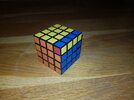
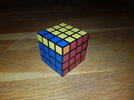

Anyone of the first 8 algs in this list will solve it completely. (Just apply the algorithm with blue in front and yellow on top.)This is my cube. The sides that are not visible are solved properly (all white / all green).
Is it possible to solve it at all?
If you are going to include algorithm authors (which I support), you might as well go all the way and include date of discovery and links to original publicationsAnyone of the first 8 algs in this list will solve it completely. (Just apply the algorithm with blue in front and yellow on top.)


Robert YauQual è il nome della persona che ha creato il metodo di speedsolving 4x4 utilizzato dai risolutori più veloci del mondo?
I already did to the best of my ability.If you are going to include algorithm authors (which I support), you might as well go all the way and include date of discovery and links to original publications
That's debatable. (But if you want to debate, please use that thread, not this one. Thanks.)

Thanks, but I'll just wait another day to see if anyone has an algorithm. The reason I think this may be possible is because I'm okay with a couple center pieces moving around.It's not possible to twist a single corner by itself. You really just have to move the three wing pieces around it instead.
(It's very much possible to do 4→2 reduction, just usually not recommended because it's much harder than the alternatives.)

Nice, congrats on solving the 4x4.Thanks so much! By the way, I FINALLY just finished solving my 4x4 after 2 days of pain lmao

Abijeet, he was reducing a 4x4 into a 2x2, There is no other possible for 5x5 other than to a weird 3x3.Nice, congrats on solving the 4x4.
Now onto the 5x5 puzzle.
That reminds me of when I solved my 5x5 layer by layer with more commutators than everNice, congrats on solving the 4x4.
Now onto the 5x5 puzzle.

If you're trying to use the reduction method, you didn't finish the edge pairing step. (The unsolved edge pieces in your picture are yet to be paired.)I keep getting this case on 4x4 and no parity algs or regular algs are solving it. Every other side is solved except for these two.