Jorian Meeuse's progression thread (Kinch WR230 ER70 NR4)

I started learning SQ1 cubeshape, I know all cases that take 4 slices or fewer, and a few others. Few reasons why I'm doing this: it's nice to iterate (is that the right word?) between 2x2 algs and CS algs every now and then, it is very important for SQ1 BLD to be able to 1-look the cubeshape (because yes, you need to trace through cubeshape on every SQ1 BLD solve, it's gonna be pain), and lastly, I have SQ1 in my next comp.

Also I'm afraid I forgot a lot of my floating algs for 3BLD. I think I want to do too many things at the same time lol
So since the main reason for this was to be able to do SQ1 BLD, I decided to simplify a little. I will still learn CS, but not in a speed optimal way. I will make sure I can 1-look each cubeshape case. Most of them are very easy to be set up to 3 slicers intuitively. I will just trace the pieces until they are in for example the scallop/scallop situation, which I will have prememorized with a 'key'. I devised a system to memorize the tracing of a cubeshape case and convert it into a key. Here are the 3 keys I have made so far (I spent like 5 minutes on this so it's very prone to mistakes, will check later):
SCALLOP/KITE / (-1,-2) / (-3,0) /: UA AU CV WD DB BC VW XX

SCALLOP/SCALLOP / (-1,-2) / (-3,-3) /: XA AU BV WD DX UB VC CW

KITE/SCALLOP / (2,1) / (0,3) /: VV WX DA AC CW XD UB BU

As you see, I can't care about speed optimal solutions, because these keys only work for the algs I put in front of them, and the algs only work from one angle. I'm putting these keys here mainly so I can memorize them later, but if you are interested in how they work you can always ask. Or it could be a fun challenge to figure out how they work yourself :)

I think I'll make keys for all 3-slicers and the 2 7-slicers. For the 6 slicers I'll probably do a 1 slice setup into the 7-slicers.
 
Ok I just realized some optimization I can do (not in speed but in the number of keys I have to learn) namely that whatever the cubeshape is, a /(6,6)/ will flip all pieces (except for the equator) with a z2. So if I know the key for scallop/kite, I don't have to learn the key for kite/scallop. I could just do the /(6,6)/ which is very simple to visually trace, if you want to you can even do a z2 rotation during memo and trace from there, then do a z2 again and start exec with /(6,6)/. This would then give me a CS case I know the key for. This means the keys I have left to make are:
Shield/Square
Muffin/Square
Left Pawn/Right Pawn
Barrel/Kite (maybe i shouldn't make a key for this, it seems easy to trace through)
Muffin/Muffin
Shield/Shield
Kite/Square

I'll probably make the keys tomorrow.
 
Just made all remaining keys (except for Barrel/Kite because it's unnecessary as I said in the previous post):

SHIELD/SQUARE / (-1,0) / (-3,0) / AA UV CV WD DB BC

MUFFIN/SQUARE / (2,0) / (3,0) / VW DD AU VB BC CA

LEFT PAWN/RIGHT PAWN / (-1,4) / (-3,0) / VW XX CV WD DB BC UA AU

BARREL/KITE just trace

MUFFIN/MUFFIN / (2,0) / (3,3) / VW DD AU VC CW XA XU BB

SHIELD/SHIELD / (-1,0) / (-3,-3) / AA UV BV WD DX UB CC WX’

KITE/SQUARE / (-1,0) / (2,0) / (-2,0) / (2,0) / (-1,0) / (-3,0) / VC VC BW DA UA DB

SCALLOP/KITE / (-1,-2) / (-3,0) / UA AU CV WD DB BC VW XX

SCALLOP/SCALLOP / (-1,-2) / (-3,-3) /: XA AU BV WD DX UB VC CW

SHIELD/SQUARE / (-1,0) / (-3,0) / AA UV CV WD DB BC

MUFFIN/SQUARE / (2,0) / (3,0) / VW DD AU VB BC CA

LEFT PAWN/RIGHT PAWN / (-1,4) / (-3,0) / VW XX CV WD DB BC UA AU

MUFFIN/MUFFIN / (2,0) / (3,3) / VW DD AU VC CW XA XU BB

SHIELD/SHIELD / (-1,0) / (-3,-3) / AA UV BV WD DX UB CC WX

KITE/SQUARE / (-1,0) / (2,0) / (-2,0) / (2,0) / (-1,0) / (-3,0) / VC VC BW DA UA DB
 
Last edited:
I thought it would be fun to write a small python program again after a long time without coding, so I wrote this program to help me drill above keys.
import random

list = ['SCALLOP/KITE', 'SCALLOP/SCALLOP', 'SHIELD/SQUARE', 'MUFFIN/SQUARE', 'LEFT PAWN/RIGHT PAWN', 'MUFFIN/MUFFIN', 'SHIELD/SHIELD', 'KITE/SQUARE']


def function():
x = random.choice(list)

y = input(x)

if x == 'SCALLOP/KITE':
z = 'UA AU CV WD DB BC VW XX'
if x == 'SCALLOP/SCALLOP':
z = 'XA AU BV WD DX UB VC CW'
if x == 'SHIELD/SQUARE':
z = 'AA UV CV WD DB BC'
if x == 'MUFFIN/SQUARE':
z = 'VW DD AU VB BC CA'
if x == 'LEFT PAWN/RIGHT PAWN':
z = 'VW XX CV WD DB BC UA AU'
if x == 'MUFFIN/MUFFIN':
z = 'VW DD AU VC CW XA XU BB'
if x == 'SHIELD/SHIELD':
z = 'AA UV BV WD DX UB CC WX'
if x == 'KITE/SQUARE':
z = 'VC VC BW DA UA DB'
if y == z:
function()
if y != z:
print('haha fout nu moet je het programma opnieuw opstarten')

function()

BTW if you're curious, the 'haha fout nu moet je het programma opnieuw opstarten' thing is Dutch for 'haha wrong now you have to restart the program' because I was too lazy to make it loop through the same question until you get it right.
 
I just tried SQ1 BLD twice, the first time I took 20 minutes to discover that tracing through 3 slices is just too much (for now at least) so I gave up, the second attempt I actually traced through CS correctly but I DNF'ed only because I did some corner setups wrong ( (1,0) / ) instead of (4,0) / ), I would have had a succes if it weren't for that.
Edit: that last attempt was a 15:27.41 with 11:21.19 memo
 
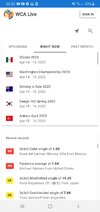
Check WCA Live quickly before this is deleted. His average is like 1:30 so probs was a 1:02 solve put in as 1.02

EDIT: you're too late, it's been deleted.
 

Attachments

  • Screenshot_20230415-202012_Chrome.jpg
    Screenshot_20230415-202012_Chrome.jpg
    187.4 KB · Views: 17
So I did 7BLD in weekly comp, I got a 32:36.35 DNF, with 16:38.22 memo. I am very satisfied with that time. I forgot to do JR on clockwise obliques, and I had 2 outer +centers unsolved, I think the memo was wrong. Overall a very nice attempt. I went reasonably safe and it was still very close to sub 30 and had only 5 pieces wrong.
 
So I did 7BLD in weekly comp, I got a 32:36.35 DNF, with 16:38.22 memo. I am very satisfied with that time. I forgot to do JR on clockwise obliques, and I had 2 outer +centers unsolved, I think the memo was wrong. Overall a very nice attempt. I went reasonably safe and it was still very close to sub 30 and had only 5 pieces wrong.
since when did you start doing blindsolving
 
since when did you start doing blindsolving
In january 2020 I started speedsolving in general (i could already solve a cube for years but not fast) and I believe I learnt BLD in february of that year, so pretty quickly after. My first 7BLD was in july 2020 and after that I didn't do much BLD until like the beginning of 2022. My first 4BLD success was funnily enough almost 2 years after my first 7BLD and 2 days before I got the 4BLD NR (which was my 6th success)
 
Back
Top