How AI can aid in cubing

Joined
Jan 16, 2023
Messages
358
Location
SC
WCA ID
2024HICK04
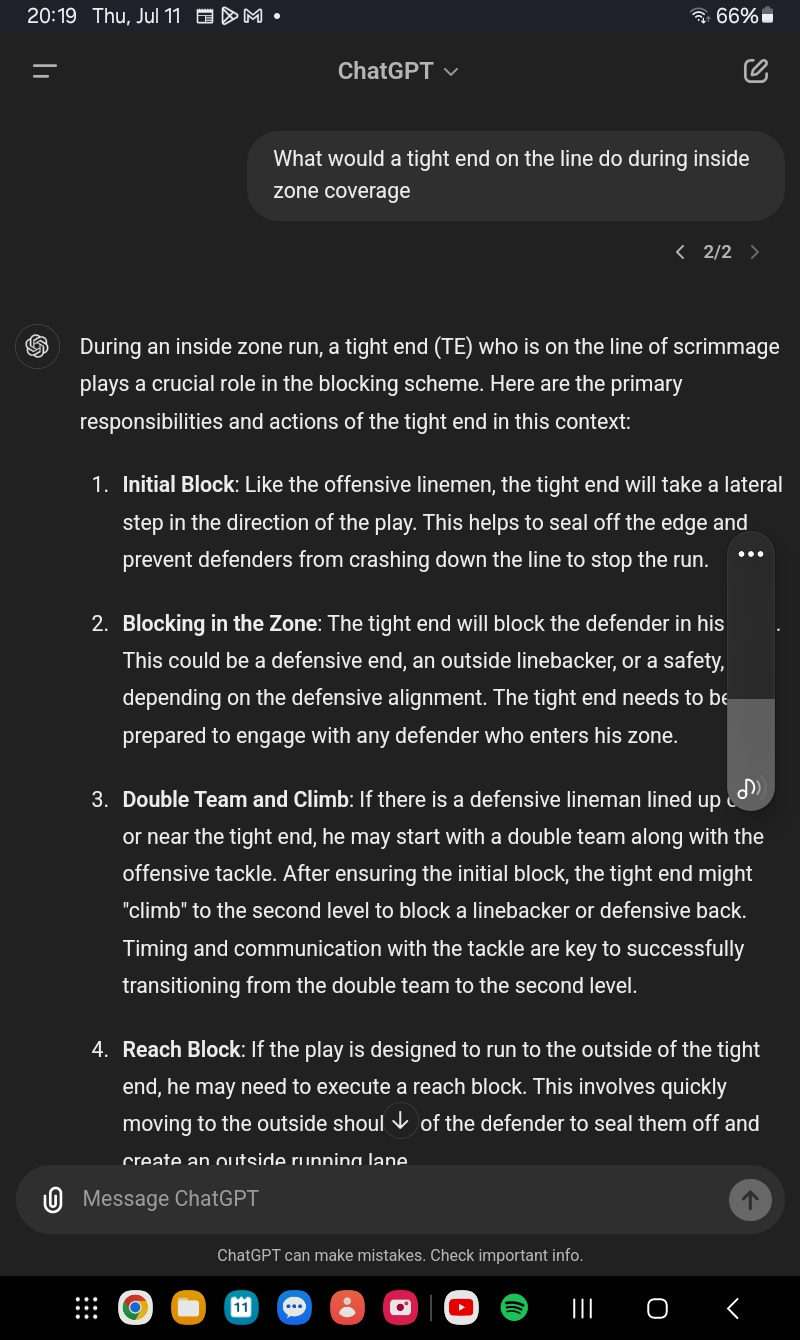
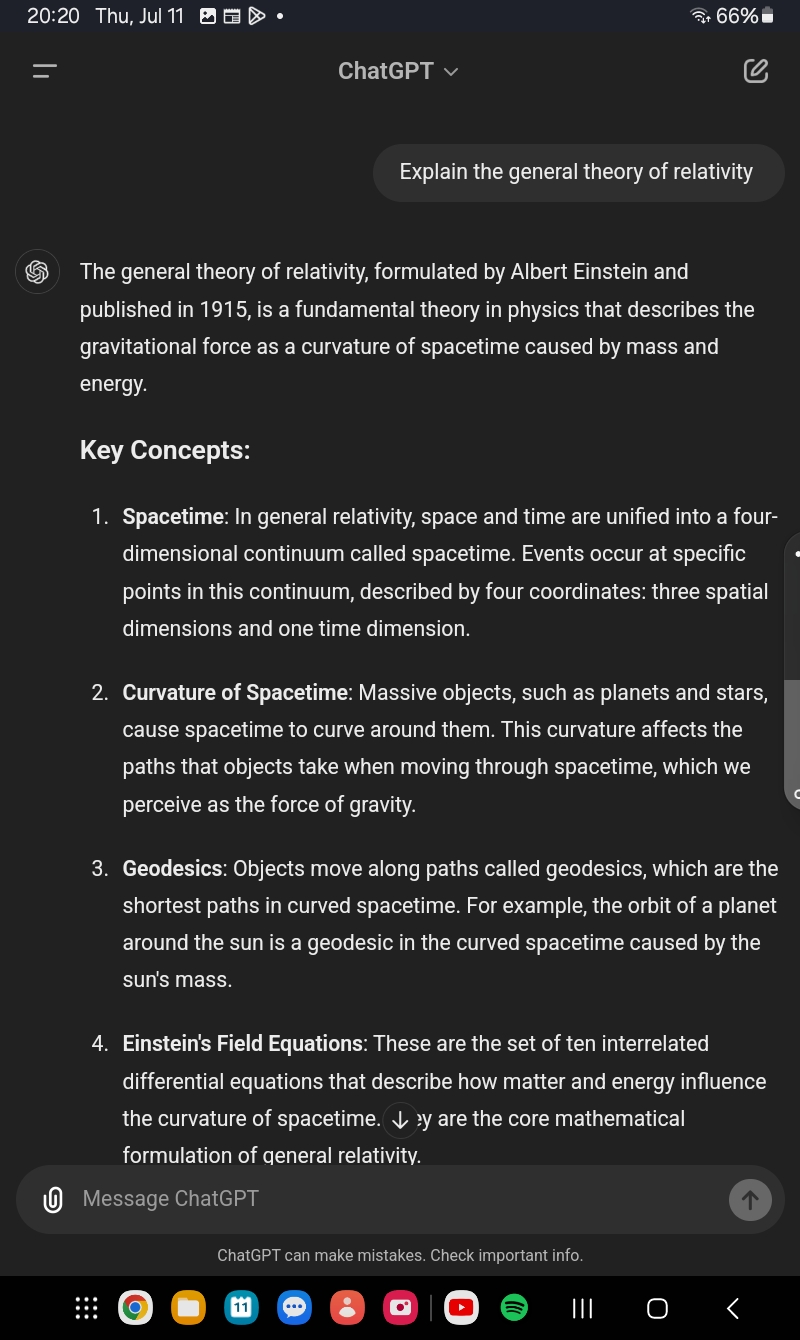
So I have not been cubing much recently but I have been doing other things and after thinking a d looking up I went on chat gpt and did a bit of research not on cubing but other things and found that AI could be a really big help. Here are a few picture not all of cubing related subjects but just showing how it could possibly help now I have not done and deeper research but anybody willingly to can.
Screenshot_20240711_201952_Chrome.jpg
Screenshot_20240711_202029_Chrome.jpg
Screenshot_20240711_202054_Chrome.jpg
 
Great to see you Back! but uhhh....I guess great minds think alike, cuz.... you made a thread like identical to mine lol.

 
Great to see you Back! but uhhh....I guess great minds think alike, cuz.... you made a thread like identical to mine lol.

My bad I did not see yours but agree great minds do think alike.
 
I've tried using AI for a lot of cubing related stuff and tbh it's currently kinda useless. But it could get really good if there was an AI trained about cubing.
yeah like a lot of other websites related to other stuff have their own specialized AI for the given topic. Like this website I use to find the best loadouts in Warzone is called ggs.ai and it uses an AI as one of its tools.
 
yeah like a lot of other websites related to other stuff have their own specialized AI for the given topic. Like this website I use to find the best loadouts in Warzone is called ggs.ai and it uses an AI as one of its tools.
that is smart I have not really looked up any specifically related AI's just have been using chatGPT for anything from theory of relitivity to American football to cubing and also looked up if it was possible for. a flavored sunflower seed like the ones from the grocery store to grow.
 
For a slightly more serious answer...
At the moment, ChatGPT is just bad for cubing. It is a LLM (large language model) which means it has no way of checking the mathematics or anything like that. It doesn't know what a Rubik's cube is, it just knows what the most likely word to come next is. I have no idea if, in principle, anyone could make an AI that knows what a Rubik's cube is (in the same way Cube Explorer or Batch Solver do), but it would be cool if that were the case.

To demonstrate ChatGPT's lack of awareness of what a Rubik's cube actually is, I've spoilered some responses to questions.

The ZZ method is a popular speedcubing method used to solve the Rubik's Cube. Variants of the ZZ method differ in their steps and algorithms, aimed at optimizing different aspects of the solve, such as move count, look-ahead, and algorithmic complexity. Here are five variants of the ZZ method, listed in order of speed from fastest to slowest, based on common consensus and community feedback:

1. ZZ-a
- Speed: Fastest
- Description: This variant focuses on minimizing the number of rotations and optimizing the efficiency of the algorithms used. It emphasizes low move count and reduced look-ahead times, making it the fastest variant for experienced solvers.

2. ZZ-b
- Speed: Very fast
- Description: ZZ-b improves on the standard ZZ method by using advanced algorithms for the last layer, resulting in faster solve times. It requires more algorithm memorization but significantly enhances solve efficiency.

3. ZZ-d
- Speed: Fast
- Description: ZZ-d uses a different approach for the last layer, incorporating COLL (Corner Orientation of the Last Layer) and EPLL (Edge Permutation of the Last Layer) techniques. This variant strikes a balance between speed and algorithm complexity.

4. ZZ-CT (ZZ-Collins-Cornell-Tucker)
- Speed: Moderately fast
- Description: ZZ-CT simplifies some steps of the standard ZZ method while still aiming for efficient solves. It's a good middle-ground variant, offering a balance between ease of learning and solving speed.

5. ZZ
- Speed: Standard
- Description: The original ZZ method, which is still quite fast but not as optimized as the other variants. It involves EOLine, F2L, and a standard last layer solution, making it slower compared to its more advanced counterparts.

Each of these variants is tailored to different levels of solver skill and preference for algorithm complexity versus solving speed. Advanced cubers often prefer ZZ-a or ZZ-b for their speed advantages, while those looking for a balance between ease of learning and efficiency might opt for ZZ-d or ZZ-CT.

Creating a new ZZ variant that is faster than ZZ-a involves innovating on the existing steps to reduce move count and improve overall solving efficiency. Let's call this new variant ZZ-X.

ZZ-X Method Steps

1. EOLine-X (Edge Orientation Line Extended):
- Objective: Orient all edges and solve an extended line on the D-layer, incorporating 1 or 2 additional D-layer edges along with the standard EOLine edges.
- Move Count: ~9-11 moves

2. X-F2L (Extended First Two Layers):
- Objective: Solve the first two layers while using X-cross techniques to influence the LL (Last Layer) edges, solving additional D-layer edge pairs during the F2L process.
- Move Count: ~25-30 moves

3. LL-CO (Last Layer Corners Orientation):
- Objective: Orient all last layer corners, potentially using fewer algorithms and integrating some edges into their final positions.
- Move Count: ~7-9 moves

4. LL-CP (Last Layer Corners Permutation):
- Objective: Permute all last layer corners.
- Move Count: ~8-10 moves

5. EPLL-X (Edge Permutation Last Layer Extended):
- Objective: Permute the last layer edges with a combination of advanced algorithms designed to leverage the already influenced edges from earlier steps.
- Move Count: ~6-8 moves

Summary of Move Counts

- EOLine-X: ~9-11 moves
- X-F2L: ~25-30 moves
- LL-CO: ~7-9 moves
- LL-CP: ~8-10 moves
- EPLL-X: ~6-8 moves

Total Move Count

- Minimum: 55 moves
- Maximum: 68 moves

Key Innovations of ZZ-X

1. EOLine-X: By solving an extended line with additional D-layer edges, the later steps become more efficient, reducing the move count for F2L.
2. X-F2L: Using advanced F2L techniques to influence LL edges during the F2L stage, leading to a smoother transition to the last layer and a reduction in overall moves.
3. LL-CO and LL-CP Integration: By splitting the LL into more manageable sub-steps with focused orientation and permutation, the solver can use fewer moves than typical all-in-one LL methods.
4. EPLL-X: Utilizing advanced edge permutation algorithms that take advantage of the partially solved state from previous steps, leading to a very low move count for the final step.

Conclusion

The ZZ-X variant aims to reduce the overall move count by optimizing each step and introducing more efficient techniques. With a potential total move count range of 55-68 moves, it should theoretically outperform ZZ-a in terms of speed, assuming proficiency with the new techniques and algorithms.

As you can see from the first one, it has a vague understanding of what these methods are, but not actually (most easily seen in ZZ-CT) and also by the fact it put ZZ-b on there. As shown in the second one, it has 0 knowledge of what a cube is, because even though it solved all the pieces (something that obviously 4o can do over GPT-3), it has no idea it's created ZZ with EOCross and 3LLL. Which we all know is just slower than with ZBLL. It would be cool if we could create new, actually fast methods with AI, but I don't think a language model is the way to do it. If we could somehow perfectly simulate your fingers and brain and use a genetic algorithm to run through loads of scrambles to find the best "method", that would be interesting, but I have no idea if that would actually work, and I don't think it would help a lot. Anyway, we can keep on trying.
 
Back
Top