• Welcome to SpeedSolving.com — the world’s largest puzzle community!

    You’re currently browsing as a guest, which means you have limited access to discussions, resources, member profiles, and community features.

    Join 50,000+ cubers and puzzle enthusiasts from around the world to ask questions, share solves, improve faster, and be part of the community.

    Registration is free, fast, and easy — create your account today.

    Already a member? Log in here to hide this message and start participating.

cubingapp suggestion thread

Yes, there are a lot of good ones from the discord server, in the algset channel and other channels
For triangle corner permutation (TCP), there are really nice documents that have everything you need, both with the standard dayan color scheme with yellow on top: https://drive.google.com/file/d/1VXpek2mT2d8Th_8wzDXMhWEZ869fjCum/view?usp=sharing and with grey on top: https://drive.google.com/file/d/1RbHDb670ih-UlTw5stZfi8Oiwky0TSF8/view?usp=sharing (both courtesy of SAC2 )

We also have algs for Last bottom triple (LBT), https://zwegner.github.io/cubing/fto/lbt-algs.html , this is from zzw

also have algs for the 1-look pairing (1LP) step during last 3 triples (L3T): https://drive.google.com/file/d/1WC1oiMGTeKxcea6LpOXJvDoarpw6gquy/view?usp=sharing , this is from Benpuzzles

And finally we now have a comprehensive algsheet for full 1-look last 3 triples (1L3T) https://zwegner.github.io/cubing/fto/1l3t.html , there are others, but people have said this is the best link for now. this is also from zzw
Thanks for providing these resources!

I've started writing the TCP .json. What do the Yellow curly brackets symbolise? Are they the same as normal brackets which are used to identify triggers?
 
Thanks for providing these resources!

I've started writing the TCP .json. What do the Yellow curly brackets symbolise? Are they the same as normal brackets which are used to identify triggers?
The yellow curly brackets is the notation for rotations on an FTO. the first letter is the new U face, and the 2nd letter is the new F face you rotate into. for example, {R,BR} means you rotate the puzzle such that the R face is your new U face and the BR face is the new F face. this notation is hollistic and very intuitive.
 
The yellow curly brackets is the notation for rotations on an FTO. the first letter is the new U face, and the 2nd letter is the new F face you rotate into. for example, {R,BR} means you rotate the puzzle such that the R face is your new U face and the BR face is the new F face. this notation is hollistic and very intuitive.
Got it, thanks!
 
{
"puzzle": "Pyraminx",
"subsets": [
"Even TCP",
"Odd TCP",
"2-flip TCP"
],
"texts": [
"Characters in Curly Brackets {} signify the U Face and F Face of the puzzle, in that order, and characters in square brackets [] signify U or U' setup moves."
],
"cases": {
"#1": {
"subset": "Even TCP",
"algs": {
"{B,U} U' R U R'": {},
"{R,BR} R' U R U'": {}
}
},
"#2": {
"subset": "Even TCP",
"algs": {
"{B,U} (U' R U) (R D R' U' R D') (R' U R) ": {},
"{R,BR} (R' U R U' (R' U R' D' R U' R' D R2)": {}
}
},
"#3": {
"subset": "Even TCP",
"algs": {
"{B,U} (U' R' D R') (U R D' R)": {},
" {R,BR} (R D' R U)": {}
}
},
"#4": {
"subset": "Even TCP",
"algs": {
"{B, BL} U R' U' R": {},
"{L,U} R U' R' U": {}
}
},
"#5": {
"subset": "Even TCP",
"algs": {
"{B,BL} (U R' U') (R' D' R U R' D) (R U' R)": {},
"{L,U} (R U' R' U) (R U' R D R' U R D' R2')": {}
}
},
"#6": {
"subset": "Even TCP)",
"algs": {
"{B,BL} (U R D' R) (U' R' D R')": {},
"[U'] {L,U} (R' D R' R') (R D' R U)": {}
}
},
"#7": {
"subset": "Odd TCP",
"algs": {
"{R,BR} U D' (R U' R) D (B,BR) (R U' R' U)": {},
"{R,BR} U D, (R U' R') D (L,D) (U R' U' R)": {}
}
},
"#8": {
"subset": "Odd TCP",
"algs": {
"[U'] {B,U] (R' D' R U') RR' D' R' U) (R D' R) ": {},
"[U'] {B,U} (R' D' R U' (R' D R2 U) R'": {}
}
},
"#9": {
"subset": "Odd TCP",
"algs": {
"[U'] {B,U} (R' D' R U') (R' D R2 U) R'": {}
}
},
"#10": {
"subset": "Odd TCP",
"algs": {
"{L,U} U' D (R' U R) D' {L,D} (R' U R U')": {}
}
},
"#11": {
"subset": "Odd TCP",
"algs": {
"{L,U} (R' D R' U') (R D R U) (R' D R)": {}
}
},
"#12": {
"subset": "Odd TCP",
"algs": {
" {R,U} (R BR R' L) (R BR' R2' L' R)": {},
" {L,U} R U' R2' D') (R U R' D) R": {},
" {B,BL} (R D R' U) (R D' R U') R": {}
}
},
"#13": {
"subset": "2-flip TCP",
"algs": {
"{R,BR} (R' U' Rw' R U') R U Rw R' U)": {}
}
},
"#14": {
"subset": "2-flip TCP",
"algs": {
"{L,U} (R U Rw R' U) (R' U' Rw' R U')": {}
}
},
"#15": {
"subset": "2-flip TCP ",
"algs": {
"{B,U} (R U' R' U) {L,D} (R' U R U')": {},
"{R,U} (U' R U R') {L,D} (U R' U' R)": {},
"{R,BR} (R' U' R) {B,BR} (U' R U R') L": {}
}
},
"#16": {
"subset": "2-flip TCP",
"algs": {
"{R,BR} (U Rw' U' R) (U Rw R2' U') R": {}
}
},
"$17": {
"subset": "2-flip TCP",
"algs": {
"{L,U} (U' Rw U R') (U' Rw2 R' U) R'": {}
}
},
"#18": {
"subset": "2-flip tcp",
"algs": {
"{R,BR} (R' U' R D') (R U' R' D) (R' U' R)": {}
}
}
}
}
Here's the PR: https://github.com/spencerchubb/cubingapp/pull/17

Other FTO algs to come soon ig
 
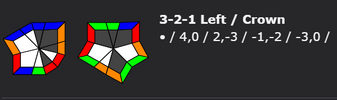
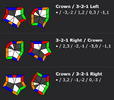
I'm trying to use the sq1 cubeshape page and these four cases are mislabeled. The algs match the pictures, but the cases that correspond with the labels don't seem to exist anywhere in the list. Also, would you be willing to share where you got your algs? I have been looking for a list that isn't attached to anything else, but I haven't been successful so far. Thanks!

1769653327598.png
1769653365950.png
 
I'm trying to use the sq1 cubeshape page and these four cases are mislabeled. The algs match the pictures, but the cases that correspond with the labels don't seem to exist anywhere in the list. Also, would you be willing to share where you got your algs? I have been looking for a list that isn't attached to anything else, but I haven't been successful so far. Thanks!

View attachment 46239
View attachment 46240
those cases should have a correct algorithm now. also, I updated it to mirror the bottom face to emulate how you would see the bottom of a physical puzzle. I'm curious if you think it's better this way

thanks for bringing this to my attention!

(unfortunately i don't remember where these came from, it's been a while)
 
Back
Top