• Welcome to SpeedSolving.com — the world’s largest puzzle community!

    You’re currently browsing as a guest, which means you have limited access to discussions, resources, member profiles, and community features.

    Join 50,000+ cubers and puzzle enthusiasts from around the world to ask questions, share solves, improve faster, and be part of the community.

    Registration is free, fast, and easy — create your account today.

    Already a member? Log in here to hide this message and start participating.

One-Answer 4x4 Question Thread

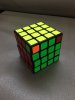
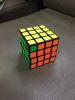
Hi there, have been trying to resolve this for the past week. I kept ending up with 2 unsolve corners on the last layer of the 4x4x4, i will basically need to swap these 2 corners before i can oriente them. Has anybody seen this type of issue before?
 

Attachments

  • image1.jpeg
    image1.jpeg
    55.8 KB · Views: 2
  • image2.jpeg
    image2.jpeg
    54.5 KB · Views: 2
  • image2 (1).jpeg
    image2 (1).jpeg
    54.5 KB · Views: 1
Hi there, have been trying to resolve this for the past week. I kept ending up with 2 unsolve corners on the last layer of the 4x4x4, i will basically need to swap these 2 corners before i can oriente them. Has anybody seen this type of issue before?
If nothing else is swapped, that's an impossible case. You'll need to disassemble.
 
Last edited:
You have just got PLL parity, do 2R2 R2 U2 2R2 R2 2U2 2R2 R2 2U2 and you will either have an F perm or a T perm depending where you did it

I like the other version of that algorithm with the slice moves more.
Wide moves are awkward, they make my hand tired.

That one is the slice one.
no I meant using direct slice moves like M2 and not do wide R2 and R2 which is a equivalent of M2,
 
Last edited:
Geez, how many notations are there for 4x4? I write my PP alg like this:

r2 U2 r2 Uw2 r2 Uw2

With x being a slice, Xw being a wide move, and X/X'/X2 being outer layer turns
The notation you're using may be popular (e.g. CubeSkills uses that too) but it's bad notation and this is the hill I'll die on.

I've done a fair number of big cube reconstructions (some have not been added to cubesolv.es yet) and it would have been hell if I had to write all of those in modified Singmaster(?) notation. You may have noticed that all of Brest's, Stewy's and my big cube recons use SiGN notation. There is a reason for this! SiGN is just better.

It's honestly kind of embarrassing that as a community, we've been so terrible at standardising big cube notation. WCA notation is universally understood, but cannot represent slices. Singmaster-based notations are awful but popular because that's what many older tutorials are written with. SiGN somehow never managed to catch on, except among people who actually have to deal with big cube notation frequently. Our weekly comp uses ancient WCA notation (wtf!) for 666 and 777 scrambles.
 
Last edited:
The notation you're using may be popular (e.g. CubeSkills uses that too) but it's bad notation and this is the hill I'll die on.

I've done a fair number of big cube reconstructions (some have not been added to cubesolv.es yet) and it would have been hell if I had to write all of those in modified Singmaster(?) notation. You may have noticed that all of Brest's, Stewy's and my big cube recons use SiGN notation. There is a reason for this! SiGN is just better.

It's honestly kind of embarrassing that as a community, we've been so terrible at standardising big cube notation. WCA notation is universally understood, but cannot represent slices. Singmaster-based notations are awful but popular because that's what many older tutorials are written with. SiGN somehow never managed to catch on, except among people who actually have to deal with big cube notation frequently. Our weekly comp uses ancient WCA notation (wtf!) for 666 and 777 scrambles.
Why does this notation is worse though?
 
Why does this notation is worse though?
I'm assuming you're referring to Singmaster-based notation (with lowercase letters for inner slices).

1. There's no authoritative source you can point to defining what everything means, because it evolved "naturally". With SiGN or WCA notation, you can point someone at the relevant website and let them read.

2. The notation prioritises the wrong thing for speedsolving. Slice moves are bad and wide moves are good, and so wide moves should be easier to read/type than slice moves. This is (trivially) true for WCA notation since it cannot even represent slices, and also true for SiGN (2R for inner slice versus r for wide). Extremely not true for the earlier variants of Singmaster notation that used Uu for wide moves or modern variants that defer to WCA notation by using Uw.

(In a non-cubing context, see how Morse code uses the shortest codes for E, T, A, I, N (five of the six most frequent English letters) while using longer codes for less frequent letters. See also Huffman coding.)

3. Lowercase letters (without any prefix) have the same meaning as they do in the common notation for 3×3×3: you just turn two layers. There's a case to be made that maybe an unprefixed lowercase letter should mean turning all-layers-but-one instead, but within big cube speedsolves, all-but-one wide turns are rare because they need you to grip a tiny section of the cube while executing the move, which is unergonomic. Either way, Singmaster notation fails on this count.

4. There is no widely agreed upon way of writing non-outer block turns in Singmaster notation. This is not a big problem on 4×4×4 since you can still use "M", "S", "E", but on bigger cubes, how would you write SiGN's 2-3u? The problem isn't coming up with a notation (which isn't difficult), it's doing it in a way that is already understood so that people don't have to waste time trying to understand your new notation. To be fair, the fact that I have to type this out at all means that SiGN isn't quite there yet.

5. The virtual cube that most of us use, alg.cubing.net, already supports SiGN and WCA notation, but not Singmaster notation.
 
Are there algorithms for the different PLL parity situations?

For opposite/diagonal corners,I usually do the opposite edges parity then a v-perm. For adjacent edges in the UF and UR spot, I will usually do a R U R' U' then the opposite edges parity, then U R U' R'.

Are there better algorithms for this? I find myself taking what feels like way too long for these cases
Doing parity from certain angles can give you a better PLL. You are doing the right alg for adj parity which is just sexy parity reverse sexy. Just try and figure out how to get the best PLL. Watch this video by SCR
 
Are there algorithms for the different PLL parity situations?
The basic:

Additional algs:
Cases are named the same as on J Perm's website (which I think are also the same names that are used on square-1 PLL/PBL alg sheets). Not all of these may be ideal for you. All algs written in SiGN (lowercase = wide move; uppercase with numerical prefix = slice move); just because a slice move is written as such doesn't mean you have to execute it as a slice move.

adj:
(UB-UL) r U r' R U' r' U' r U r U' r' U' r' R U r U R' U' R' (I don't use this, but I think some people can execute this crazy fast)
(UF-UL) u' R U R' u' r2 U2 2R2 U2 r2 u R U' R' u (this and the next three are the algs I use)
(UB-UL) u R U' R' u r2 U2 2R2 U2 r2 u' R U R' u'
(UF-UR) u' R U' R' u' … (you get the idea)
(UB-UR) u R U R' u …
even more alternatives:
(UF-UR) R2 D' r2 U2 F2 2R2 F2 U2 r2 D R2
(UB-UR) (x' R2) B r2 F2 U2 2R2 U2 F2 r2 B' R2
(UF-UL) (x L2) F r2 F2 U2 2R2 U2 F2 r2 F' L2
(UB-UL) just AUF and do one of the above

W: R U' R U R U R U' R' U' r2 U2 2R2 u2 2R2 u2 (and/or the mirror)
O−: R' U' R' F R F' U R [UF-UB swap & suitable AUF] F U R U' R' F'

Ba: (r l) U2 r2 u2 2R2 u2 F 3r U' R U2 L' U R'
Bb: (r' l') U2 r2 u2 2R2 u2 B 3r' U R' U2 L U' R
Da: R' U L' U2 R U' 3r B r2 U2 r2 u2 2R2 u2 (x')
Db: R U' L U2 R' U 3r' F r2 U2 r2 u2 2R2 u2 (x)
Pa: R U' L U2 R' U 3r' r2 U2 r2 u2 2R2 u2 (x)
Pb: R' U L' U2 R U' 3r r2 U2 r2 u2 2R2 u2 (x')

Q: z r2 u2 R2 u2 F (R U R' U')3 F' U2 R2 u2 r2 (z')
X: r2 F2 U2 r2 F' (U' R' U R)3 F R2 U2 F2 r2
diag corners: 2R U 2R' U' r' F r2 U' r' U' r U r' F' R U R' U' r' D' r U2 r' D r
 
Back
Top