
guysensei1
Legend
That's not a valid piece...

Follow along with the video below to see how to install our site as a web app on your home screen.
Note: This feature may not be available in some browsers.
That's not a valid piece...
*LBUThat's not a valid piece...

Ok I added cube rotations to generator and also a sorter based on a primitive efficiency estimator. It's a bit better now.I was looking for the best alg for Ubr-Bdr-Rbd


Thanks for sharing the tip! I've also started using corner 3-cycles, that wasn't as difficult as seemed in the beginning. I guess I might start using a flashcard app too as I get to a bit more complicated comms.After many different approaches, I may have found the ideal way for me to drill my 3Style comms on a more productive way.
I'll be using Anki. This is an amazing flashcard app for anyone to learn anything through spaced repetition. I have successfully used it in the past to expand my German vocabulary and more recently to learn the Major Mnemonic System.
I have created a deck where I'll be adding new comms as they are discovered, and using it to drill them randomly.
Each flashcard has a letter pair as the front, which is prompted to me and then I'll perform the case on a solved cube. If I succeed, and depending on how fluent / fast at recalling and executing it, I'll repeat a few times over before moving on to the next one. Tapping the flashcard will show the respective algorithm in case I need to double-check it.
What's amazing to me about Anki is that it makes me focus on a specific case, one at a time, and their appearances will be prompted depending on how much I need to practice each, which is to say my worst cases will show up more often so I drill them more intensively. The better I get at a case, the less it shows up until it needs refreshing.
My previous approach was kinda random, and I found I was not focusing properly. I'd drill random cases from my spreadsheet and not make much progress, with a few real time solves in between - in which I'd often forget or downright panic when I came across a case I had a comm for, resorting to OP. It was still feeling kind of overwhelming, and clearly counterproductive.
Now my first Anki session led me to about 45min of focused practice on just the comms I have and need to get good at, and I'm far more confident in most of the cases already.
Tomorrow I'll start working on an upgraded practice regimen. I'll warm up with an Anki session of 20 random comms, do a couple Ao12s and then back to Anki, followed by trying to come up with new comms for the cases I still need to learn.
Rinse, repeat, and hopefully have the FDR sticker set fully implemented within a week or so, depending on how much practice time I get.

Was it this one?I recall seeing a nice alg for wing parity in big-BLD, for r2, somewhere in these forums not too long ago. But literally an hour of trying to get the forum search tool to do what I want, and manually searching through many of these threads, I can't find it. Anyone know where it was?

Last year I made a Windows app for drilling 3-cycles. Don't think I ever mentioned it here on the BLD forums, so better late than never.After many different approaches, I may have found the ideal way for me to drill my 3Style comms on a more productive way.
I'll be using Anki. This is an amazing flashcard app for anyone to learn anything through spaced repetition. I have successfully used it in the past to expand my German vocabulary and more recently to learn the Major Mnemonic System.
You can check it out here:
I recall seeing a nice alg for wing parity in big-BLD, for r2, somewhere in these forums not too long ago. But literally an hour of trying to get the forum search tool to do what I want, and manually searching through many of these threads, I can't find it. Anyone know where it was?
Was it this one?
r' U2 r U2 r' U2 x r U2 r U2 r U2 r2 U2 x' r' U2
Rob Yau posted it a few years ago in one of the megathreads but search isn't so good at finding things buried in those
It was me. Here's link though Mark put an alg: https://www.speedsolving.com/forum/threads/big-cube-bld-discussion.16775/page-24#post-1057684

Last year I made a Windows app for drilling 3-cycles. Don't think I ever mentioned it here on the BLD forums, so better late than never.
https://www.speedsolving.com/forum/threads/bldtrainer-new-application-for-practicing-3-cycles.61303/
It can be used in a variety of ways, for example to focus on 3-cycles involving a specific sticker.
Thanks, I'm glad you like it!This is AMAZING! Thanks for sharing!


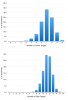
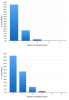
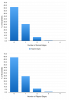
| Count | Corner Targets | Edge Targets | Solved Corners | Twisted Corners | Solved Edges | Flipped Edges |
|---|---|---|---|---|---|---|
| 0 | 0.0% | 0.0% | 75.0% | 57.0% | 61.8% | 63.5% |
| 1 | 0.0% | 0.0% | 21.5% | 32.4% | 30.7% | 29.1% |
| 2 | 0.2% | 0.0% | 3.1% | 8.4% | 6.8% | 6.5% |
| 3 | 0.5% | 0.0% | 0.3% | 1.9% | 0.6% | 0.8% |
| 4 | 2.8% | 0.0% | 0.1% | 0.1% | 0.1% | 0.1% |
| 5 | 7.5% | 0.0% | 0.0% | 0.2% | 0.0% | 0.0% |
| 6 | 20.6% | 0.0% | 0.0% | 0.0% | 0.0% | 0.0% |
| 7 | 33.4% | 0.4% | 0.0% | 0.0% | 0.0% | 0.0% |
| 8 | 24.9% | 1.8% | 0.0% | 0.0% | 0.0% | 0.0% |
| 9 | 9.1% | 6.8% | 0.0% | 0.0% | 0.0% | 0.0% |
| 10 | 0.9% | 16.8% | 0.0% | 0.0% | 0.0% | 0.0% |
| 11 | 0.0% | 29.3% | 0.0% | 0.0% | 0.0% | 0.0% |
| 12 | 0.0% | 28.1% | 0.0% | 0.0% | 0.0% | 0.0% |
| 13 | 0.0% | 13.8% | 0.0% | 0.0% | 0.0% | 0.0% |
| 14 | 0.0% | 2.8% | 0.0% | 0.0% | 0.0% | 0.0% |
| 15 | 0.0% | 0.3% | 0.0% | 0.0% | 0.0% | 0.0% |
| Avg. | 6.988 | 11.281 | 0.289 | 0.562 | 0.465 | 0.449 |
I go directly from image to commutator. In fact, when I'm coming up with comms, I find it easier to think of it in terms of "the comm for cat" rather than the "the comm for CT".I've got a question for people who use 3-style.
When you're recalling information from your images and executing it, do you first turn the images back into letters, then the letters into the right commutator? Or do you go directly from the image to the right commutator?
As an example, let's say you have a CaT in your memo.
Do you turn the image of a cat back into CT, then remember the commutator that you correspond with CT? Or do you directly correspond the image of a cat with the commutator?
Thanks!


Doesn't matter what color but it's best to use the same one every time for consistency.What color should I start with on top, front, and right? Does it matter and should I use the same one everytime?


