
TDM
Legend
Same. I was thinking about some supercube centres, but not all of them...I forgot about centralmost center rotations

Follow along with the video below to see how to install our site as a web app on your home screen.
Note: This feature may not be available in some browsers.

Same. I was thinking about some supercube centres, but not all of them...I forgot about centralmost center rotations
11-layered, not 13. We already have:
- megaminx: 3 layers
- gigaminx: 5 layers
- teraminx: 7 layers
-petaminx: 9 layers.
So examinx should have 11.
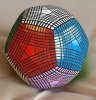

Well, you may think so, but an Examinx is not the next step up. By the regular orders of magnitude, it goes peta- exa- zetta-, but the one person who actually designed it named it wrong.
what?
If the one person who designed it has no clue about how that naming scheme works, we're not forced to stick to his error forever just because he chose the wrong name in the first place. His puzzle is a zettaminx, not an examinx, period.Well, you may think so, but an Examinx is not the next step up. By the regular orders of magnitude, it goes peta- exa- zetta-, but the one person who actually designed it named it wrong.
goodatthis said:Also, gigaminxes have 5 layers, not 6.

What are the odds of getting a skip of orientation of the 8 edges other than the cross pieces? Because that's what just happened. I just got a solve that was rotationless, and was <RUL> except for one F move and one D move. This is a CFOP solve, not a ZZ solve. http://tinyurl.com/n5l3hy4

If you are left with 5 remaining centers, the U center can be in one of 5 places, so the chance of it being solved is 1/5. Given that the U center is solved, the F center can be in one of 4 places, so it has a 1/4 chance of being solved. Given the U and F centers are solved, the R center can be in one of 3 places, so it has a 1/3 chance of being solved. Once the U, F, and R centers are solved, L5C must be solved because there are two left and skewb can't have parity, so the chance of having a last five centers skip is 1/5*1/4*1/3 = 1/60. Another way to think of it is that there are 5 centers, so you could arrange them in 5! = 120 ways, but dividing by 2 (because skewb can't have parity) gives you 60 combinations, 1 of which is solved.I was doing some skewb solves, when suddenly I had a last-5-centers skip. I solved 1 center + 4 corners first, then solved the last 4 corners with R' F R F', and then suddenly the skewb was solved. What is the probability for such a skip?


I'm guessing that the request is for at least 3 pairs, and that F2L pair skips are also taken into consideration?
Yep, they are.I'm guessing that the request is for at least 3 pairs, and that F2L pair skips are also taken into consideration?


If you had a set of 3x3 stickers (9 stickers of each sticker color, 6 colors), and you randomly stickered a cube, what are the odds that it will be solvable?
I think about 1 in 3*10[sup]15[/sup]. In other words, don't try it.
What about the other restrictions?
What is the probability that a 1x2x3 block will form in the LL during the solving of F2L? I realized that when I was at US Nationals, that happened 3 times.
You mean just formed during LL and then perhaps broken again, or also still there at the end of F2L?


