D
Deleted member 55877
Guest
i think it's a lowercase L

Follow along with the video below to see how to install our site as a web app on your home screen.
Note: This feature may not be available in some browsers.


Looks like it. Then you can see l'i think it's a lowercase L
I’m gonna try that, it is definitely a 1 and then a 1’ I had to make the picture smaller resolution to post it and make it blurry so I’m thinking maybe it’s a typo. A small L would make sense tho so I’ll give it a try.Looks like it. Then you can see l'


I don’t know what you mean by high quality practice. Doing solves while focused is high quality enough for improvementHey, im really into 5x5. But how to practise on 5x5, it isnt as easy as on 3x3 where you can e.g. dril ll. Should i just solve? That isnt high quality practise tbh

Big cubes are long enough that I find “deliberate practice” (only doing one part of it over and over) useless for it, especially since transitions between steps are extremely important. Just pick something specific to be extra careful with during solves and do full solvesHm, what i mean by it is, That just solving isnt very good practise. Practising certain parts helps much more to improve than just solving, which is my experience. It`s called deliberate practise as you may know.
My actual question is, are there any practise techniques?
No idea what you mean. Post picture.I accedentally scrmbled my 5x5 and don't know how to solve it.
I have all the edges good but need to swap the right middle bars, but by doing that, try not to destuerb the edges
Thanks!
Just post the alg in the comments


I don’t have either, but I think that most people would say definitely.Is it worth it to spend more money on a mgc 5 rather than a the MS 5x5?
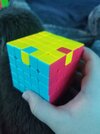 I solved my own way cause vid are confusing but I got this.

F2 U 3R U' F R' U F' 3R' F U' R F perhaps?I solved my own way cause vid are confusing but I got this.


1. UD, as it makes fingertricks and lookahead easier.Mostly for Yau users.
1. Do you make First 2 centres on LR (so the transition into cross edges is easier) or UD?
2. Do you make the 4 cross edges and then centres or you make 3 cross edges, finish centres and then finish the last cross edge?
3. Which approach is the fastest for making Centres - 2/3 Bars (half bars but for 5x5) or making a centre and then moving on to the next?
4. If you make centres and then the last cross edge, do you make the cross edge in the M-slice ( same orientation as making the cross) or do you rotate, and make it with the E-slice?
5. Can someone link a good edge pairing video, all the ones I've seen are Redux-related.
6. How important are L2E algorithms if you already know Parity?
7. When you're done with First four edges, do you always insert at least one F2L pair or you wait until you're done with all the edges?
8. What do you average?
9. How do you improve lookahead if you don't even know where to look?
I tried making all 4 at once and preserving the last one but it's way harder to make centres that way2. Depends. Make 4 and hide the last one, or wait to make the last one.


