

Hiori_Fembysolver
Member
Hi everyone,
I would like to propose a new 3x3 method I’ve been developing called Zeta-Bp8. The main goal of this method is to achieve a highly efficient move count while exploring alternative blocks and restricting modern S-slice moves during the final steps. It is a fully color-neutral method that blends intuitive blockbuilding efficiency with algorithmic sequences.
Here is the complete breakdown of the steps:
1. Zeta Slotting (Steps 1 & 2)
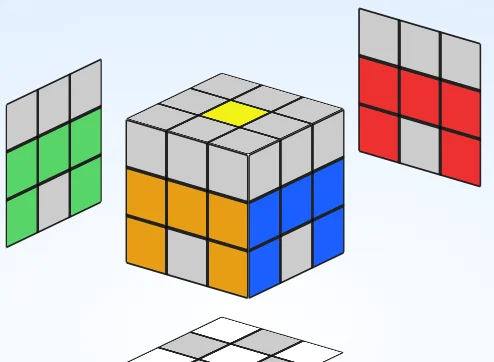
2. CMLL (Step 3)
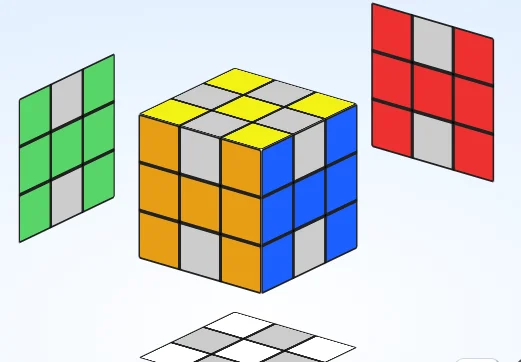
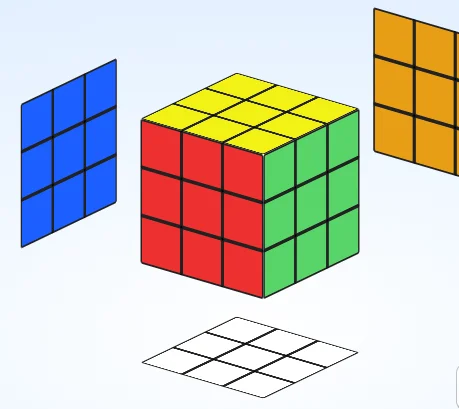
3. L8E - Last 8 Edges (Step 4) [After Upadte]
I am currently working on generating the full visual sheet for the 1-Look slice-free L8E cases. What do you think about the viability of this method? I would love to hear your feedback, suggestions for the L8E subsets, or any thoughts on the transition ergonomics!
Thanks!
I would like to propose a new 3x3 method I’ve been developing called Zeta-Bp8. The main goal of this method is to achieve a highly efficient move count while exploring alternative blocks and restricting modern S-slice moves during the final steps. It is a fully color-neutral method that blends intuitive blockbuilding efficiency with algorithmic sequences.
Here is the complete breakdown of the steps:
1. Zeta Slotting (Steps 1 & 2)
- Detailed Description: This is the foundational phase of the method. Instead of building a traditional cross or standard Roux blocks, the user utilizes full color neutrality to inspect and choose the most efficient path to arrange the initial pairs and slots (Zeta Slotting). This choice is strictly guided by a specific edge classification system: an edge is defined as "Good" if it can be correctly positioned in 3 moves or less, and "Bad" if it requires more than 3 moves. The solver analyzes these edge states during inspection to determine exactly which color/side the solve will be built on.
- The Transition: A critical aspect of this phase is utilizing active Look Ahead. While finishing the final slots of the Zeta structure, the solver must actively track and predict the top layer corner pieces to achieve a seamless, pauseless transition directly into the CMLL stage. Because it gives the solver immense freedom during inspection to bypass bad cases, it requires advanced color recognition and predictive tracking to fluidly transition into the next steps.
- Estimated Move Count: ~18 moves.
2. CMLL (Step 3)
- Description: Once the Zeta blocks are formed and the top layer corners are isolated, we use standard CMLL algorithms from the Roux method to simultaneously orient and permute the top 4 corners without disturbing the lower structures.
- Estimated Move Count: ~11-13 moves (Avg: 12).
At the end of this step, the cube should look like this: All 4 top layer corners are completely solved (both oriented and permuted correctly relative to each other), while the lower blocks remain intact, leaving only the last 8 edges to be solved.
3. L8E - Last 8 Edges (Step 4) [After Upadte]
- Detailed Description: This step solves the remaining 8 edges of the cube simultaneously using a strict 1-Look approach. Instead of separating orientation and permutation, the user recognizes the entire state of the last 8 edges and solves them in a single algorithmic look.
- The Constraint & Ergonomics: The defining and unique feature of Zeta-Bp8's L8E is that all internal slice moves (M, S, and E) are completely banned. The step is solved purely through outer-layer interactions using a subset optimized for <U, D, R, L, F, B>. By leveraging tactical F and B moves to manipulate edge orientation, the method achieves optimal solutions ranging from 13 to 15 moves per case. This eliminates the risk of inner-slice lockups and allows for a pure, high-TPS endgame.
- Estimated Move Count: ~11-15 moves (Avg: 13).
Pros & Cons [ After Update ]
Pros:- Great Efficiency: With an average move count of ~43 to 50 moves, it bridges the gap between CFOP and Roux while completely avoiding internal slices at the end.
- Lockup-Free Endgame: By completely eliminating M, S, and E slices from the L8E phase, the solver can execute the final algorithms with maximum stability and confidence, preventing frustrating mid-slice mechanical lockups.
- 1-Look Fluidity: Transitioning straight from CMLL to a 1-Look L8E completely eliminates the pause between orientation and permutation, maximizing execution speed.
- Full Algorithmic TPS: Turning the entire L8E into a purely algorithmic step using external faces allows for highly consistent, predictable, and fast execution grip styles.
- Color Neutrality: Promotes high inspection freedom during the Zeta Slotting phase, allowing for optimized start options based on the scramble.
- F/B Move Ergonomics: Relying on outer layers to orient the remaining 8 edges introduces more F and B moves into the endgame, which requires specialized fingertrick mastery compared to standard M,S methods.
- High Look Ahead Demand: The transition from the intuitive Zeta Slotting to CMLL requires the solver to track corners while finishing blocks, which drastically increases the mental load and can cause pauses if look ahead fails.
- Massive Algs Subset: Moving from a 2-Look to a full 1-Look L8E drastically increases the number of algorithms required to cover all possible edge orientation and permutation combinations without relying on helper slices.
- Steep Learning Curve: Full color neutrality combined with unconventional initial blockbuilding requires high intuition, excellent lookahead, and strong spatial awareness.
Stats and Example
- Average Move Count: ~43 to 50 moves.
- Method Personal Best (PB): 22.00 seconds.
I am currently working on generating the full visual sheet for the 1-Look slice-free L8E cases. What do you think about the viability of this method? I would love to hear your feedback, suggestions for the L8E subsets, or any thoughts on the transition ergonomics!
Thanks!
Last edited:


