
Waffles
Veteran
Thanks guys, I have a competition coming up and I didn’t register for clock so I think I’ll take your advice on this one

Follow along with the video below to see how to install our site as a web app on your home screen.
Note: This feature may not be available in some browsers.



Right now, my understanding is that no-flip is used when it is very helpful to do so (very special cases, 2 move sides, etc.). I think Aedan Bryant uses it some, but I don’t know if any top level solver uses it exclusively or even the majority of the time. Flipping, especially x2 flips, are so fast that it’s rarely easier to do no-flip. I haven’t really looked into it yet, but I think it would be a good thing if you wanted to prove its viability. It’s definitely a mind bending method and I know that it hasn’t been fully explored. Go ahead if you want to.What is the general consensus on no flip? I think clock has a lot of room to grow still, and the next step is no-flip, simultaneous pins, and taking advantage of it being commutative (seriously stretching inspection here). Maybe I should prove that it’s viable first?
That’s good to know, I had no idea if anyone used it and the only trace of it is an old YouTube video and forum thread. Thank you!I think Aedan Bryant uses it some, but I don’t know if any top level solver uses it exclusively or even the majority of the time.
Yeah, about a year ago, I found a video of a no-flip method on YouTube and started using it:I noticed @AndrewT99 mentioned maining no-flip in his introduction thread.


I just got a qiyi clock and I already lost a nut.
Do you know where I can get the nut that the qiyi clock uses to hold the case together?
Like homedepot or lowes?
I dont want to have to get it from thecubicle where I will have to pay $6 just for shipping.
Thank you so much!Homedepot or Lowes have an ok amount of smaller nuts. Just bring one with you into the store and check its size. If they don't, I should be able to send you one. My work should have practically every size/thread pattern
IMO, if it works and is not breaking the clock, there isn’t a problem. I haven’t seen it, but you could leave it there, or open the clock up and clean it out.Sorry for double post but I have a question:
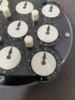
Is lube on the outside like this normal?
View attachment 16118
Ok, I’ve been hearing enough about this no-flip method that I have to try it. I’ll report back in a week or so if I can get myself to learn this.Yeah, about a year ago, I found a video of a no-flip method on YouTube and started using it:
Basically, from what I can tell, the pros are
1. you need to press less pins in a solve
2. higher efficiency as you are turning both sides of the clock per pin press as opposed to just one side
and the cons are
1. you have to do some mental sums and memorization
2. you have to split your concentration when turning both sides by different numbers
3. higher risk of DNF
For me, I don't really have too much problem with mental sums or memorization, and learning to split your concentration comes with practice, and my DNF rate is very low, which is why I decided to go with this method.
That said, I'm by no means qualified enough (i.e. fast enough) to say whether it is outright better than the normal method currently used.
Good luckOk, I’ve been hearing enough about this no-flip method that I have to try it. I’ll report back in a week or so if I can get myself to learn this.


A tip is that when you do the corner clocks, you do not need to flip back over to the first side you solved edges+centers on.I just started practicing the Rubik's Clock a couple days ago, I average sub-60 now, but I'm using the most basic beginner's method possible. Are there more advanced speedsolving methods faster people use, or any tips I can use to get faster?


