• Welcome to SpeedSolving.com — the world’s largest puzzle community!

    You’re currently browsing as a guest, which means you have limited access to discussions, resources, member profiles, and community features.

    Join 50,000+ cubers and puzzle enthusiasts from around the world to ask questions, share solves, improve faster, and be part of the community.

    Registration is free, fast, and easy — create your account today.

    Already a member? Log in here to hide this message and start participating.

Anyone know this technique please?

Palmer

Member
Joined
Sep 29, 2025
Messages
4
Location
Sussex
Hope I've posted this in the right place...

Back in the early 80s I learnt how to do the Rubik's cube. Somehow 40 years later I can still just about remember the technique I used but some parts are a bit hazy and take a few attempts, though I can still get it done in a couple of minutes (obviously not trying to break any records here!)

Just wondered if anyone knows this technique and what it's called or what book it came from?

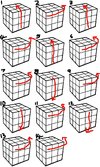
Basically I start by getting one almost complete face, apart from one centre edge piece (that's used to move pieces 'through' in the next step). Then I complete the bottom face (4 corners first, then centre pieces) followed by putting the first missing edge piece in place so I have a complete top and bottom face. Then it's just a matter of a few simple sequences. I always remember the last step in my head as 'up 1, across, up 1, across, up 1, across, across, down 1, across, down 1, across, down 1, across, across' (like the attached pic).

I definitely remember owning the book 'The Simple Solution To Rubik's Cube' by James G Nourse as a kid but when I scanned through a few pages I don't think it was that one I learnt from. Could have just been a cheap printed guide from somewhere but I'd love a physical copy for when my brain starts to fade and that I can also teach my kids!
 

Attachments

  • Final Steps.jpg
    Final Steps.jpg
    318.3 KB · Views: 22
Back in the early 80s I learnt how to do the Rubik's cube.

Back in the early 80s, a popular solving method used to be Corners-first.

Basically I start by getting one almost complete face, apart from one centre edge piece

Note that in cubing jargon, there is a difference between a face and a layer. Nowadays we call 3x3x3 pieces corners, edges and centers.

Anyway, to answer your question: you seem to be using some kind of Corners-first method. Check the following links to see if it matches your solving order:


I am too a Corners-first user, the way I solve the cube when speed solving can be seen here: https://hlavolam.maweb.eu/corners-first-method - compare the algorithm no. 16 at the bottom of that page with your picture :-)
 
Hope I've posted this in the right place...

Back in the early 80s I learnt how to do the Rubik's cube. Somehow 40 years later I can still just about remember the technique I used but some parts are a bit hazy and take a few attempts, though I can still get it done in a couple of minutes (obviously not trying to break any records here!)

Just wondered if anyone knows this technique and what it's called or what book it came from?

Basically I start by getting one almost complete face, apart from one centre edge piece (that's used to move pieces 'through' in the next step). Then I complete the bottom face (4 corners first, then centre pieces) followed by putting the first missing edge piece in place so I have a complete top and bottom face. Then it's just a matter of a few simple sequences. I always remember the last step in my head as 'up 1, across, up 1, across, up 1, across, across, down 1, across, down 1, across, down 1, across, across' (like the attached pic).

I definitely remember owning the book 'The Simple Solution To Rubik's Cube' by James G Nourse as a kid but when I scanned through a few pages I don't think it was that one I learnt from. Could have just been a cheap printed guide from somewhere but I'd love a physical copy for when my brain starts to fade and that I can also teach my kids!
I have never heard or seen this method anywhere but it looks cool! U should just learn beginner or CFOP tho
 
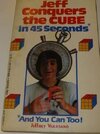
You are using Waterman's method. It is also the method I used intuitively in the 1980's without even knowing about Waterman. To be more clear you are using the simple version of Waterman's method. Your method was not in the Simple Solution to the Rubik's Cube (which had an absolutely horrible method), and it was also not in a couple of other common books available at book stores. There was however a book called '?????: Rubik's Cube in 45 seconds'. (????=was the guys name). I think that book may have described the method in writing, even though many people were using that method intuitively.
Waterman published a booklet around 1988 but if you are in North America it would be highly unlikely that you ever saw it back then.
 
Thanks everyone for the suggestions. Sorry for using the wrong jargon, I only ever did it in a very basic way as a kid so not aware of all the variations and terminologies!

It does look like I'm using some variation of Waterman's so I'll have a good read through everything you've all suggested and see if I can find my specific technique in their somewhere. I'm from the UK so I guess each country had certain ways that got popular back in the 80s!

I still find it's a good way to give an ageing brain a workout and although I'm not looking to set any records I'm just pleased I can impress my kids by doing it in around 1:30!
 
You are using Waterman's method. It is also the method I used intuitively in the 1980's without even knowing about Waterman. To be more clear you are using the simple version of Waterman's method. Your method was not in the Simple Solution to the Rubik's Cube (which had an absolutely horrible method), and it was also not in a couple of other common books available at book stores. There was however a book called '?????: Rubik's Cube in 45 seconds'. (????=was the guys name). I think that book may have described the method in writing, even though many people were using that method intuitively.
Waterman published a booklet around 1988 but if you are in North America it would be highly unlikely that you ever saw it back then.
Was this the book?
51VsMg6BSZL._SY445_SX342_.jpg
 
That might be it; the one I recall had a slightly different cover but it could be the same book.
 
You are using Waterman's method. It is also the method I used intuitively in the 1980's without even knowing about Waterman. To be more clear you are using the simple version of Waterman's method. Your method was not in the Simple Solution to the Rubik's Cube (which had an absolutely horrible method), and it was also not in a couple of other common books available at book stores. There was however a book called '?????: Rubik's Cube in 45 seconds'. (????=was the guys name). I think that book may have described the method in writing, even though many people were using that method intuitively.
Waterman published a booklet around 1988 but if you are in North America it would be highly unlikely that you ever saw it back then.
Sussex is in southern England. I remember a book 'You can do the Cube' by Patrick Bossert I think. Funny how the cubing craze snuffed out in the 80s until it was rediscovered in the early 2000s.
 
Not wanting to bring the tone down on a lighthearted forum but I think one of the reasons I'm so determined to cement this puzzle in my mind is that my father passed away about 8 years ago. In the last years of his life he suffered from progressive dementia and didn't remember me at the end.

One of my biggest fears as I get older is the same thing happening to me and that I might forget my own children one day. So there's a part of me that's recently promised itself to try and keep my brain and memory alive, functioning and active.

It's probably silly but I feel if I can keep practicing things like the cube every now and then and remembering the solution to this little puzzle that I learned years ago when I was a kid, maybe it might help keep the old grey matter ticking along!

Anyway, many thanks for all the pointers :)
 
One of my biggest fears as I get older is the same thing happening to me and that I might forget my own children one day. So there's a part of me that's recently promised itself to try and keep my brain and memory alive, functioning and active.

It's probably silly but I feel if I can keep practicing things like the cube every now and then and remembering the solution to this little puzzle that I learned years ago when I was a kid, maybe it might help keep the old grey matter ticking along!

If forgetting your solution in time is your concern, I would recommend considering intuitive solving instead of algorithmic solving. In intuitive solving, you don´t need to memorize any move sequences. As a child, I personally would appreciate if my father told me how to understand the cube as opposed to memorizing move sequences because a trained monkey can do just that (no offence intended).

From my personal experience: 20 years ago, I learned how to solve this 4x4x4 case algorithmically:


Today, I have no idea how to solve it algorithmically - I simply forgot the move sequence in time. However, I know how to solve it intuitively. You might be saying: "up 1, across, up 1, across, up 1, across, across, down 1, across, down 1, across, down 1, across, across is easy to remember, I will never forget it". The same I was saying to myself with that 4x4x4 case 20 years ago :-) (the cube is interactive, if you want a new challenge, you can try solving it - now you know again how your kids feel when first approaching a 3x3x3 cube ;-)). It´s not fun to remember 500 algorithms if you have 100 puzzles and 5 algorithms for each puzzle. It is fun to solve all 100 puzzles with the same principle without memorizing anything :-).

Just recently, someone else asked how to solve your case intuitively in principal.

On the other hand, if you want to train your memory, I would reccomend learning how to solve the cube blindfolded because in that case you need to memorize initial cube state as well as several move sequences.

Happy cubing.
 
You are using Waterman's method. It is also the method I used intuitively in the 1980's without even knowing about Waterman. To be more clear you are using the simple version of Waterman's method. Your method was not in the Simple Solution to the Rubik's Cube (which had an absolutely horrible method), and it was also not in a couple of other common books available at book stores. There was however a book called '?????: Rubik's Cube in 45 seconds'. (????=was the guys name). I think that book may have described the method in writing, even though many people were using that method intuitively.
Waterman published a booklet around 1988 but if you are in North America it would be highly unlikely that you ever saw it back then.
Finally, someone knows what it is! 1980s is wild tho
 
We still didn't find out which Sussex we are talking about, I mean Sussex is next to me (Kent, England) but also in 3 places in USA I think. Well, there are competitions for cubing all over the place anyway.
Board games are good, chess, Othello, connect 4.
And there are loads of solving systems if you don't want a complex system like CFOP, ZZ, Roux, Petrus etc.
I use a pretty simple system (unique to me) with only a few sequences to remember. 👍
I'm in Sussex in the UK, not that far from Kent actually!
 
If you want to avoid dementia you must take pro-active steps, since it is caused primarily by heavy metals in the food supply, you need to take daily heavy metal detox products like modified citrus pectin, fulvic acid, selenium, NAC, and cilantro. Citricleanse and Amalgaclear are my favorite products.
Taking daily anti-oxidants would likely also help. Your health is in your own hands and never rely on our broken healthcare system to take care of you.
Garlic also keeps heavy metals out of the body but not everyone enjoys garlic or the terrible breath it creates. My dad is obsessed with garlic and eats it every day (in addition to lots of supplements), and he's 97 and still has a 130+ IQ and flawless memory and he still writes articles & research papers.
 
If forgetting your solution in time is your concern, I would recommend considering intuitive solving instead of algorithmic solving. In intuitive solving, you don´t need to memorize any move sequences. As a child, I personally would appreciate if my father told me how to understand the cube as opposed to memorizing move sequences because a trained monkey can do just that (no offence intended).

From my personal experience: 20 years ago, I learned how to solve this 4x4x4 case algorithmically:


Today, I have no idea how to solve it algorithmically - I simply forgot the move sequence in time. However, I know how to solve it intuitively. You might be saying: "up 1, across, up 1, across, up 1, across, across, down 1, across, down 1, across, down 1, across, across is easy to remember, I will never forget it". The same I was saying to myself with that 4x4x4 case 20 years ago :-) (the cube is interactive, if you want a new challenge, you can try solving it - now you know again how your kids feel when first approaching a 3x3x3 cube ;-)). It´s not fun to remember 500 algorithms if you have 100 puzzles and 5 algorithms for each puzzle. It is fun to solve all 100 puzzles with the same principle without memorizing anything :-).

Just recently, someone else asked how to solve your case intuitively in principal.

On the other hand, if you want to train your memory, I would reccomend learning how to solve the cube blindfolded because in that case you need to memorize initial cube state as well as several move sequences.

Happy cubing.
good day

I learned to solve this case on jperm's video about "parity"

(starts at 6min)

cool things is that by knowing how "parity" works it allowed me to develop my own algorithm for solving the loopover puzzle on even grids 👏
 
  • Like
Reactions: qwr
If you want to avoid dementia you must take pro-active steps, since it is caused primarily by heavy metals in the food supply, you need to take daily heavy metal detox products like modified citrus pectin, fulvic acid, selenium, NAC, and cilantro. Citricleanse and Amalgaclear are my favorite products.
Taking daily anti-oxidants would likely also help. Your health is in your own hands and never rely on our broken healthcare system to take care of you.
Garlic also keeps heavy metals out of the body but not everyone enjoys garlic or the terrible breath it creates. My dad is obsessed with garlic and eats it every day (in addition to lots of supplements), and he's 97 and still has a 130+ IQ and flawless memory and he still writes articles & research papers.
Off topic
 
Back in the early 80s I learnt how to do the Rubik's cube. Somehow 40 years later I can still just about remember the technique I used but some parts are a bit hazy and take a few attempts, though I can still get it done in a couple of minutes (obviously not trying to break any records here!)

Just wondered if anyone knows this technique and what it's called or what book it came from?
I have a similar experience, back then I learned a method from a small book that I picked up in the midwest region of the US. What I remember is that the first two layers were the same as today's LBL beginner method, but the last layer was corners first and basic ELL to finish. Rather than M moves it used a lot of L/R moves before manipulating the edges. Unfortunately I don't remember much else about the algs used and the name of the book is lost to me also :)
 
Back
Top