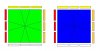
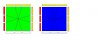
1.2 EOCP
EOCP does exactly what it sounds like- orients edges and permutes corners at the same time.
I think this is the only point in the method where it makes sense to combine 2 successive steps. Solving other things as you make the cube shape seems very difficult and the EP step at the end already has enough cases as it is.
You could combine corner separation and edge separation in one step, but I'm not a big believer since corner separation is really only half a step that takes 3 twists at the very worst. I feel it's going to save you a couple of moves for learning many more cases and making recognition much more complex. I'm still curious to know the exact number of cases and their optimal solutions so I might look into this later.
Now as for EOCP, I've generated all states for Jaap's solver that have the corners already
oriented (I'll use that term since it's so commonly used

). For most of the 216 EOCP cases you have to generate 576 EPs though and not 100 EPs (this is true for the case where the corners are completely solved). I started running it on Saturday and it's now halfway. I've uploaded the input files and the script to run the solver in case you want to find them yourself:
http://www.cubezone.be/eocp.zip
Here are some nice algorithms for the case with 2 adjacent wrong edges in each layer (UF, UR, DF and DR):
(0,-4)/(0,-3)/(1,1)/(0,3)/(-1,3) (swaps no corners)
(0,4)/(0,-3)/(3,3)/(-2,1)/(-1,3) (swaps UBR-UBL and DFL-DBL)
(0,-1)/(3,3)/(-3,0)/(3,0)/(-2,-2)/(-1,0) (swaps UBR-UBL and DFR-DBR)
(1,0)/(3,0)/(-3,0)/(-1,-1)/(0,-3)/(0,3)/(0,1) (swaps UBR-UBL and DBR-DBL)
(4,0)/(3,0)/(2,2)/(3,0)/(3,-5) (swaps UFR-UBR and DBR-DBL)


 ).