A new FMC theory?

Status
Not open for further replies.
Thank you for your concerns. Ill put it into my play. And remember Im not just trying to be lucky once Im trying to be lucky all the time....

I know this is repeating what others have said to some extent, but I think everyone's suggesting that you learn our current most optimal methods for finding low move count solutions. Once you have solid foundational knowledge of what current FMC experts have already discovered, you may even be able to begin working more on your own theory. It's like learning or inventing nearly anything.

For example, the majority of great scientists didn't invent groundbreaking theories overnight. You learn everything we already know, then apply your own creativity with the knowledge that other's have already uncovered through your own informed observations. Human knowledge is an intergenerational accumulation of information--all that we have is a constantly growing database of shared information. FMC is a very construction of the human mind--a challenge to solve a human-developed puzzle in as few moves as possible. Others are able to consistently get sub-20 or nearly sub-20 singles/means, so by learning how you can get to that point, you can begin developing new things for yourself. The resource of experts in an existing field (in this case, FMC) is invaluable. They started off with nothing as well, and becoming extremely good at FMC didn't occur overnight. I commend you for trying to think outside of the box, but without foundational knowledge of advanced methodology, you're running in circles. We are all human (yourself included), and by constructively taking the advice of accomplished FMC competitors, you're more bound for success and expanding your creative capabilities than already deeming yourself a future expert without foundational knowledge of the event.
 
Last edited:
Post in thread 'A new FMC theory?' https://www.speedsolving.com/threads/a-new-fmc-theory.92874/post-1609470

Please read the first paragraph
How does just using more paper help? It might save few seconds but you would still need several hours (or more like several days) to check hundreds of DRs.

Also you obviously can't use a machine that solves the cube. And even if you could, again that doesn't save that much time since you normally can backtrack your moves so you don't have to constantly scramble and solve the cube. And even if you could somehow eliminate scramble+solve times COMPLETELY you would still have nowhere near enough time.

You would need some completely revolutionary method to find DRs. Do you have such method? It is simply not possible to do this with the currently known methods.
This is the crux of it. You (Nabhan) simply don't understand how things are working and you seem to not get that, despite what everyone has told you.
Thank you for your concerns. Ill put it into my play. And remember Im not just trying to be lucky once Im trying to be lucky all the time....
This addresses nothing I said. I understand you're "trying to be lucky all the time", but you haven't told us of any new technique that will help at all apart from the "more paper" idea, which, as tseitsei (and others) has said, this is not how it works. Do your homework and come back once you know what's up.
 
I know this is repeating what others have said to some extent, but I think everyone's suggesting that you learn our current most optimal methods for finding low move count solutions. Once you have solid foundational knowledge of what current FMC experts have already discovered, you may even be able to begin working more on your own theory. It's like learning or inventing nearly anything.

For example, the majority of great scientists didn't invent groundbreaking theories overnight. You learn everything we already know, then apply your own creativity with the knowledge that other's have already uncovered through your own informed observations. Human knowledge is an intergenerational accumulation of information--all that we have is a constantly growing database of shared information. FMC is a very construction of the human mind--a challenge to solve a human-developed puzzle in as few moves as possible. Others are able to consistently get sub-20 or nearly sub-20 singles/means, so by learning how you can get to that point, you can begin developing new things for yourself. The resource of experts in an existing field (in this case, FMC) is invaluable. They started off with nothing as well, and becoming extremely good at FMC didn't occur overnight. I commend you for trying to think outside of the box, but without foundational knowledge of advanced methodology, you're running in circles. We are all human (yourself included), and by constructively taking the advice of accomplished FMC competitors, you're more bound for success and expanding your creative capabilities than already deeming yourself a future expert without foundational knowledge of the event.
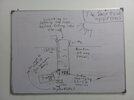
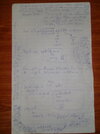
What im working on
 

Attachments

  • 20240625_181741.jpg
    20240625_181741.jpg
    143.2 KB · Views: 44
This is the crux of it. You (Nabhan) simply don't understand how things are working and you seem to not get that, despite what everyone has told you.

This addresses nothing I said. I understand you're "trying to be lucky all the time", but you haven't told us of any new technique that will help at all apart from the "more paper" idea, which, as tseitsei (and others) has said, this is not how it works. Do your homework and come back once you know what's up.
Ill reply this in a few weeks time
 
How does just using more paper help? It might save few seconds but you would still need several hours (or more like several days) to check hundreds of DRs.

Also you obviously can't use a machine that solves the cube. And even if you could, again that doesn't save that much time since you normally can backtrack your moves so you don't have to constantly scramble and solve the cube. And even if you could somehow eliminate scramble+solve times COMPLETELY you would still have nowhere near enough time.

You would need some completely revolutionary method to find DRs. Do you have such method? It is simply not possible to do this with the currently known methods.
Ill reply this after learning complete DR probably within a few months cuz im working on setting up the rope before falling into the well of DR
 
Ill reply this after learning complete DR probably within a few months cuz im working on setting up the rope before falling into the well of DR
So you are saying that you dont Even know how to do DR properly? And yet you somehow consider yourself capable of developing some groundbreaking new fmc theory without even understanding the basic concepts. You really sound delusional man.
 
This is not neasecarily true. We found gods number was 20 by using brute force. Assuming there were to be a mistake in the code that was severe enough to affect the number, then the number could be wrong.

Again, not saying that this is likely in the slightest, (it is extremely unlikely) however I just want to point out that there is a possibility that the math is wrong. Humans are prone to error.
Thats an interesting way of spelling necessarily :D

While I also am very convinced that the gods number is actually 20, you have to keep in mind, that all of that is based on trusting the respecitve team member with access to the google computer. It is literally just his word that it worked, which concluded the proof^^
 
Let me get this straight.
Your revolutionary idea is 'Instead of checking a better path, let's check a worse path because I might get lucky.'
And then
'Well if I check every worse path I can get a very good solution. And how will I check thousands of paths in an hour? I'll ask the WCA to change the rules.'
And for some reason you want to be known as the father of modern FMC.
 
I think that this idea would be okay with unlimited time, but in an hour it's just not feasible.

While I have nothing against religious beliefs, I will also ask @Nabhan Niyaz to not mention god or religion (other than with gods number) in this post, as this is a forum about speedcubing, and this is a thread about FMC.
 

I hope this video gives you some knowledge on what im trying to develop
To put what you said in proper terminology for anyone that doesnt wanna watch the video:
Instead of just picking one of the 3 available EO to solve and then solve another one to get DR, you wanna consider each edge on all EOs at the same time and look into how that affects solutions. Most likely to have a more direct way to get to DR.

Thats surprisingly coherent of an idea tbh, but I feel like that video is not good at explaining it, because the first 2 minutes you dont really say anything of value and the actual idea just comes in the end.
Yeah, STAY TUNED TILL THE END
😅😅
 
To put what you said in proper terminology for anyone that doesnt wanna watch the video:
Instead of just picking one of the 3 available EO to solve and then solve another one to get DR, you wanna consider each edge on all EOs at the same time and look into how that affects solutions. Most likely to have a more direct way to get to DR.

Thats surprisingly coherent of an idea tbh, but I feel like that video is not good at explaining it, because the first 2 minutes you dont really say anything of value and the actual idea just comes in the end.
Did you get an idea of HOW this concept of double bad edge would help you to get to DR more efficiently? I wasn't able to pick anything like that from his explanation. Just saying it does isn't all that helpful.

First of all just saying that it helps getting to DR doesn't make it true. And secondly even if it is true you still need a human viable way of using that theory. Both points remain unanswered in the slightest after watching the video, to my understanding at least. At least the first one needs to be properly explained and proved for this to have merit. Second one can be developed more and more over time if this is actually helpful.

I mean this might be useful to find EOs fast but people are already relatively fast at finding EOs. What I would like to hear is HOW do double bad edges help us predict if a given EO is "promising" or not.
 
Status
Not open for further replies.
Back
Top