It provides information about edge orientation. E.g. if the edge is in the UF position, in one orientation it'll be attracted to URF but not UFL and in the other orientation it'll be attracted to UFL but not URF. On average there'll be two attracting pieces on the left side and two attracting pieces on the right side (out of UF, UB, DF, DB), but sometimes there'll be a 1-3 split or maybe even a 0-4 split.I don't think it can provide any information, please correct me if I'm wrong.

Navigation
Install the app
How to install the app on iOS
Follow along with the video below to see how to install our site as a web app on your home screen.
Note: This feature may not be available in some browsers.
More options
Style variation
You are using an out of date browser. It may not display this or other websites correctly.
You should upgrade or use an alternative browser.
You should upgrade or use an alternative browser.
Older cubers discussions
- Thread starter MarcelP
- Start date

openseas
Veteran
It provides information about edge orientation. E.g. if the edge is in the UF position, in one orientation it'll be attracted to URF but not UFL and in the other orientation it'll be attracted to UFL but not URF. On average there'll be two attracting pieces on the left side and two attracting pieces on the right side (out of UF, UB, DF, DB), but sometimes there'll be a 1-3 split or maybe even a 0-4 split.
Well, that's possible. Since the pull force is more like an average of all combined, it will be an issue if there are 0 split case (1-3 split won't matter much). Let me calculate that possibility.
That brings another point: all magnetic versions need to be investigated and verified. Not likely but possible to have such combinations, intentional or non-intentional.

Sergey
Veteran
- Joined
- Feb 16, 2018
- Messages
- 288
Interesting problem... Cannot even imagine delegate with magnetometer examining each piece of puzzles... Even assuming the introduction of some sort of certification, the puzzle must have a design that provides unavoidable damage in case of modification.That brings another point: all magnetic versions need to be investigated and verified. Not likely but possible to have such combinations, intentional or non-intentional.
Last edited:
openseas
Veteran
Well, that's possible. Since the pull force is more like an average of all combined, it will be an issue if there are 0 split case (1-3 split won't matter much). Let me calculate that possibility.
That brings another point: all magnetic versions need to be investigated and verified. Not likely but possible to have such combinations, intentional or non-intentional.
I was able to generate a state of 0-4 split. Confirmed, should be illegal!
@xyzzy , thanks pointing it out! Glad that I posted here!
Sergey
Veteran
- Joined
- Feb 16, 2018
- Messages
- 288
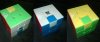
openseas
Veteran
This case?
View attachment 9525
Yes, that's one example depending on how you matched up in terms of colors with magnets
Sergey
Veteran
- Joined
- Feb 16, 2018
- Messages
- 288
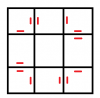
I assumed this scheme (on the solved cube):Yes, that's one example depending on how you matched up in terms of colors with magnets
openseas
Veteran
I assumed this scheme (on the solved cube):
View attachment 9526
That is correct but it depends on which color part is non-magnetized. For example, I used all white and yellow, half of red and orange edges as non-magnet versions. So, if you have a state where all white or yellow is like, DF, FU, UB, BD, then, yes, one side is 0-4 state.
Sergey
Veteran
- Joined
- Feb 16, 2018
- Messages
- 288
Is 3LM feels stronger than factory 2M? I ordered LM yesterday...Non-magnet version is unstable while both magnet versions are too strong
openseas
Veteran
Is 3LM feels stronger than factory 2M? I ordered LM yesterday...
Can't confirm since I don't have GTS2 LM. But heard that same magnet combinations for GTS2 for LM version.
Since I do mostly BLD, I really like extremely weak magnets just to maintain the stability.

- Joined
- Jun 7, 2007
- Messages
- 11,923
- Location
- Indianapolis
- WCA ID
- 2007HUGH01
- YouTube
- Visit Channel
I feel like sometime in the past couple of days, someone here (@openseas ? @mark49152 ?) gave a list of RUD G-perms that they used, but I didn't have much luck finding it. Whoever it was who had a good set of them, could you possibly repost them here? I'm thinking maybe it might finally be my solution to G-perms. I have never had even remotely satisfactory G-perms - they've always been awful - and lately they've been giving me even more trouble than usual. I've always been pretty good with RUD algs; maybe this would finally fix my G-perm problem?

mark49152
Premium Member
@Mike Hughey - yes I have an awesome set of RUD G-perms 
PLL12 (Gd) ( D' R U R' [U' D] R2 U' R U' R' U R' U R2 )
PLL13 (Gc) ( D R'2 U' R U' R U R' U R2 [D' U] R U' R' )
PLL14 (Gb) ( D R' U' R [U D'] R2 U R' U R U' R U' R'2 )
PLL15 (Ga) ( D' R2 U R' U R' U' R U' R2 [D U'] R' U R )
I was able to find a nice fingering & flow for all of them, but since it's subjective, will leave that as an exercise for the reader
Last edited:
openseas
Veteran
@Mike Hughey / I think we discussed about RUD V-perm not G perm. I learned G-perm from Chris Olson's tutorial, nothing special, like everybody else, most hated permutations to me, too
- Joined
- Jun 7, 2007
- Messages
- 11,923
- Location
- Indianapolis
- WCA ID
- 2007HUGH01
- YouTube
- Visit Channel
Okay, thanks - I did find that discussion. I think maybe @mark49152 may have just mentioned his, without actually listing them all. Mark, I'm really looking forward to seeing them!@Mike Hughey / I think we discussed about RUD V-perm not G perm. I learned G-perm from Chris Olson's tutorial, nothing special, like everybody else, most hated permutations to me, too
mark49152
Premium Member
G-perms added. Sorry, I didn't get to it last night.

pglewis
Veteran
So how about aiming to solve two cubes whilst juggling them? lol
Absolutely... if I want to turn two working cubes into zero working cubes and a replacement parts order

- Joined
- Jun 7, 2007
- Messages
- 11,923
- Location
- Indianapolis
- WCA ID
- 2007HUGH01
- YouTube
- Visit Channel
@Mike Hughey - yes I have an awesome set of RUD G-perms
PLL12 (Gd) ( D' R U R' [U' D] R2 U' R U' R' U R' U R2 )
PLL13 (Gc) ( D R'2 U' R U' R U R' U R2 [D' U] R U' R' )
PLL14 (Gb) ( D R' U' R [U D'] R2 U R' U R U' R U' R'2 )
PLL15 (Ga) ( D' R2 U R' U R' U' R U' R2 [D U'] R' U R )
I was able to find a nice fingering & flow for all of them, but since it's subjective, will leave that as an exercise for the reader
Thanks so much - these all seem very nice to me! Now the challenge is to actually learn them.
mark49152
Premium Member
It might help to note they are all mirrors and inverses.Thanks so much - these all seem very nice to me! Now the challenge is to actually learn them.
- Joined
- Jun 7, 2007
- Messages
- 11,923
- Location
- Indianapolis
- WCA ID
- 2007HUGH01
- YouTube
- Visit Channel
Thanks - I didn't notice at first because of the D moves being always moved to the beginning of the algs.It might help to note they are all mirrors and inverses.
mark49152
Premium Member
I think they can be done either end, but I have a preference for doing them first so that I can do them with my LH in parallel with a RH regrip, if one is necessary.Thanks - I didn't notice at first because of the D moves being always moved to the beginning of the algs.
Similar threads

- Replies
- 0
- Views
- 796

- Replies
- 11
- Views
- 2,509
D

- Replies
- 1
- Views
- 102

[Member Intro]
Older beginner in scotland
- Replies
- 17
- Views
- 3,175

- Replies
- 6
- Views
- 2,268