• Welcome to SpeedSolving.com — the world’s largest puzzle community!

    You’re currently browsing as a guest, which means you have limited access to discussions, resources, member profiles, and community features.

    Join 50,000+ cubers and puzzle enthusiasts from around the world to ask questions, share solves, improve faster, and be part of the community.

    Registration is free, fast, and easy — create your account today.

    Already a member? Log in here to hide this message and start participating.

Older cubers discussions

Now, question: Corners are solved, but that's nine memo letters (a new cycle was needed). Do I need to run the parity alg now? But won't that give me an unwanted swap of two solved corners? But I am saving edges for later, gotta learn the three algs, and get them to stick.
The parity alg will swap two of the solved corners, but since those two corners also get swapped during each edge piece that you solve and you will have an odd number of edges, those two corners will end up back in the correct position
 
New 3BLD PB of 1:13.83. It was an easy 10/6 scramble, but it was also almost 7 seconds better than my previous PB, so it was a good solve too.

Then tried only my 3rd practice MBLD since 2016. No such luck there. 6/10 59:02. It's the first time I've done 10 under an hour, so that's good at least. Errors were a twisted corner on the 3BLD cube, did parity alg on last cube when there wasn't parity, did an edge pair from wrong cube (was similar to edge pair I was supposed to do), and one unknown (maybe undid setup wrong)
 
The parity alg will swap two of the solved corners, but since those two corners also get swapped during each edge piece that you solve and you will have an odd number of edges, those two corners will end up back in the correct position

But, how am I going to know they are the correct corners that get swapped while doing an odd nbr of edges? Might I not wind up with two pairs of incorrect corners?
 
But, how am I going to know they are the correct corners that get swapped while doing an odd nbr of edges? Might I not wind up with two pairs of incorrect corners?

There are corresponding parity algorithm per method.
If you use OP corner, parity algorithm swaps UB & UL together.
For example, OP for both corner and edge, R perm does that.
 
Last edited:
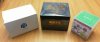
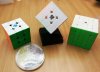
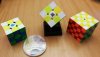
Some new toys arrived :)

Yuxin 5x5, GTS3m, and GAN354m.

I wanted to try the Yuxin 5x5 even though I'm quite happy with my BoChuang. I put some magnets in it last night and will reassemble when I get home from work later.

The GTS3 is an interesting cube. I don't feel the ridges when solving. It is fast and the magnets are great. It has the GTS feel similar to the GTS2. The corner cutting is not the best but I haven't played with the tensions at all yet and the cube is stock OOTB. I'm keen to try the new tensioning mechanism.

The GAN354m is simply amazing OOTB. The green nuts and the magnets are both perfect for me. The cube is fast, smooth, and very .... very quiet. It is an instant OH main for me even though it doesn't hold it's cube-shape as well as the Valk Power M. The smooth and easy turning compensates for that. The size is great for me as I have smaller hands. Very happy with the GAN :)

IMG_20180731_094734.jpg IMG_20180731_101959.jpg IMG_20180731_102037.jpg
 
The GAN354m is simply amazing OOTB. The green nuts and the magnets are both perfect for me. The cube is fast, smooth, and very .... very quiet. It is an instant OH main for me even though it doesn't hold it's cube-shape as well as the Valk Power M. The smooth and easy turning compensates for that. The size is great for me as I have smaller hands. Very happy with the GAN :)

Intresting. I like stickerless cube and I like Gan so I think I must buy it.
 
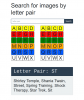
I should be back to drilling blind today in prep for another 7 cube multi attempt tomorrow. Got sidetracked with this letter pair app, as it goes, but it's worth the effort.

I refactored things so it's less ad-hoc and more structured and ready for expansion and threw some Bootstrap at it so it looks prettier than my usual "yep, a developer did the design" look. The next major thing is to restructure the data so the images are individual rows; they're currently just a single comma separated list 1:1 with letter pairs. Once that's done I can attack add/edit/delete on individual images in the list which will take care of the basic CRUD to manage images. And once that's done the structure can be duplicated for a separate list for audio.

flashcards.png
pair-search.png
 
I should be back to drilling blind today in prep for another 7 cube multi attempt tomorrow. Got sidetracked with this letter pair app, as it goes, but it's worth the effort.

I refactored things so it's less ad-hoc and more structured and ready for expansion and threw some Bootstrap at it so it looks prettier than my usual "yep, a developer did the design" look. The next major thing is to restructure the data so the images are individual rows; they're currently just a single comma separated list 1:1 with letter pairs. Once that's done I can attack add/edit/delete on individual images in the list which will take care of the basic CRUD to manage images. And once that's done the structure can be duplicated for a separate list for audio.

View attachment 9331
View attachment 9332

I assume (hope) you plan to make this available. For a fee would be fine. I can think of lots of options you can add, but I'm sure you already have (thought of them).
 
Last edited:
I should be back to drilling blind today in prep for another 7 cube multi attempt tomorrow. Got sidetracked with this letter pair app, as it goes, but it's worth the effort.

I refactored things so it's less ad-hoc and more structured and ready for expansion and threw some Bootstrap at it so it looks prettier than my usual "yep, a developer did the design" look. The next major thing is to restructure the data so the images are individual rows; they're currently just a single comma separated list 1:1 with letter pairs. Once that's done I can attack add/edit/delete on individual images in the list which will take care of the basic CRUD to manage images. And once that's done the structure can be duplicated for a separate list for audio.

View attachment 9331
View attachment 9332
Oh my goodness. I need this. Any idea when it might be available? Thanks
 
I should be back to drilling blind today in prep for another 7 cube multi attempt tomorrow. Got sidetracked with this letter pair app, as it goes, but it's worth the effort.

I refactored things so it's less ad-hoc and more structured and ready for expansion and threw some Bootstrap at it so it looks prettier than my usual "yep, a developer did the design" look. The next major thing is to restructure the data so the images are individual rows; they're currently just a single comma separated list 1:1 with letter pairs. Once that's done I can attack add/edit/delete on individual images in the list which will take care of the basic CRUD to manage images. And once that's done the structure can be duplicated for a separate list for audio.

View attachment 9331
View attachment 9332

And BTW, the most important option to make it useful to me would be the capability to alter the color scheme. For example, I also use yellow at U, but blue at F.
 
I assume (hope) you plan to make this available. For a fee would be fine. I can think of lots of options you can add, but I'm sure you already have (thought of them).

Oh my goodness. I need this. Any idea when it might be available? Thanks

Whatever I do, if ultimately useful, I'll release as open source. Likely GPL2, or something similar.

The ultimate vision is a full stack client/server system, the idea being that people learning blind-- or just anyone with holes in their list-- could search for images from others' lists and add them to their own list with a mouse click. A ready-made, pre-vetted resource for building your own list. There are a lot of pieces that would be needed for that including hosting, users and authentication, a back-end relational database and some help on the server-side.

A stand-alone version using local storage could be prototyped to minimum viable a lot faster without the sharing and back end server features and could be getting use long before a server hosting the full implementation would happen.

My current prototyping is full stack with a MySQL database all running locally so I need to think about transitioning what I have to a self-contained single-page app.

Also, I'm still a little ways from being ready to put a call out for volunteers but I could definitely eventually use some help from anyone with experience with node/express, design/SCSS/CSS, backbone/MV* frameworks, javascript in general, and SQL databases. In particular I'm very green with node and express on the server side but I muddle my way through.

I'll update with progress either here or in a new thread if it gets that far. There are still some big pieces needed to be universally useful besides the entire server-side, including being able to define a custom letter scheme, configuration settings for color scheme and orientation, and import export facilities.
 
So this just happened....
Ao5 = 19.69

Only the 3rd or 4th time I’ve ever averaged a sub-20. I’m quite pleased. I’ve landed more low-20s and sub-20 singles is this practice session than I ever recall doing before in a group of 25.

Time List:
1. 19.68 D2 R B U2 D R' U B R' U2 F' L2 U2 B' D2 F2 B U2 R2
2. (18.09) L2 U2 F2 L2 B2 U' F2 L2 D2 U R2 F D' F2 D' B2 U2 R' F L F
3. (22.12) F' L2 U2 L2 D L2 F2 R2 D2 F2 U' F2 R' D' B' U2 R' D B' L
4. 21.08 F2 L2 F2 R U2 R' U2 B2 L F2 D2 U' B R' B F' U' R2 D2 L
5. 18.32 U' B L' D R L B U' F L2 D' L2 D' B2 U' F2 U' R2 D2 R2

Edit to add:
Just looked at the ao25... 5 sub-20 singles and six 20.xx singles. That’s 11/25 in what I consider “fast” right now. I’ll take 1 in 5 sub-20 single right now. Of course, they didn’t come like that. Clearly.... those three in a tight pack and the others spread out a bit, but had a sting of 4 in a row 20.xx too. Overall, a good ao25 practice session.
 
Last edited:
So this just happened....
Ao5 = 19.69

Only the 3rd or 4th time I’ve ever averaged a sub-20. I’m quite pleased. I’ve landed more low-20s and sub-20 singles is this practice session than I ever recall doing before in a group of 25.

Time List:
1. 19.68 D2 R B U2 D R' U B R' U2 F' L2 U2 B' D2 F2 B U2 R2
2. (18.09) L2 U2 F2 L2 B2 U' F2 L2 D2 U R2 F D' F2 D' B2 U2 R' F L F
3. (22.12) F' L2 U2 L2 D L2 F2 R2 D2 F2 U' F2 R' D' B' U2 R' D B' L
4. 21.08 F2 L2 F2 R U2 R' U2 B2 L F2 D2 U' B R' B F' U' R2 D2 L
5. 18.32 U' B L' D R L B U' F L2 D' L2 D' B2 U' F2 U' R2 D2 R2

Edit to add:
Just looked at the ao25... 5 sub-20 singles and six 20.xx singles. That’s 11/25 in what I consider “fast” right now. I’ll take 1 in 5 sub-20 single right now. Of course, they didn’t come like that. Clearly.... those three in a tight pack and the others spread out a bit, but had a sting of 4 in a row 20.xx too. Overall, a good ao25 practice session.

Awesome! I know you were a little frustrated at being plateaued or regressed recently, nice session there.
 
So this just happened....
Ao5 = 19.

Only the 3rd or 4th time I’ve ever averaged a sub-20. I’m quite pleased. I’ve landed more low-20s and sub-20 singles is this practice session than I ever recall doing before in a group of 25.

Time List:
1. 19.68 D2 R B U2 D R' U B R' U2 F' L2 U2 B' D2 F2 B U2 R2
2. (18.09) L2 U2 F2 L2 B2 U' F2 L2 D2 U R2 F D' F2 D' B2 U2 R' F L F
3. (22.12) F' L2 U2 L2 D L2 F2 R2 D2 F2 U' F2 R' D' B' U2 R' D B' L
4. 21.08 F2 L2 F2 R U2 R' U2 B2 L F2 D2 U' B R' B F' U' R2 D2 L
5. 18.32 U' B L' D R L B U' F L2 D' L2 D' B2 U' F2 U' R2 D2 R2

Edit to add:
Just looked at the ao25... 5 sub-20 singles and six 20.xx singles. That’s 11/25 in what I consider “fast” right now. I’ll take 1 in 5 sub-20 single right now. Of course, they didn’t come like that. Clearly.... those three in a tight pack and the others spread out a bit, but had a sting of 4 in a row 20.xx too. Overall, a good ao25 practice session.

And you were the guy who was gonna shelve 3x3 for a while. Maybe a more relaxed attitude helped?

My adventure into blind cubing is going slowly, though hopefully surely. Still doing sighted solves, but with lots of "not looking" while doing that. Setups, and particularly un-setups, give me grief. And I am making occasional execution errors, these *-Perm algs are new to me and not yet automatic. Tend to mix up the RUs and RU primes, etc. Can't afford any of those mistakes in blind. A little (well, a lot) unsure about keeping track of odd/even for parity, how to know where to shoot the buffer for a new cycle, how to know when the trace is complete, etc. But would rather figure out all those on my own before asking for help. (Though tips would be welcome.)
 
Last edited:
And you were the guy who was gonna shelve 3x3 for a while. Maybe a more relaxed attitude helped?

My adventure into blind cubing is going slowly, though hopefully surely. Still doing sighted solves, but with lots of "not looking" while doing that. Setups, and particularly un-setups, give me grief. And I am making occasional executions errors, these *-Perm algs are new to me and not yet automatic. Tend to mix up the RUs and RU primes, etc. Can't afford any of those mistakes in blind. A little (well, a lot) unsure about keeping track of odd/even for parity, how to know where to shoot the buffer for a new cycle, how to know when the trace is complete, etc. But would rather figure out all those on my own before asking for help. (Though tips would be welcome.)
Blind is hard work and unforgiving of errors but that makes it incredibly rewarding when success comes, which it will.
Tips/spoilers
  • Remember your letters in pairs. This makes for a shorter memo and it will be obvious when you have an odd number (parity)
  • The cycle ends when you get to your buffer. You don't solve the buffer, just move on to an unsolved piece. It's useful if you have favourites to go to then it's easier to track if they are already in your memo. So for OP corners you'd always go to P first but if that piece has been done (you have P, V or K in your memo) you mught have L, T or C as next choice. You'll solve a sticker on that piece again as the end of the cycle.
  • To keep track of whether you have all pieces memo'd you start with a base number of 7 for corners and 11 for edges. Take 1 away for each piece that's already solved and add 1 for each new cycle. Assuming you solve 2 stickers for a twist or flip then add 1 for each of those too. If the number you get matches the number of letters in your memo then you are done.
Hey, that helps. Especially the tip re when tracing is done.
 
@pglewis yeah... this past week, it seems like the new F2L stuff is becoming more quick to execute. I did lots of warmup before I sat down for specific timed solves.

@Old Tom I haven’t been focusing on timing my 3x3 lately, but I can’t just ignore it! I had some recent success with 4x4 as well this week. This has been a solid week for me and I didn’t get to practice as much. Maybe you’re right, a little more relaxed and things go well.
 
Blind is hard work and unforgiving of errors but that makes it incredibly rewarding when success comes, which it will.
Tips/spoilers
  • To keep track of whether you have all pieces memo'd you start with a base number of 7 for corners and 11 for edges. Take 1 away for each piece that's already solved and add 1 for each new cycle. Assuming you solve 2 stickers for a twist or flip then add 1 for each of those too. If the number you get matches the number of letters in your memo then you are done.
I didn’t know this little trick! Nice.
 
Back
Top