ZZF2L - Techniques Compared

Wristlor

Member
Joined
Dec 9, 2016
Messages
13
Location
Germany
Hey fellow ZZ-Cubers,

I recently started cubing again and was wondering which was them most efficient way to solve ZZF2L.

(The following refers to the start of the F2L)

As you may know the most common way to start your F2L is by building 1x1x2 blocks and insert them with the remaining Edge to form blocks.
But you can also start off by building two lines. One consists of the 2 E-Slice-Edges and the Other line consist of the D-Layer pieces of the same side. (Dunno if that technique has a name, I call it Double-Lining)

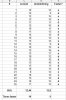
So I went to compare them in 25 Solves (I know this is a small samplesize, but time is rare)
with the following rules:
  • same scrambles were used + same EO-Lines were build
  • sorted out X-EO-Lines
  • nothing was done to influence the F2L during the EO-Line
  • I counted the moves un til I could have virtually moved onto the third block for both methods
  • blocks were build anywhere and not necessarily next to each other nor on the same side
i4X9v

ZZF2L.jpg

Conclusions / Impressions:

  • building blocks was generally a bit more efficient and more often the better choice
  • interesting to note: If one method has been quite efficient the other one had some quite lengthy solutions
  • if one technique has been efficient the other one mostly sucked ass
  • the more Edges were on the wrong side (R-Edges on L), the was Doublelining in comparison
  • if the Cross-Edges have been on the wrong side, Doublelining has almost always been more efficient
  • if there was an 1-move-block blockbuilding has obviously been most of the times more efficient
  • if 1 E-Slice-Edge has been on the right side and the other one was U, while the other pieces have been on the wrong side, Doublelining has been shining the most
To sum it up. If one methods has been good the other was mostly ineffecient. This means knowing both techniques seems to be reasonable to deal with the other techniques bad cases. Overall blockbuilding has been more often more efficient
(could alsobe, that I'm not that good at cubing).

It would be really great if someone would test it too.

(Also is 12.x moves on avg. even good?)

Have fun!

EDIT: uploaded wrong image
 
Last edited:
There are several techniques that I commonly use.
  • E-edge+corner pair, then D-edge, then remaining pair. This is my default if I see nothing else.
  • D-edge, then E-edge+corner pairs, CFOP style, I only do it if the cross edge is already in place.
  • D-edge+corner pair, then E-edge, then remaining pair. I do this fairly often. I've been practicing recognising easy D-edge+corner pairs so I'm now using them almost every solve.
  • D-edge+corner pair, then E-edge+corner pair, then remaining edge. I'll usually build both pairs, store them on one side, then place the edge. It looks really cool because you go from random pairs to a fully block in 4 or 5 moves. I do this quite often maybe once every 2 or 3 solves.
  • 1x1x3 line and then insert the two E-edges. Is this what you call double lining? I only do this if the line is pre-built or almost built and both E-edges are already in place. It's only really usefull for the first block. If I had to guess, I'd say I do this once every 20-30 solves. I do it a lot more in FMC when I have time to plan things out.
  • Lastly, never forget keyhole if an you need to insert a corner or edge without disturbing the other pieces on that side
I don't think learning techniques is the best thing. I think the key to efficient and fast F2L with ZZ is not restricting yourself to any one technique. You have to practice lots of slow solves where you study each case and carefully plan out the most efficient way to solve that case. You have to adapt to take advantage of the situation, and the great thing about not having the cross edges in place is that you actually have the freedom to adapt.
 
a discussion and analysis of the movecount for several different approaches:
https://www.speedsolving.com/forum/threads/zz-f2l-move-count.16020/

i usually just make a square with the first pieces I see, then follow it up with a pair. i try to leave the FR slot for last because i only know last slot variants from one orientation.

and when i'm doing slow solves i use way too many D-moves. Sliding pairs in from underneath, keyhole, weird stuff.
 
so were you solving one or both sides? if it was one this could be good for ct

Yes after doublelining you will have one side of your F2L finished.

There are several techniques that I commonly use.
  • 1x1x3 line and then insert the two E-edges. Is this what you call double lining? I only do this if the line is pre-built or almost built and both E-edges are already in place. It's only really usefull for the first block. If I had to guess, I'd say I do this once every 20-30 solves. I do it a lot more in FMC when I have time to plan things out.

Yes that´s what I mean with doublelining (I just needed a name to reference to).
Also I maybe should have clarified that these movecounts all refer to the start of your F2L when you only have the EO-Line.

The reason why I made this post was not to convince anyone to only use doublelining, since its the inferior technique most of the time, but as shown it's really useful especially when blockbuilding doesn't seem attractive.
Most of the ZZ-Cubers only use 1x1x2-Blockbuilding, when in maybe 35% of all cases it would be better to build two lines.
Hopefully I made some of these expand their F2L-Pool.

@mDiPalma

Thx for the link. Really interesting breakdown for blockbuilding
 
Last edited:
Back
Top