• Welcome to SpeedSolving.com — the world’s largest puzzle community!

    You’re currently browsing as a guest, which means you have limited access to discussions, resources, member profiles, and community features.

    Join 50,000+ cubers and puzzle enthusiasts from around the world to ask questions, share solves, improve faster, and be part of the community.

    Registration is free, fast, and easy — create your account today.

    Already a member? Log in here to hide this message and start participating.

Random Blindfold Cubing Discussion

I'm sure clock has been done? Stefan? Mike?

Yes, done. Also, Super 5x5.

Mirror Blocks probably can't be truly BLD solved because you can never avoid getting info about the puzzle position by feeling it.

Interesting. I have the opposite opinion. How is it not BLD solved when you're blindfolded the entire time you have it? I think it's more BLD solving that all those other puzzles (because we're somewhat mentally solving when we analyze cycles and stuff before being blindfolded). I don't understand the part about avoiding info from feeling, btw. Why would you? That's the only way you get info. And what does it matter? Blind means unable to see, not unable to feel.
 
Last edited:
Interesting. I have the opposite opinion. How is it not BLD solved when you're blindfolded the entire time you have it? I think it's more BLD solving that all those other puzzles (because we're somewhat mentally solving when we analyze cycles and stuff before being blindfolded). I don't understand the part about avoiding info from feeling, btw. Why would you? That's the only way you get info. And what does it matter? Blind means unable to see, not unable to feel.
In my opinion the concept of a blindsolve is that you memorize the position, then solve it based only on that memorization and anything you knew before seeing the scramble. Mirror blocks is the same situation as a Braille/textured cube - you are just doing a normal solve while getting the position information in a non-visual way. No memorization step is even needed.
 
In my opinion the concept of a blindsolve is that you memorize the position, then solve it based only on that memorization and anything you knew before seeing the scramble.

Mmh, my opinion is that the *concept* of a blindsolve is that you solve blind.

And that the sighted memorization is just a necessary *consequence* of that (for most puzzles). It's not called "from memory solving" :)
 
What's a "normal" ratio for 5BLD blind execution to sighted execution?
I average low to mid 5 for blind execution, and I just did a 6:45 and 6:24 sighted. I thought I would be about as fast sighted.

I don't remember exact ratios, but I remember testing this a while ago and it was definitely less than 1. Blind execution was always noticeably faster than sighted. Stefan put it a good way back then, there is very little delay between pairs when blindfolded because you memo'd everything beforehand and can "think ahead". Your "look ahead" while sighted cannot compete with your "think ahead" of already "knowing" which pair comes next rather than having to search for it sighted.
 
I don't remember exact ratios, but I remember testing this a while ago and it was definitely less than 1. Blind execution was always noticeably faster than sighted. Stefan put it a good way back then, there is very little delay between pairs when blindfolded because you memo'd everything beforehand and can "think ahead". Your "look ahead" while sighted cannot compete with your "think ahead" of already "knowing" which pair comes next rather than having to search for it sighted.
Yeah that makes sense. I suppose my recall isn't as bad as I think.
 
Best 5bld tutorial?

I don't think there are many tutorials, but this is basically all you need to know:

x-centers: these are done exactly like 4BLD centers
+-centers: Corey has a tutorial here: https://www.youtube.com/watch?v=w59BgT6piDU
wings: exactly like wings in 4BLD
midges (middle edges) and corners are just like edges and corners on 3x3, and they also have a related parity. I fix parity by solving midges, doing U' F2 U M2 U' F2 U, solving corners, and then doing y2 (R U R' U') Rw2 Fw2 U2 r2 U2 Fw2 Rw2 (U R U' R')
 
Best 5bld tutorial?

As well as what Cale said, be careful with centres if you solve them after midges since things like M' U2 M U2 aren't centre safe. You probably know to be careful from 4BLD corners, but it's helpful to think these things though just to make sure, it's very easy to DNF at first because of silly things like that. Good luck!
 
Is there any software out there where you can input a scramble and it generates letter pairs or a commutator only solution for it? (or something along those lines that could be used to practice BLD)
 
Is there any software out there where you can input a scramble and it generates letter pairs or a commutator only solution for it? (or something along those lines that could be used to practice BLD)

I am literally working on such a thing right now. Once I figure out how websites work, I hope it will be up in the next couple of days.

Edit: Ok it was more than a few days, but here it is: BLD Memo Tool.
 
Last edited:
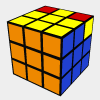
Hello, Orange Front. Is there any algorithm for the following case of twisted corners without having to do a U' and doing (U R U' R')*2 L' (R U R' U)*2 L

rubiks-cube-image.php.png
 
Last edited:
Ok. I have a question for more experienced BLD solvers.

Did learning 4BLD help your 3BLD times? I can imagine that it would because it is a lot easier to do after learning to memo like that, but would it be more beneficial for me to get faster at 3BLD itself, or move onto 4BLD, and just naturally get fast at 3BLD? And get faster and more success rates with MBLD?
 
Back
Top