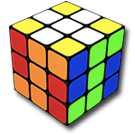
Scrambled cube state
|
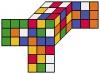
The Scrambled cube state is the cube state where nothing is solved. It's the first cube state for any method.
Here are some examples of scrambled cube states :


Previous Step
- The previous state of this one is the Solved cube state. Use the Scrambling step to have the Scrambled cube state.
Next Steps
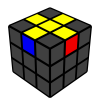 * Use the Cross step to have the Cross cube state. This is the most common transition as in the CFOP method.
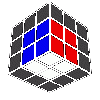 * Use the 2x2x2 block step to have the 2x2x2 Block cube state. This is the first transition for the Petrus Method and the Tripod Method.
- Use the EOLine step to have the EOline cube state. This is the first transition for the ZZ method.
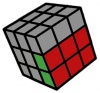 * Use the 1st Roux Block step to have the LRoux Block cube state. This is the first transition for the Roux method.
- Use the Xcross step to have the F2L-3 cube state.
- Use the Mock Cross step to have the Cross-1 cube state.
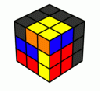 * Use the Heise blocks step to have the Heise blocks cube state. This is the first transition for the Heise Method.
- Use the DougLi block step to have the F2L-1E (D) cube state.
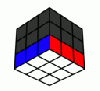 * Use the 1st layer step to have the 1st Layer cube state.
- Use the Triangle step to have the Triangle cube state.
- Use the Block-1CO step to have the 2x2x3 Block -1CO cube state. This is the first transition for the Petrus rotten method.
- Use the D-block 3x2x1 +2EE step to have the NM 3x2x1 Blocks cube state. This is the first transition for the Navi method.
- Use the Only 2C step to have the 2 adj C cube state.
- Use the Opp Edges +No E edg on D step to have the Half Cross no E Edg cube state.
- Use the D CO+P +Belt step to have the Belt + W/Y separated + D CO cube state, as in the MCPOP method.
- Use the Partial belt step to have the Belt-1 cube state, as in the Ladder method.
- Use the Belt pre OE step to have the Bad Cross cube state, also called D EO cube state.
- Use the Pure belt step to have the Belt cube state.
- Use the 2 blocks 1x1x3 step to have the 1st Layer - 2 Opp Edg cube state, as in the TICT method.
- Use the 1x1x3 Block step to have the 1x1x3 Block cube state, as in the TICT method.
- Place+O E edg
- CO (Guimond)
- EPS-like x2 *+setup (Gosch)
- CO Boonerang Preorient
- Human Kociemba 1a Or+Sep E
- Domino redux
- Perm all Edg
- 3OP EO (Flip2+Setup)
- HTA G1
- EO (noline)
- 3OP EO (MU*)
- Solve 1st L w/ opp colors
- JKNK F2L (PLL like)
- Place 1st L (no O o P)
- Redux to 180° "look"
- Noah CP 2.0
- Perm C
- Any method Ignore O
- Start cross on wrong center (Centers Last)
- BH-blind COMMS
- Intuit COMM +setup (by Roux)
- FRULD x252 parts
- God's Algorithm
- EOline on L
- 3C+1
- 3C (VOP)
- T_perm*+setup (Adv Gosch)
- 4C
- Bad EOline (zz-roux BaEOLine)
- 2x2 Solve
- Guimond step1 (Guimond)
- Guimond CO
- OSPA CO
- Orient 4C (Menshov)
- SOAP separate
- 4 pairs
- FOPP 1/4
- Form pairs
- 1x2x3 block
- 2 blocks 2x2
- 2blocks (w/ JAA fixed edge)
- 2blocks (Petrus-zz)
- Blocktega pair+CO
- Salvia
- Sep +Partially orient corners
- Cross no color
- 2white +orient
- Solve white (Ortega)
- 3white +Orient
- Orient C (Sortega)
- Freeslice F2L
- F2B
- 2Roux Blocks
|