
• Welcome to SpeedSolving.com — the world’s largest puzzle community!

    You’re currently browsing as a guest, which means you have limited access to discussions, resources, member profiles, and community features.

    Join 50,000+ cubers and puzzle enthusiasts from around the world to ask questions, share solves, improve faster, and be part of the community.

    Registration is free, fast, and easy — create your account today.

    Already a member? Log in here to hide this message and start participating.

Older cubers discussions

It will obviously take a little longer to gain the understanding of the M slice algs and the swap targets for 2nd letter but surely better to take that hit initially?

You'll see opinions from both sides in the past couple pages from the same topic for Jason. I'm on the M2 side and for reasons I can't explain I enjoy M2 execution more than doing corners in my solves.

I think this was the Achilles heel in my solves back in the day. I used a PAO (PERSON doing an ACTION with an OBJECT) system previously but this is obviously a three target per image system and as such is a lot harder to judge parity etc. I toyed with and even started creating a letter pair list on a number of occasions but never finished.

I've probably spent three times as much time filling in my spreadsheet as I have actual blind practice. The biggest time-sink for me during memo is conjuring good images quickly, without those stalls I could probably be well under 5 mins. I collect as many good images as I can for a pair, not just one or two. Where possible I like to have a few people, a place or two, and various objects; I like to include actions but I haven't had great luck collecting many.

A couple things I do may or may not be good practice. I always memo a letter pair, so when there is parity I just double the dangling letter (F = FF = Fred Flintstone), I just found I have an easier time that way for some reason. I suspect this might present a conflict if/when I move to higher order cubes blind, I haven't looked into the systems there yet. For pairs starting with X or Q I usually just use excited/quarrelsome animals (eXcited Alligator, Quarrelsome Hamster). On the plus side, it quickly fills-in two entire troublesome columns of the matrix from hell. On the minus side, these occur frequently enough that there's a higher risk of confusion for mbld or several successive 3bld.

The spreadsheet still has lots of holes but it's getting there.
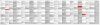
pairs.jpg
 
Last edited:
It seems like M2 vs OP just changes your buffer position and how you execute (I understand M2 has algs to execute some cases). Am I missing something? The reason I'm doing OP at the moment is because as I mentioned tracing through a solve and getting the memo right is by far the big challenge for me. I really was more trying to see if I understood the concepts but I'm almost to the point I could do a solve (well I could if I could get a memo right all the way).

I'm practicing corner and edge memo separate and then trying to execute and see what mistakes I'm making. Any hints on knowing how many letters you should have? I know corners and edges are odd or even together. I did an edge memo a bit ago and had 10 letters with no cycle breaks, I should have known I was missing at least one edge since none were solved. In fact the last edge was flipped in place so I had to target one side then the other (is that called 2 cycle?).
 
I've probably spent three times as much time filling in my spreadsheet as I have actual blind practice.
Well worth it in the long run. Memo is much more important than execution until you start getting quick.

A couple things I do may or may not be good practice. I always memo a letter pair, so when there is parity I just double the dangling letter (F = FF = Fred Flintstone), I just found I have an easier time that way for some reason.
I always use a single word for those eg fluff, Dad, pop etc. There's 2 options for each edge so they're easy to find.

It seems like M2 vs OP just changes your buffer position and how you execute (I understand M2 has algs to execute some cases). Am I missing something?
That's pretty much it but of course your swapping alg is much shorter in M2. Advanced M2 has some nice shortcuts too that you won't get with OP.

Any hints on knowing how many letters you should have?
For edges start with 11 (which is 12 edges less the buffer). Add 1 for each cycle break, also add 1 for each flipped edge if you are solving them by shooting to both stickers then subtract 1 for each piece that's already solved. If the number matches the number of letters you have in your memo you are laughing. It's the same for corners but start with 7.
 
Well worth it in the long run. Memo is much more important than execution until you start getting quick.


I always use a single word for those eg fluff, Dad, pop etc. There's 2 options for each edge so they're easy to find.


That's pretty much it but of course your swapping alg is much shorter in M2. Advanced M2 has some nice shortcuts too that you won't get with OP.


For edges start with 11 (which is 12 edges less the buffer). Add 1 for each cycle break, also add 1 for each flipped edge if you are solving them by shooting to both stickers then subtract 1 for each piece that's already solved. If the number matches the number of letters you have in your memo you are laughing. It's the same for corners but start with 7.
Thanks! I figured it might be straight forward like that but wasn't sure. I had never seen it mentioned, of course as I said I've skimmed a lot of the blind posts on here in the past. :) Funny but to me that would be one of the early things I explain to someone. To me it's like ok here's this process to do something, and next a way to double check you did it right.
 
Thanks! I figured it might be straight forward like that but wasn't sure. I had never seen it mentioned, of course as I said I've skimmed a lot of the blind posts on here in the past. :) Funny but to me that would be one of the early things I explain to someone. To me it's like ok here's this process to do something, and next a way to double check you did it right.
You will come across it written as a formula occasionally. I think the reason you don't see it more is that you still need a way of knowing which ones you haven't done and if you mark them with your fingers you then don't need the formula. It's a nice double check though.
 
Relearning 3bld seems to be going pretty well so far. Just got a sub-3 success (2:53) and a 2:21 off by one edge cycle. Apparently I did the right cycle, but in the wrong direction. This happens with some cases, I must review these carefully. The 2:21 scramble was kind of an oddity, though. Only one corner cycle and 4 twisted corners.
 
OK -- I feel like I'm making some progress with M2 now. I have a couple of questions:
  1. Is there any logic to the S / I algorithms? I get how Q works, and C and W are simple enough to remember, but S and I are currently a mystery to me. I'd prefer to understand them than just to blindly memorize them.
  2. When you hit C second in a pair, do you memo it as C or W?
Thanks!
1. I'll leave this to better minds.
2. It's up to you. I stick with the correct letter and rely on their position in the pair to know how to solve. If you switch the letter in memo there is less thinking but you may find it a little harder to track what stickers you have already covered.
 
Regarding myself not much to say. Little to no practise but still trying to avoid forgetting any algs. This week I managed to do some 4x4 and, after like a little bit less than 100 solves I'm back to my best times from before. Didn't get any PB's nor any new sub-1min solves but got lots of sub 1:05s and several of them with OLL parity or PLL parity which would have been sub minute without.

Glad to see you check-in and glad you're able to get enough maintenance solves to keep in shape. I've been in another busy period without much practice time for the past couple weeks too. Hope all is going well besides those 100 solves!

OK -- I feel like I'm making some progress with M2 now. I have a couple of questions:
  1. Is there any logic to the S / I algorithms? I get how Q works, and C and W are simple enough to remember, but S and I are currently a mystery to me. I'd prefer to understand them than just to blindly memorize them.
  2. When you hit C second in a pair, do you memo it as C or W?
Thanks!

1) That's basically where I am. At some point I also traced the parity alg so it's intuitive for me as well. I still accept I/S as magic and just commit 'em to memory, but at some point I want to sit down and physically trace through it on the cube. It's not all that hard, I'm just lazy.

2) I memo the actual sticker and reverse it in execution; I know Mark, notably, reverses in memo. I may eventually decide to go the other way so execution can just be go-go-go with less thinking but I think this is an area I can personally readjust to without too much fuss if it becomes a bottleneck.
 
First sub-15 single with other than white cross:

14.56 D2 L' U B' L2 D2 B2 R F U L2 F2 L2 U F2 U L2 U B2 D

y2 // inspection
U' L2 U2 R2 D' R' U' R' // xxcross
U L U L' // F2L-3
d' R U R' // F2L-4
U F R' F R2 U' R' U' R U R' F2 // OLL
U R U R' F' R U R' U' R' F R2 U' R' U2 // PLL (Jb) & AUF

Yellow cross is determined by the first move in the scramble (D). I saw I could make an xcross halfway through solving the cross by doing R' U' R' instead of R2 at the end. The other F2L pair solved during cross was purely accidental.

Anyway, with F2L done in 16 moves and a J-perm, the solve should be much faster than this. Yellow cross is still clearly slower than white.

Edit: after making the reconstruction I tried solving the same solve again with the same solution. It took me 6-7 attempts, then finally I got it down to sub-10. Holy badger it requires some fast movement to even get this 43 mover done in <10 seconds. How people can consistently solve in that time is beyond me...
 
Last edited:
Thanks @mark49152 and @newtonbase! Just did another try and had correct memo but messed up execution somehow. Not sure if I missed a letter pair or what. But I went back through it then and executed same memo and it worked. These 20-30 minute memos are crazy. I keep rechecking myself and then I'll start edges and forget how corners even starts. Once I get the first couple it seems to come back to me. It's very fun though!
 
Once I get the first couple it seems to come back to me. It's very fun though!
I have the same issue so I often review just the first pair as I know the rest will flow after that.
A technique I used to use with rooms in MBLD was to put the first image as a picture on the door of the first room. Unfortunately, I now use a better set of rooms but they don't have doors, or the doors are always open in real life.
 
Once I get the first couple it seems to come back to me. It's very fun though!
Noah calls that a keystone. If you have a really strong image for the first pair, it helps recall the rest. I vaguely recall reading someone recently say that for multi or big blind they memo a separate scene with just the keystone images from all the rest of their memo. As long as they remember the keystone scene, they have a good chance of recovering any other part of their memo.
 
Back
Top