• Welcome to SpeedSolving.com — the world’s largest puzzle community!

    You’re currently browsing as a guest, which means you have limited access to discussions, resources, member profiles, and community features.

    Join 50,000+ cubers and puzzle enthusiasts from around the world to ask questions, share solves, improve faster, and be part of the community.

    Registration is free, fast, and easy — create your account today.

    Already a member? Log in here to hide this message and start participating.

How to speedsolve a Curvycopter (non-jumbling)?

Metallic Silver

Veteran
Joined
Jul 12, 2016
Messages
308
YouTube
Visit Channel
What's the method to speedsolving a curvycopter without jumbling? I never thought trying to be Sub-1:30 would be so difficult using beginner's. (I can't even be sub-2 actually)
What are the steps and tricks?
 
Main discussion https://www.speedsolving.com/threads/curvy-copter-discussion-new.75052/

My guess would be being move efficient in first layer (for example solving centers, edges, corners together instead of one at a time) and then applying last layer algs, but I have never attempted a speedsolve.

Dang, so its just intuition or fewest moves, no strategy steps?
I skim through that discussion and it was mostly for jumbling, there aren't any clear method steps, and it was just mostly about making it an event and sharing some speedsolves with jumbling..
 
I am sub-3 minutes at the moment (without jumbling, with jumbling I need 7-10 minutes but done just 15 solves).

So I think I have no big tips for you but maybe?

1. Step 4 white leaves
No tip. I just do it intuitive

2. Step the corners with the 2 additional leaves
I think you know how to recognize in which direction you have to rotate a corner to get it with white side on the correct place? So if you have to rotate it left or right around the cube?

3. Step the yellow leaves
I also do it intuitive but this can be a starting point. Look at the cases an practice to recognize the optimal solution

4. Step PLL (yes, I do PLL before OLL)
At the moment I only can make a Aa-Perm and a Ab-Perm and I use not really Perms because the alg I use also changes the rotation of the corners

5. Step OLL
At the moment I only use Sune and AntiSune so sometimes I need too many Sunes!

So for me the next steps are to learn the additional 5 OLL cases and to use A a/b Perms that are really perms and to learn the additional 2 PLL cases.

Maybe this helps? But I think If you are Sub-2 you already do this OLL and PLL perms.
 
I can't even be sub-2 actually
For a 2 minute non-jumbling time it is impressive that you have just 1/2 to 1 1/2 minutes more in the weekly comp with jumbling.

I loose most over 1 minute to get the cube in cube shape :-) And the LL Jumbling sometimes takes 3-5 minutes.

Do you have a tutorial or so with jumbling tips for Shape and LL?
 
For a 2 minute non-jumbling time it is impressive that you have just 1/2 to 1 1/2 minutes more in the weekly comp with jumbling.

I loose most over 1 minute to get the cube in cube shape :) And the LL Jumbling sometimes takes 3-5 minutes.
Do you have a tutorial or so with jumbling tips for Shape and LL?

That was with jumbling? Oh crap. No, i didnt jumble at all actually.
 
That was with jumbling? Oh crap. No, i didnt jumble at all actually.
Oops. Yes, the notation (in the Weekly Competition scrambles) with the +, +2, - and -2 after a move indicates an approximately 60 degree and approximately 120 degree turn. So the sequences like:
UF- DL- LF UF+ DL+
perform jumbling. And for almost all scrambles, when you're finished with the scramble, you should have a puzzle that is not in cubic shape.
 
So just to be completely clear, + means 60 degrees clockwise, +2 means 120 degrees clockwise, - means 60 degrees counterclockwise, and -2 means 120 degrees counterclockwise. If there's no + or -, it means a 180 degree turn.

And of course, like I said earlier, those angles are approximate values. I'm not sure what the actual angle is - it's clearly something a bit different from 60 and 120 degrees - whatever it takes to allow the next turn.

I measured my LanLan with a protractor and it's about 90 +- 12 deg, or 78 and 102 deg.
I'm not good enough with geometry to say the precise angle mathematically. I don't think it's a fixed number, meaning you could in theory make the corners bigger and edges smaller, or vice versa.
 
I am sub-3 minutes at the moment (without jumbling, with jumbling I need 7-10 minutes but done just 15 solves).

So I think I have no big tips for you but maybe?

1. Step 4 white leaves
No tip. I just do it intuitive

2. Step the corners with the 2 additional leaves
I think you know how to recognize in which direction you have to rotate a corner to get it with white side on the correct place? So if you have to rotate it left or right around the cube?

3. Step the yellow leaves
I also do it intuitive but this can be a starting point. Look at the cases an practice to recognize the optimal solution

4. Step PLL (yes, I do PLL before OLL)
At the moment I only can make a Aa-Perm and a Ab-Perm and I use not really Perms because the alg I use also changes the rotation of the corners

5. Step OLL
At the moment I only use Sune and AntiSune so sometimes I need too many Sunes!

So for me the next steps are to learn the additional 5 OLL cases and to use A a/b Perms that are really perms and to learn the additional 2 PLL cases.

Maybe this helps? But I think If you are Sub-2 you already do this OLL and PLL perms.

I came up with my own method that does last layer completely differently and is probably way slower. https://www.speedsolving.com/threads/curvy-copter-discussion-new.75052/page-7#post-1383498
Basically it involves solving the corners (orientation and permutation) intuitively (not efficient), solving the edges with (UF UR)3, then solving all centers with (UF FR UR FR)2.
 
@Metallic Silver Sorry. It was not my intention to expose you!

@qwr Yeah the LL with Jumbling is the step were I loose my time! I learned the OLL/PPL yesterday and so I need about 2:00 to 2:15 without jumbling.

To get the 4 yellow leaves (and all others around) takes sometime 2 minutes, sometime 5 minutes. I still try which leaves has to be changed with which other... Today a hot day. So going to a lake now and I think in 3-4 hours I will know a lot more about LL Jumbling

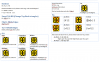
At the moment I have this (some sentences are in German):

1596970638945.png
 
What's the method to speedsolving a curvycopter without jumbling? I never thought trying to be Sub-1:30 would be so difficult using beginner's. (I can't even be sub-2 actually)
What are the steps and tricks?
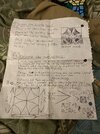
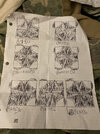
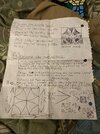
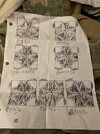
Here are some photos of a tutorial I have written out. These algorithms are original as far as I know, and feel free to share them with anyone as long as proper credit is given. However, you should be able to get f2l and the yellow cross intuitively for this method. Also, all algorithms are performed with the top facing towards you, so R would be the right side, L would be the left side, B would be the top, and F would be the front, E would be R and L both, and M would be B and F both. Let me know if you have any questions image.jpgimage.jpg
 
What's the method to speedsolving a curvycopter without jumbling? I never thought trying to be Sub-1:30 would be so difficult using beginner's. (I can't even be sub-2 actually)
What are the steps and tricks?
Here are some photos of a tutorial I have written out. These algorithms are original as far as I know, and feel free to share them with anyone as long as proper credit is given. However, you should be able to get f2l and the yellow cross intuitively for this method. Also, all algorithms are performed with the top facing towards you, so R would be the right side, L would be the left side, B would be the top, and F would be the front, E would be R and L both, and M would be B and F both. Let me know if you have any questions4BC62FFC-0446-4B3F-8CB3-0209EEE6F06E.jpeg09084F97-06A2-4A24-A2A7-BC534BB47D47.jpeg
 
Back
Top